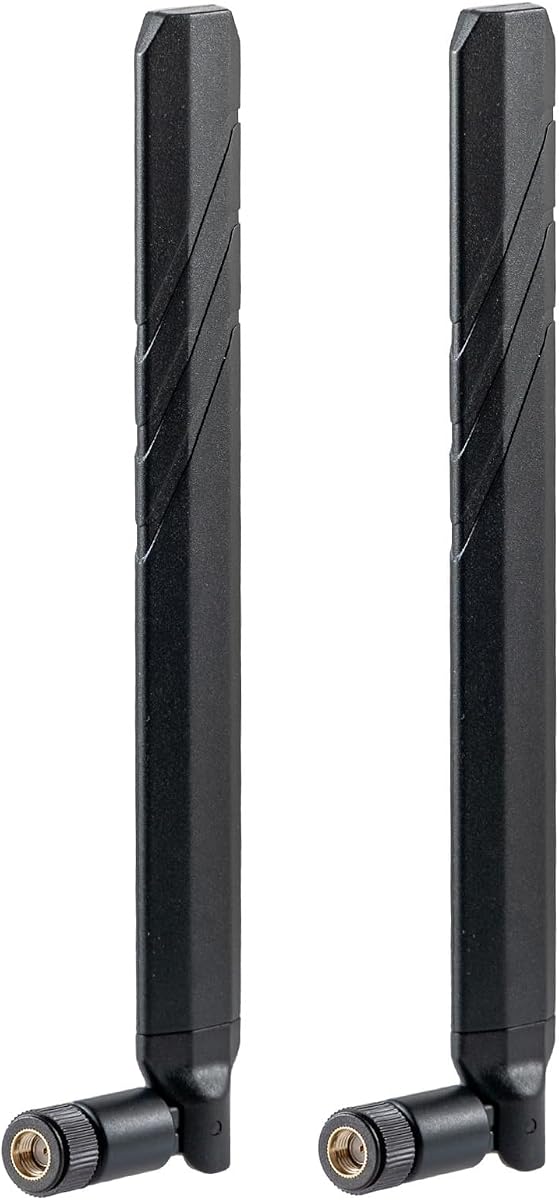
Dual RP-SMA Signal Antenna
4.7Editor score
Ten dBi nominal gain
Broad 600–6000 MHz range
IP67 weather resistance
Two antennas included
Discover the best 4G antenna for trail cameras with pro comparisons of gain, connector type, weather resistance, range, installation, and model compatibility.
A 4G antenna can make a major difference when a cellular trail camera sits in a remote location with weak service. The right external antenna may improve reception, support steadier image uploads, and reduce missed alerts, provided its connector, frequency range, and mounting method suit your equipment.
We compared the ten options in this guide by examining gain, supported cellular bands, connector design, cable length, weather resistance, included mounting hardware, and stated compatibility with major trail camera brands. The list includes single antennas, multipacks, SMA and RP-SMA models, and mounting-ready alternatives.
Each review explains who the antenna is best suited for and where practical limitations may apply. Product details can change as manufacturers revise listings, so readers should verify connector type, camera compatibility, and the latest specifications before purchasing for a remote installation.
4.7Editor score

4.6Editor score
4.1Editor score
The comparison highlights connector type, nominal gain, supported frequency bands, weather protection, cable arrangement, package quantity, and mounting provisions. These details determine whether an antenna can connect to the camera, withstand outdoor exposure, and be positioned effectively for better cellular reception.


The Bingfu SMA 4G LTE Antenna Replacement is a 4.0-rated option centered on straightforward installation and broad compatibility. It uses a 5 dBi omni-directional antenna, supports the 698–960 MHz, 1710–2170 MHz, and 2300–2700 MHz ranges, and comes with a 10-foot cable for positioning the antenna away from the camera enclosure.
We may earn a commission when you buy through this link, at no additional cost to you.
Its strongest feature is the included RP-SMA male adapter, which gives the package more flexibility than a fixed-connector design. The stated camera compatibility covers numerous Tactacam, Stealth Cam, Moultrie, and other cellular trail camera models, while the product can also serve routers, hotspots, security cameras, and other SMA-equipped cellular devices.
The antenna itself is described as rain resistant and is supplied with a wall-mount bracket and four self-tapping screws. Those provisions make it a practical choice for a fixed installation where the antenna can be placed on a wall, post, or similar surface. However, the lower gain specification makes it more modest than several higher-gain alternatives.
This is a good pick for buyers who value a complete mounting package, a long cable, and broad model support more than maximum stated gain. Confirm whether your camera uses SMA or RP-SMA, identify the connector gender, and make sure the antenna can be mounted in a clear position before buying.
The supplied RP-SMA adapter expands compatibility, but connector type remains the most important installation check. A standard SMA connection and an RP-SMA connection may look similar while fitting entirely different ports.
The 10-foot lead provides meaningful placement freedom, and the included wall-mount bracket is helpful for raising the antenna above nearby vegetation or the camera housing.
We may earn a commission when you buy through this link, at no additional cost to you.
This two-pack of RP-SMA antennas holds the highest customer rating in the group at 4.7. Each antenna offers 10 dBi nominal gain, an advertised 600–6000 MHz frequency range, an omni-directional design, 50-ohm impedance, and IP67 weather protection. The stated voltage standing ratio is below 1.8.
We may earn a commission when you buy through this link, at no additional cost to you.
Compatibility is the product's principal selling point. The listing names Spypoint Link Micro, LINK-EVO, LINK-S Sola, LINK-DARK, and LINK-W models, along with multiple Tactacam Reveal and Defend cameras and Stealth Cam models using RP-SMA connectors. Its wide 600–6000 MHz specification also sets it apart from options focused only on the three traditional LTE ranges.
The two-pack format offers a useful backup or a way to equip two cameras without buying separate listings. Because no wall bracket or screws are listed, however, users should plan their own mounting method and protect the connectors from moisture. The fixed RP-SMA male connector also limits use with equipment requiring standard SMA.
Choose this antenna when you need strong stated gain, broad frequency coverage, or two matching units. It is especially relevant for RP-SMA-equipped cameras used in locations where reception is inconsistent. Verify the port type and plan a secure, weather-protected mounting method before installation.
The advertised 600–6000 MHz range covers substantially more spectrum than the common 698–2700 MHz selection used by several other antennas in this roundup.
A matched two-pack can serve separate cameras or provide a spare, making it more flexible than a single-antenna package for users managing multiple hunting properties.
We may earn a commission when you buy through this link, at no additional cost to you.
The Bingfu RPSMA 4G LTE two-pack combines a 4.3 rating with 9 dBi nominal gain, giving it a strong balance between signal specification and quantity. Its omni-directional design covers the 698–960 MHz, 1710–2170 MHz, and 2300–2700 MHz bands used by cellular networks such as Verizon, AT&T, T-Mobile, and Sprint.
We may earn a commission when you buy through this link, at no additional cost to you.
The stated compatibility covers several Spypoint Link variants, a broad selection of Tactacam Reveal and Defend models, and multiple Stealth Cam products. It can also work with cellular routers, security cameras, modems, hotspots, industrial IoT gateways, and other RP-SMA cellular equipment, making it more broadly useful than a camera-specific replacement alone.
A notable limitation is the explicit Spypoint restriction: the listing says not to use it with other Spypoint models. The package contains two RP-SMA male antennas but no bracket or fasteners. Users must confirm the camera's connector and decide on a separate mounting solution before installation.
This product is a sensible option for buyers who need two high-gain antennas and work with RP-SMA equipment. It is less attractive for Spypoint owners who cannot verify their exact camera model or for installers who require an all-in-one package with mounting hardware.
The listing supports several named camera families, but the warning against unspecified Spypoint models deserves attention. Checking the camera's exact model and antenna port avoids an incompatible purchase.
Two matching antennas can be deployed at separate hunting locations, retained as a spare, or used to equip two compatible cameras without ordering different antenna styles.
We may earn a commission when you buy through this link, at no additional cost to you.
The RP-SMA Signal Upgrade is a 4.4-rated two-pack designed for cellular trail cameras and other remote cellular equipment. Each omni-directional antenna provides 9 dBi nominal gain, 50-ohm impedance, an advertised voltage standing ratio below 1.8, and IP67 protection for outdoor-oriented use.
We may earn a commission when you buy through this link, at no additional cost to you.
The listed camera coverage includes Spypoint Link Micro, LINK-EVO, LINK-S Sola, LINK-DARK, and LINK-W models; Tactacam Defend, Reveal X, Reveal X PRO, Reveal XB, and Reveal SK cameras; and RP-SMA-equipped Stealth Cam models. Its purpose is to improve the available cellular signal for more reliable photo and video transmission.
Compared with multipacks that include only antennas, the package remains dependent on a separate mounting solution. That drawback is manageable if the camera is already mounted to a tree, pole, or other structure with a suitable antenna position. The connector must also match exactly because this is an RP-SMA male design.
This antenna is well suited to buyers who want a matched pair, outdoor weather protection, and nine dBi of stated gain. It is most attractive for RP-SMA cameras that can use an external antenna positioned above the enclosure and away from dense cover.
The stated IP67 protection makes this pack a natural consideration for cameras exposed to rain, dust, and seasonal temperature changes, provided the connector area is also protected.
The listing emphasizes improved data transmission and photo or video uploads, making antenna placement and line-of-sight exposure important parts of the expected setup.
We may earn a commission when you buy through this link, at no additional cost to you.
This Bingfu four-pack is the largest antenna set in the guide and carries a 4.4 rating. Each standard SMA male antenna has 8 dBi nominal gain and an omni-directional pattern across the 698–960 MHz, 1710–2170 MHz, and 2300–2700 MHz ranges.
We may earn a commission when you buy through this link, at no additional cost to you.
Its camera focus includes specific Spypoint Flex and related models, Moultrie Edge 3 and Covert cellular cameras, and Spartan GoLive M and Ghost GoCam models. Because it uses SMA rather than RP-SMA, buyers can also apply it to cellular routers, security cameras, hotspots, repeaters, and other standard SMA devices.
The main complication is connector discipline. The listing repeatedly emphasizes that the connector is not RP-SMA, so users should not assume that every cellular camera will accept it. The Spypoint compatibility is also limited to named models rather than every camera in that brand's range.
This set is a good fit for buyers managing several standard SMA cameras or needing spare antennas for field maintenance. Its quantity and broad device support may be more useful than maximum gain for that type of user, but exact connector and model verification remains essential.
A four-pack is convenient for users who own multiple compatible cameras or who expect regular field maintenance and want replacement antennas ready to deploy.
The design is intended for standard SMA connections, not RP-SMA. Camera manuals, port markings, or an existing antenna should be checked before ordering.
We may earn a commission when you buy through this link, at no additional cost to you.
The Eifagur Low-Loss Antenna is a 4.1-rated option offering 5 dBi nominal gain, 50-ohm impedance, IP67 weather resistance, and a 10-foot RG58 cable. Its goal is to improve cellular reception for picture transmission rather than advertise the highest gain in the group.
We may earn a commission when you buy through this link, at no additional cost to you.
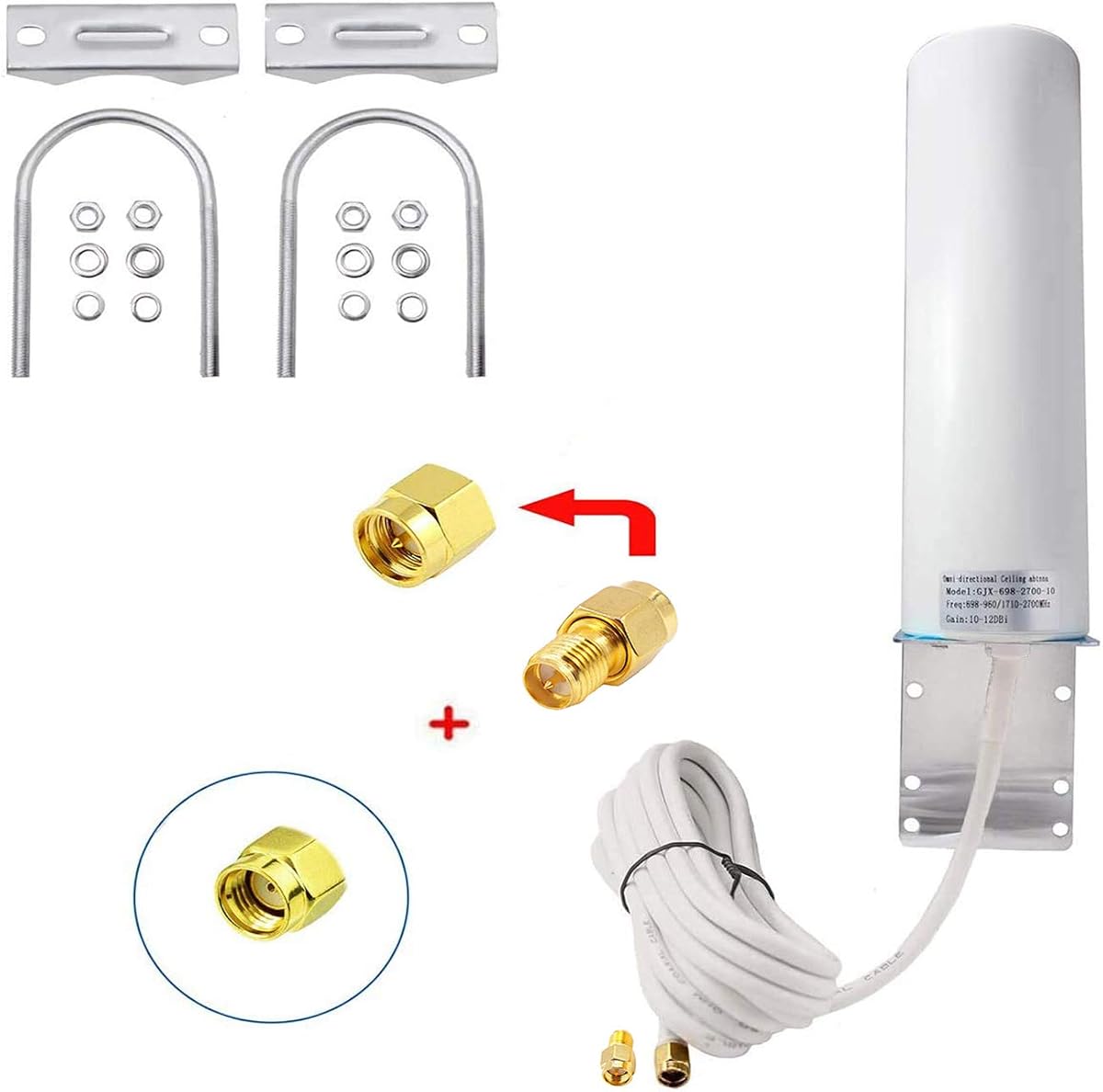
Compatibility is broad: the listing names Spypoint Flex, Link Micro, LINK-EVO, LINK-S Sola, LINK-DARK, and LINK-W cameras, along with Tactacam, Moultrie Mobile Edge Pro, Spartan HD GoCam, Covert, Muddy, and other cellular cameras. A wall-mount bracket, four screws, and an RP-SMA female-to-SMA male adapter are included.
This package is notably installation-ready compared with antenna-only multipacks. The included bracket makes it easier to attach the antenna to a suitable surface, while the adapter allows the standard SMA side to connect to an RP-SMA camera port. Buyers still need to determine which end of the adapter belongs at the camera and which belongs at the antenna.
Choose this model if a complete package, long cable, and broad stated camera support matter more than maximum gain. It is especially useful for first-time antenna installers who want the necessary mounting pieces included without sourcing them separately.
The wall bracket and screws remove the need to search for basic mounting hardware, making this a convenient option for a new camera installation.
The 10-foot RG58 lead gives installers room to move the antenna away from the camera body, which can help if the camera housing or nearby cover interferes with reception.
We may earn a commission when you buy through this link, at no additional cost to you.
The Bingfu RP-SMA Two-Pack has a 4.5 rating and provides two 6 dBi omni-directional antennas. Each unit supports the 698–960 MHz, 1710–2170 MHz, and 2300–2700 MHz bands and is intended for RP-SMA-equipped cellular devices.
We may earn a commission when you buy through this link, at no additional cost to you.
The camera list includes Tactacam Reveal XB, Reveal SK, Reveal X generations, Reveal PRO versions, Reveal Ultra, Reveal X-Pro, and Defend models. It also covers specified Spypoint Link variants and Stealth Cam products. Beyond hunting cameras, the antenna can be used with cellular routers, modems, security cameras, hotspots, and industrial IoT gateways.
Compared with the 9 dBi and 10 dBi alternatives, the six dBi specification is more modest. It may still be valuable in a location where the camera already has service but uploads are inconsistent. The two-pack provides a spare or a second camera option, although the package does not list a mounting bracket.
This product suits buyers who want a strong customer rating, a pair of antennas, and broad RP-SMA compatibility without moving to the highest-gain specification. It is a practical middle option for moderate signal problems and multi-camera users.
Six dBi sits between the lower-gain installation-ready antennas and the high-gain packs in this guide, making it a middle ground for moderate coverage concerns.
The matching second antenna can be kept as a service spare or installed on another compatible camera, which is useful for buyers managing more than one location.
We may earn a commission when you buy through this link, at no additional cost to you.
The Bingfu Long-Range SMA is a 4.1-rated outdoor antenna with a 6 dBi gain specification. Its fiberglass housing is described as waterproof and durable for long-term outdoor use, while its omni-directional design covers the same three cellular frequency bands used by many major networks.
We may earn a commission when you buy through this link, at no additional cost to you.
The stated compatibility is extensive. It includes numerous Spypoint Flex and Link models, Tactacam Reveal and Defend cameras, Stealth Cam products, Moultrie Edge and Covert cameras, Spartan models, Cuddeback J-series cameras, and Muddy Manifest devices. It can also serve standard SMA or RP-SMA cellular equipment when the correct adapter is used.
The package includes an SMA antenna, an RP-SMA adapter, a wall-mount bracket, and four self-tapping screws. This makes it a more complete setup than antenna-only products. Its six dBi gain is less ambitious than the highest-gain models, so the fiberglass construction and installation flexibility are more important differentiators than maximum stated amplification.
This antenna is a good choice for a fixed outdoor installation where the enclosure must withstand weather exposure and the antenna can be mounted away from the camera housing. It is less compelling for buyers who want a matched multipack or the highest published gain.
The fiberglass enclosure is intended for durable outdoor deployment, reducing concern about weather exposure that would apply to a less substantial housing.
The adapter, bracket, and screws provide the main components needed for a fixed mount, although a suitable pole, wall, or tree mounting point must be available.
We may earn a commission when you buy through this link, at no additional cost to you.
The Eifagur High-Gain Antenna provides 10 dBi nominal gain and a 4.1 rating, making it one of the most technically substantial options in the roundup. It operates across the 698–960 MHz, 1710–2170 MHz, and 2300–2700 MHz bands with 50-ohm impedance and an omni-directional pattern.
We may earn a commission when you buy through this link, at no additional cost to you.
Compatibility covers a wide range of Spypoint Flex, Link, and LINK EVO models; Tactacam Reveal X, Reveal X PRO, Defend, and Reveal Ultra cameras; and other 3G or 4G LTE trail cameras from Moultrie, Stealth Cam, Muddy, Covert, Reolink, and other named brands. The antenna also has applications as a router or general cellular antenna.
A 10-foot RG58 cable, RP-SMA female-to-SMA male adapter, and wall-mount bracket are included. The instructions emphasize keeping the omni-directional antenna vertical and as high as possible, with the U-shaped bracket suitable for an approximately two-inch mast or pipe. That placement guidance matters because a higher, unobstructed position can be more valuable than nominal gain alone.
This is the premium choice for buyers seeking the highest stated gain in the group, extensive compatibility, and a long cable with mounting hardware. Verify the connector and camera model, and be prepared to source or select a suitable mast because the included bracket arrangement may not fit every existing camera tree.
The ten dBi specification is paired with explicit advice to mount the antenna vertically and high. This focus on placement makes the product most appropriate for permanent installations with access to a mast or pipe.
The compatibility list extends beyond hunting cameras to several cellular security camera models, increasing its usefulness for mixed property-monitoring setups.
We may earn a commission when you buy through this link, at no additional cost to you.
The Eifagur 7dBi Antenna combines a 4.6 rating with an installation-ready package, making it a particularly balanced choice. It offers 7 dBi nominal gain, IP67 weather resistance, 50-ohm impedance, a voltage standing ratio below 1.8, and a 10-foot RG58 cable.
We may earn a commission when you buy through this link, at no additional cost to you.
The listed compatibility covers Spypoint Flex, Flex-S, Flex-M, Flex-Dark, Flex G-36, Link Micro, Link Dark, Link S, LINK EVO, and LINK-EVO-V models. It also includes Tactacam Reveal X and Reveal PRO cameras, plus Spartan HD GoCam, Stealth Cam Fusion X and Revolver, Moultrie Mobile Edge Delta, Muddy, Covert, Reolink, and outdoor security cameras.
The included wall bracket, four screws, and RP-SMA female-to-SMA male adapter make it possible to install the antenna without sourcing basic hardware. As with other products using this adapter arrangement, the user must orient it correctly. Keeping the antenna away from the camera enclosure and in a clear vertical position may improve practical reception.
This is a strong all-around recommendation for a single permanent camera installation. It combines a well-regarded customer rating, moderate-to-high gain, outdoor protection, broad compatibility, and complete mounting provisions. It is less appropriate for buyers who need two ready antennas, but its one-antenna package is streamlined for a single remote setup.
Seven dBi is not the highest gain listed, but it avoids the extremes of the guide while pairing with IP67 protection, an RG58 cable, and mounting hardware for a practical remote deployment.
The supplied bracket and screws simplify installation, while the ten-foot cable allows the antenna to be mounted higher or farther from metal, dense foliage, or the camera housing.
We may earn a commission when you buy through this link, at no additional cost to you.
The right antenna depends on connector compatibility, cellular band support, placement, and the severity of the coverage problem. Reviewing these factors before ordering is more important than choosing solely by the largest gain number.
Connector type is the essential first check because an antenna with the correct frequency range still cannot be used if its plug does not match the camera's antenna port. The options in this guide use standard SMA male, RP-SMA male, or a combination that includes an adapter. RP-SMA and SMA fittings can appear similar, but their center-contact arrangements differ. The product listings repeatedly warn buyers to distinguish the connection before purchase.
Most cellular trail cameras rely on LTE bands within the 698–2700 MHz range. Most products here cover the three common groups of 698–960 MHz, 1710–2170 MHz, and 2300–2700 MHz. The two-pack rated at 4.7 covers a broader 600–6000 MHz range, while the other antenna specifications focus on the standard cellular bands. For an ordinary LTE trail camera, the common ranges are generally the more relevant comparison point.
Nominal gain measures how strongly an antenna concentrates energy in a given direction relative to a reference antenna. The products here range from 5 dBi to 10 dBi, but a larger figure does not automatically guarantee better reception. Terrain, vegetation, carrier coverage, cable loss, interference, and antenna placement can all affect the outcome. External antennas are especially useful when a camera's built-in antenna is blocked by a tree, enclosure, or unfavorable orientation.
A longer cable allows the antenna to be moved away from the camera body and potentially into a better location. The options with a 10-foot lead commonly use RG58 coax, while the longer bundled cables also allow wall or through-hole mounting. Greater cable length can introduce some loss, so it should serve a placement purpose rather than simply be as long as possible. A well-positioned antenna with a practical lead is usually preferable to a short antenna in a poor spot.
Trail cameras operate through rain, dust, snow, and seasonal temperature changes. Several antennas in this roundup specify IP67 protection, while others describe a waterproof or rain-resistant housing without using the same rating. The antenna body, connector joint, and mounting points all need protection. A mounting bracket that holds the connector above the likely moisture line and allows any cable entry to shed water is a better choice than a setup where the connection sits in a damp crevice.
A trail camera brand name alone is not enough to establish compatibility. Some listings include long compatibility lists, while others explicitly limit support to particular Spypoint, Tactacam, or Stealth Cam families. Differences between generations and variants can involve connector changes. Buyers should locate the model's antenna port, compare it with the supplied plug or adapter, and review the listing's exclusions before purchasing.
A complete package may include a wall bracket, U-shaped bracket, screws, or a through-hole mounting arrangement. Hardware is convenient, but the actual mounting surface matters. Many camera installations use a tree, pole, or strapped mount rather than a wall. Check whether the included bracket fits a roughly two-inch mast or pipe, as specifically noted for one product, and whether a separate sturdy mount will be needed. The goal is to hold the antenna vertical and high without allowing wind or wildlife to move it.
Single-antenna packages are convenient for one camera and often include mounting accessories. Multipacks provide better value for multiple cameras, maintenance spares, or a backup unit. A two-pack is a practical middle ground, while the four-pack is aimed at larger camera fleets and standard SMA equipment. If you only operate one camera and need a complete fixed installation, a single antenna with a bracket may be more useful than extra units without hardware.
Begin by identifying the camera's antenna connector and the cable or adapter required. Power down the camera before attaching an external antenna, then route the cable so it does not create a tight bend, snag on branches, or interfere with the camera door. Confirm that the connector is fully seated without using excessive force, as the coax and threaded fitting can be damaged by overtightening.
Mount the antenna vertically and as high as practical. Clear nearby branches and foliage, avoid placing it directly against metal or dense wood, and use a secure bracket, strap, pipe, or mast. When the product includes an RP-SMA-to-SMA adapter, confirm that the camera-side and antenna-side fittings are correctly oriented. Once installed, restore power and allow the camera to establish its cellular connection before evaluating image delivery.
Inspect the installation during routine camera visits. Check that the antenna remains vertical, the bracket has not loosened, vegetation has not grown over it, and the cable has not been chewed, pinched, or pulled taut. Keep the connector dry and clean, and avoid covering the antenna with a camera case or shelter fabric. If reception changes, test a higher or more exposed position before assuming the antenna itself has failed.
There is no universal connector across all trail cameras. Some use standard SMA, others use RP-SMA, and camera generations within the same brand may differ. Check the camera's specifications or inspect the original antenna fitting before purchasing. If the connector is unclear, compare the center contact carefully or contact the camera manufacturer rather than relying on visual similarity.
No. Higher nominal gain can help when placement is the limiting factor, but carrier coverage, terrain, vegetation, interference, and cable loss also matter. An antenna positioned high with a clear view may outperform a higher-gain model in a poor location. Evaluate the camera after installation and adjust its position before concluding that additional gain is needed.
Mount it vertically and as high as practical, away from metal, dense foliage, and obstructions. The included cable should permit the antenna to be separated from the camera enclosure while still reaching the installed camera. A tree limb, pole, mast, or external bracket can work, but the mounting point must be stable enough to withstand wind and animal movement.
Only if the antenna uses the other connector type. An RP-SMA male antenna can connect directly to an RP-SMA female camera port, while a standard SMA male antenna requires a suitable RP-SMA adapter. Several products in this guide include the adapter, but its orientation must be checked so the male and female ends meet the correct components.
One antenna generally serves one cellular device unless the camera system provides a documented antenna-sharing arrangement. For multiple cameras, a matched multipack is usually simpler and provides separate leads and connectors. Extra antennas also function well as field spares for installations that are far from a convenient repair location.
A weather-resistant body helps, but the installation also needs attention. Protect the connector from standing water, use a mounting method that keeps the joint out of accumulated debris, and inspect the cable and bracket during camera maintenance. The entire system should be checked after severe weather even when the antenna body carries an IP67 rating.
An antenna itself generally does not create a meaningful additional power draw, but improved cellular reception can affect how often the camera communicates with the network. More successful uploads, live viewing, or cellular activity may lead to different energy use. Monitor battery performance and retain appropriate solar or battery capacity for the camera's operating conditions.
Confirm the connector, camera model, antenna port, and adapter orientation first. Then move the antenna higher, make it vertical, and clear vegetation or other obstructions. Inspect the cable for damage and verify that the camera recognizes the external antenna. If the signal remains weak, the limiting factor may be carrier coverage rather than the antenna.
The Eifagur 7dBi Antenna is the most balanced overall recommendation, combining a 4.6 rating, IP67 protection, a 10-foot RG58 cable, broad camera support, and included mounting hardware. The dual RP-SMA Signal Antenna stands out for its 4.7 rating, wide frequency coverage, and two-pack format, while the Eifagur High-Gain Antenna is the premium choice for buyers prioritizing 10 dBi and elevated fixed placement.
Begin with connector compatibility, then narrow the field by gain, supported bands, cable length, weather protection, and mounting hardware. A moderate-gain antenna with a secure, unobstructed position may serve a remote camera better than a higher-gain model installed poorly. For multiple cameras, consider a matched multipack and ensure every unit uses the connector required by its camera.
Finally, verify the current listing, compatibility notes, included parts, and retailer offer before ordering. Trail camera models, antenna interfaces, and product packages can evolve, so the latest camera manual and seller's current details should guide the final installation.