
HOSAFE.COM 4G LTE Cellular Camera
4.1Editor score
No Wi-Fi connection required
2K color night vision
Included 64GB storage card
Security cameras for job sites compared across 10 models, focusing on cellular coverage, solar power, night vision, alerts, and rugged outdoor construction.
A job site often lacks the dependable Wi-Fi, electrical outlets, and permanent mounting infrastructure found in a finished building. Cellular security cameras solve that problem by connecting through LTE, while solar panels and rechargeable batteries reduce the need for on-site power. The right model should also withstand dust, rain, heat, and changing site conditions.
This guide compares ten security cameras for job sites using the specifications and features listed for each product. The evaluation considers connectivity, power independence, imaging, detection, night visibility, storage, installation flexibility, weather resistance, and the practical value of remote controls. It also distinguishes between continuous monitoring and event-driven clip requests.
Each review explains where a camera is strongest, where compromises appear, and which jobsite owner may benefit most. The three leading selections highlight exceptional imaging, a feature-rich off-grid setup, and flexible wireless connectivity. Product availability and configurations can change, so readers should confirm current specifications, carrier support, subscription terms, and included accessories before purchasing.
4.1Editor score

5.0Editor score

4.0Editor score
The table below compares all ten job site security cameras by their most decision-relevant attributes, including network type, power source, imaging, detection, and outdoor durability. Ratings reflect the listed customer feedback, while connectivity plans and included storage vary by model.



The TACTACAM Defend 360 is built for a job site where pulling cable or establishing reliable Wi-Fi would be impractical. It connects over LTE cellular, runs from a rechargeable battery supported by solar charging, and carries a 4.0 rating. Its standout feature is remote pan, tilt, and zoom control, allowing one camera to inspect a broader area than a fixed-view unit.
We may earn a commission when you buy through this link, at no additional cost to you.
The camera produces 4K photos and 1080p video while sending motion alerts to a phone. That distinction matters when a user needs highly detailed still imagery without accepting a larger video file for every event. Solar charging helps keep the internal battery topped off, reducing dependence on an outlet or generator. Weather resistance is another important benefit because construction sites regularly expose electronics to rain, heat, cold, and dust.
The central tradeoff is that the camera depends on cellular service at the installation location, so signal quality should be verified before installation. Also, the exceptional 4K figure describes photo resolution rather than 4K video. These limitations do not undermine the core value: a remotely repositionable cellular camera that can operate away from permanent power and network infrastructure.
This is a strong choice for contractors, supervisors, and property managers monitoring remote work areas, equipment yards, gates, or temporary facilities. It is especially attractive when one movable viewpoint is preferable to several fixed cameras and when phone-based remote control is important. For those priorities, the Defend 360 earns a place near the top of this guide.
Remote pan, tilt, and zoom means the owner can inspect different directions from a phone instead of committing to one narrow target. It is particularly useful when the camera covers a temporary gate, a cluster of equipment, or a work area whose priorities change as construction progresses.
LTE connectivity and solar-assisted battery operation make this practical where neither a home network nor a permanent electrical outlet is available. The camera is better suited to remote monitoring than to a permanently installed building where conventional Wi-Fi cameras are usually easier to maintain.
We may earn a commission when you buy through this link, at no additional cost to you.
The Vosker VKX 4G LTE Solar Cellular Security Camera, Video is designed around efficient, event-driven monitoring at remote properties and work areas. It includes a SIM card, a frameless solar panel, and a high-capacity battery. The listed 3.4 rating is the lowest among the cameras in this guide, so buyers should weigh its strong autonomy and rugged construction against mixed customer feedback.
We may earn a commission when you buy through this link, at no additional cost to you.
Its motion detection extends up to 100 feet, and the system can send photo alerts or 15-second video clips on demand. A 90-degree field of view, 1080p daytime imaging, and infrared night vision up to 100 feet provide useful coverage around equipment areas, storage yards, and construction zones. The integrated deterrent light signals the camera's presence and may discourage unwanted visitors.
This is not a live-stream-first camera. Video is requested through the app, while the camera can be programmed to take photos when motion is detected. That approach may use cellular data more selectively than continuous video, but it also means users should not expect to watch a real-time feed through this model. The included cellular plan arrangement also requires attention before transmission service begins.
The VKX is well suited to owners who value a low-maintenance, solar-oriented deployment and a swappable battery more than continuous viewing. Its rugged antenna, IP65 rating, front-access battery, and frameless panel are useful for demanding outdoor installations. It may be less suitable for supervisors accustomed to watching a live camera feed throughout the workday.
The ability to request 15-second clips on demand makes the VKX convenient for intermittent monitoring. Users can check a location when prompted or when they specifically need evidence, rather than relying on a continuous cellular video stream that may consume more data.
A front-access, swappable 14,000mAh battery gives maintainers a practical way to restore power without disassembling the entire camera. That matters on sites where a full crew may not be available for technical service or where prolonged cloud cover limits solar charging.
We may earn a commission when you buy through this link, at no additional cost to you.
The Metal 4G LTE Cellular Solar Camera stands out for combining a 6MP sensor, 50X true optical zoom, a dual-lens display, and a metal housing in an off-grid package. It has a 5.0 rating and is designed for farms, construction sites, warehouses, cabins, and other locations without Wi-Fi. The camera and solar panel install separately, allowing each component to be placed where it works best.
We may earn a commission when you buy through this link, at no additional cost to you.
Its most technically distinctive feature is genuine optical magnification. Rather than enlarging a cropped digital image, the zoom is intended to preserve detail when a user needs to inspect faces, license plates, or distant activity. The app can display upper and lower views simultaneously, while a 355-degree pan and 90-degree tilt help reduce blind spots. Color night vision is listed as reaching up to 150 feet.
Power comes from a 6W solar panel and 12,000mAh battery, with the listed ability to run for up to three months without sunlight. A metal shell adds heat resistance and outdoor durability compared with a light plastic housing. The important limitation is that motion tracking is manual; the camera supports remote positioning, but it does not automatically follow a moving subject.
This is the most compelling choice in the guide when detailed identification and a wide selection of remote-control features matter more than automatic tracking. It also suits buyers who want to position the solar panel away from the camera, which can improve exposure when the monitored view and available sunlight point in different directions.
A 50X true optical zoom gives this camera a meaningful advantage when the subject is far away and digital magnification would produce a soft or heavily cropped image. It is a useful specification for monitoring distant access roads, equipment, or perimeter areas from a safe mounting location.
Installing the camera and solar panel separately allows the camera to face the important work area while the panel receives the best available sunlight. This flexibility is particularly useful around scaffolding, temporary structures, trailers, and equipment that could otherwise obstruct one part of a combined unit.
We may earn a commission when you buy through this link, at no additional cost to you.
The SEHMUA 4G LTE Cellular Solar Security Camera is an adaptable option for sites without Wi-Fi or reliable electrical power. It uses LTE connectivity, a solar panel, and a built-in battery, and it receives a 4.2 rating. The camera supports 2K imagery, color night vision, phone alerts, remote viewing, and two-way communication through the Ubox app.
We may earn a commission when you buy through this link, at no additional cost to you.
Its motion detection uses a PIR sensor that can identify people or animals and send notifications to a phone. The lens supports horizontal and vertical rotation, giving users a broad field of view, while 4X digital zoom helps isolate areas of interest. A manually enabled spotlight supports full-color nighttime images. The included EIOTCLUB SIM is intended for U.S. use and works with major carriers, including AT&T, T-Mobile, and Verizon.
The model does not support Wi-Fi, which is intentional for off-grid operation but means cellular coverage must be confirmed. The included trial gives users time to evaluate the service, while a subscription is required afterward for continued cellular operation. Its initial full charge should be completed with the supplied power cable before the solar panel is relied upon for long-term operation.
This camera fits owners who need remote rotation, communication, and phone alerts in a fully wireless package. It is a particularly good fit for barns, storage yards, rental properties, and active construction sites where workers may need to speak to a visitor or contractor. Buyers should treat cellular service as an operating requirement rather than an optional extra.
Two-way talk lets a supervisor speak through the camera rather than relying only on visual evidence. That can be useful when a delivery driver, contractor, or site visitor approaches a gate and the owner is not physically present.
The PIR sensor can be tuned through the app, allowing users to balance prompt alerts against unwanted movement notifications. This gives the camera more flexibility than a fixed sensitivity setting when a site experiences workers, vehicles, animals, or moving equipment.
We may earn a commission when you buy through this link, at no additional cost to you.
The Vosker VKX 4G LTE Solar Cellular Security Camera, Video 2-Pack is aimed at users who need to monitor two separate assets rather than concentrate on one entrance. The bundle includes two cellular cameras and solar-based power solutions. Its 3.4 rating should be considered alongside the extensive feature set, particularly long autonomy, rugged construction, and request-based video.
We may earn a commission when you buy through this link, at no additional cost to you.
The cameras can deliver 15-second clips on demand and can be programmed to capture photos continuously when motion is detected. A larger frameless solar panel is designed to reduce the buildup of snow and dust and supports up to six months of autonomy without external power. The rugged antenna, swappable batteries, and IP65 certification support use in construction sites, barns, and remote work environments.
The two-camera format expands coverage but can also create separate placement and connectivity considerations. Both units require suitable LTE service, adequate sunlight, and a secure mounting position. Detection can be snoozed for a selected period, and an integrated deterrent light can help discourage burglars, animals, and other intruders.
This bundle is most attractive for a contractor monitoring two ends of a property, a manager overseeing equipment in two yards, or an owner protecting a gate and a storage trailer. It is less appropriate for anyone requiring a constant live feed. The two locations make the pack practical, provided cellular coverage can support both installations.
Two units can secure separate work zones, reducing the need to compromise between a wide single view and close coverage of another important area. The pack is especially useful when the two assets are far enough apart that one camera cannot meaningfully monitor both.
A configurable snooze period can temporarily disable detection when normal site activity makes alerts unnecessary. It may be useful during scheduled deliveries, crew changes, or other periods when the owner does not want to receive motion notifications.
We may earn a commission when you buy through this link, at no additional cost to you.
The 4G LTE Cellular Security Camera 2-Pack provides a coordinated way to watch two off-grid job site locations. It has a 4.1 rating and uses cellular data rather than Wi-Fi. Solar power and rechargeable batteries eliminate the need for permanent wiring, while PTZ controls and 2K color night vision make the units useful for general site awareness.
We may earn a commission when you buy through this link, at no additional cost to you.
Each camera supports 270 degrees of pan, 90 degrees of tilt, 4X digital zoom, and four spotlights for color nighttime viewing. A PIR sensor can detect people, vehicles, and animals before sending an instant notification to the phone. The Ubox app also supports two-way audio, allowing a user to speak to someone near the camera.
Event playback can use a local microSD card or cloud storage, although the card is excluded and the cloud option must be applied for. The preinstalled and preactivated SIM includes a seven-day data trial for U.S. use, with further plan choices available. An IP66 housing and listed operating range from -4 to 122 degrees Fahrenheit support outdoor use.
The two-pack is a sensible choice for monitoring a main entry and a remote equipment area, particularly when an electrician or installer is not available to run network cables. It is less convenient for owners who want local recording immediately because the storage card is not included. Buyers should account for the memory card and cellular service when setting up the system.
The package gives owners two independent cameras for separate job site zones. This can provide better coverage of gates, parking areas, temporary buildings, and equipment rows than a single unit with a very wide but less directed field of view.
Support for local microSD storage and optional cloud storage gives users some flexibility in how they review events. Local media is useful for reducing dependence on cloud availability, while cloud access can make remote playback more convenient when the phone does not contain the card.
We may earn a commission when you buy through this link, at no additional cost to you.
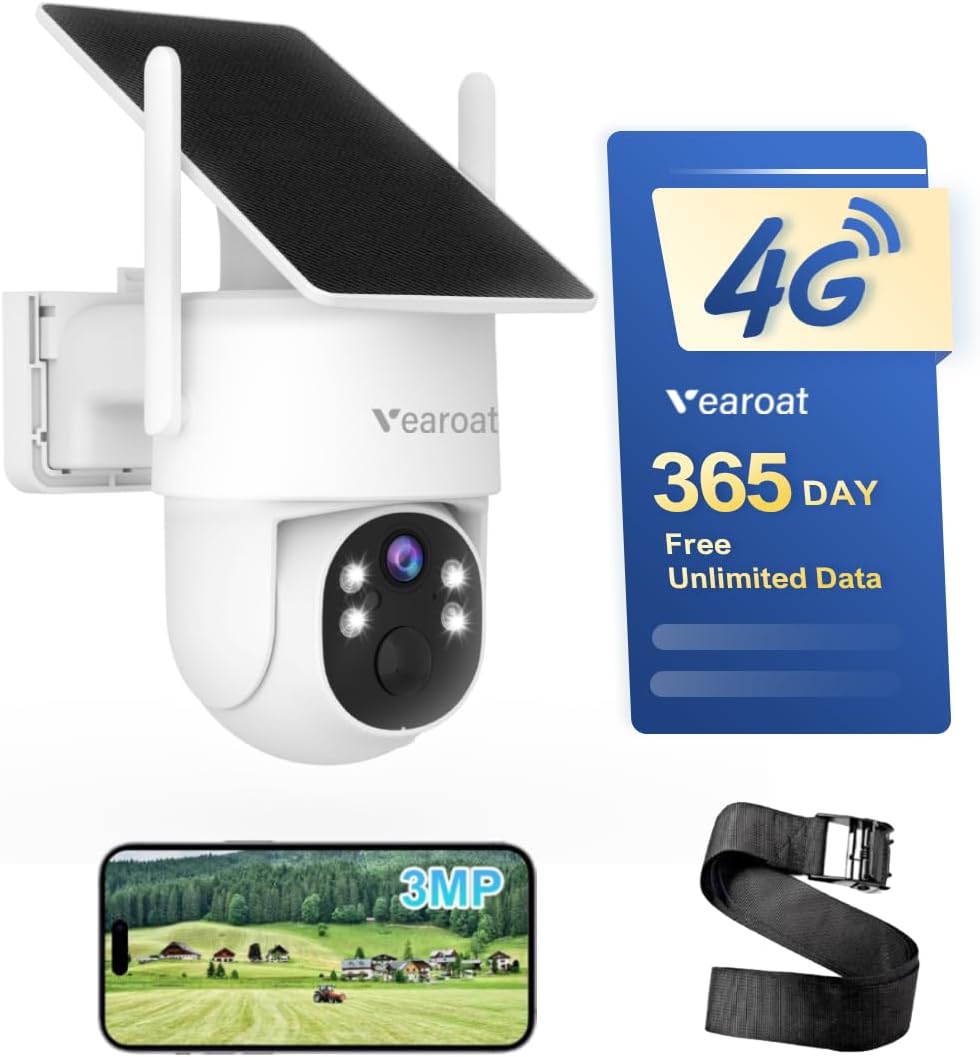
The 4G LTE Solar Security Camera Outdoor combines a 2K PTZ camera, color night vision, human detection, two-way audio, and an extended cellular data allowance. Its 5.0 rating makes it one of the strongest customer-rated options in the guide. It is designed for construction sites, farms, barns, cabins, RVs, warehouses, and other locations without Wi-Fi.
We may earn a commission when you buy through this link, at no additional cost to you.
The camera provides 360-degree pan, 120-degree tilt, and 6X digital zoom. Infrared LEDs and image sensors support full-color night viewing, while the included 7W solar panel works with a 7,800mAh rechargeable battery. Human detection generates immediate phone alerts, and two-way audio allows communication with visitors, delivery personnel, or others near the installation.
Local video storage is supported through a microSD card up to 128GB, but the card is not included. The included SIM carries 365 days of unlimited data, after which renewal is handled by scanning a QR code on the device. An IP66 housing and a listed -4 to 120-degree Fahrenheit operating range are favorable for year-round outdoor use.
This model is a good budget-oriented recommendation for users who want broad PTZ movement, night visibility, communication, and a generous initial cellular service period. It is less ideal for a buyer who wants completely recurring-free operation, since the data plan eventually requires renewal. For the first service year, however, the package offers a well-rounded feature set.
The 360-degree pan and 120-degree tilt allow the camera to cover a large outdoor area while remaining physically stationary. That makes it useful for users who do not want to commit to a fixed direction during every phase of a project.
The included 365-day unlimited data period can simplify initial setup and allow a year of monitoring without an immediate renewal decision. Users should still account for the eventual renewal process when creating a long-term site security budget.
We may earn a commission when you buy through this link, at no additional cost to you.
This Vosker VKX model is built for owners who prefer requested video clips over continuous live viewing. It uses 4G LTE, solar power, and a rechargeable battery, and it has a 3.5 rating. The on-demand workflow allows a user to request 15-second clips through the mobile app while the camera can also be programmed to take photos when motion is detected.
We may earn a commission when you buy through this link, at no additional cost to you.
Its frameless solar panel is designed to resist snow and dust buildup and can support up to six months of autonomy without external power. A rugged antenna and a front-access swappable battery simplify field maintenance. The IP65 enclosure is intended for harsh work environments, and an integrated light acts as a visible deterrent to potential intruders.
There is no continuous recording or live stream, which is the main distinction between this model and cameras built for constant remote viewing. Photo and video transmission also requires a Vosker cellular data plan, although a seven-day trial is included. A user who needs evidence on demand may find this efficient, while a supervisor expecting continuous supervision may prefer a live-view design.
This Vosker remains a practical remote-site option because it combines long autonomous power with maintenance-friendly hardware. It works particularly well for equipment yards, farms, barns, and construction areas where the main objective is event awareness rather than continuous video observation.
Requesting a short clip when needed can reduce the amount of time an owner spends actively monitoring a screen. The system remains focused on recording relevant motion events and providing short video responses through its app.
The frameless panel reduces the ledges on which snow and dust can accumulate. That design is especially relevant in northern climates or dry regions where debris on a conventional raised panel could reduce charging performance.
We may earn a commission when you buy through this link, at no additional cost to you.
The HOSAFE.COM 4G LTE Cellular Security Camera is a ready-to-install single-camera option for a site without conventional internet or power. It has a 4.1 rating and includes a 64GB microSD card, a preinstalled SIM, solar power, and a rechargeable battery. That combination simplifies the initial setup compared with a package that requires separate storage and service components.
We may earn a commission when you buy through this link, at no additional cost to you.
The camera supplies 2K imagery, color night vision, 270-degree pan, 90-degree tilt, and 4X digital zoom. Four spotlights assist with full-color nighttime viewing. Its PIR detector can recognize people, vehicles, and animals and send phone notifications through the Ubox app. A built-in speaker and microphone also support two-way audio for speaking with visitors.
Remote playback can use the included 64GB card or optional free cloud storage, which must be applied for. The preactivated SIM includes a seven-day data trial for U.S. use, and continuing service requires a suitable plan. The IP66 enclosure supports outdoor operation in temperatures listed from -4 to 122 degrees Fahrenheit.
This camera is a strong fit for a single gate, trailer, equipment area, or temporary jobsite where the owner wants a complete package with local storage. It offers enough remote-control and nighttime features for general surveillance, though buyers who need multiple locations should consider a two-pack. Cellular coverage and the ongoing data service remain essential operating requirements.
The included 64GB microSD card allows local event recording without a separate memory purchase. This is a meaningful convenience for owners who want to review footage independently of optional cloud storage availability.
Wireless cellular connectivity, a rechargeable battery, and solar charging remove the need to route Ethernet, power cables, or a dedicated network installation. The camera can therefore be placed around a site according to coverage needs rather than fixed infrastructure.
We may earn a commission when you buy through this link, at no additional cost to you.
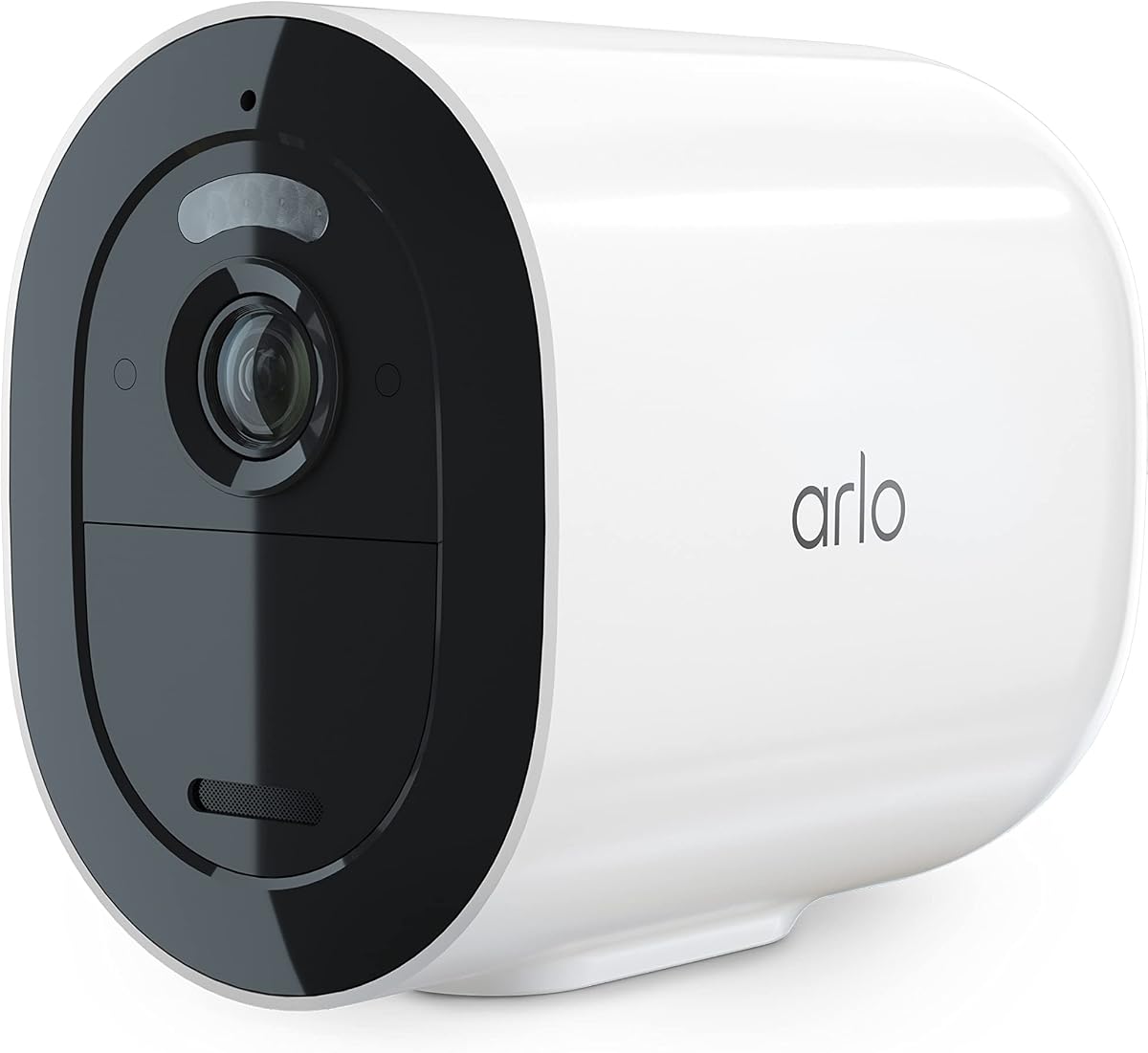
The Arlo Go 2 1080p LTE Security Camera is the most flexible network choice in the guide because it supports both 4G LTE and 2.4GHz Wi-Fi. It has a 3.5 rating and is intended for remote properties, construction sites, RVs, boats, and vacation homes. Unlike the solar-only selections, it uses a rechargeable battery and magnetic charging cable.
We may earn a commission when you buy through this link, at no additional cost to you.
The Arlo Secure app supports real-time notifications, live video streaming, remote siren activation, color night vision, two-way audio, and a spotlight. A 130-degree field of view provides broad situational awareness, while a built-in microSD slot permits local recording. GPS location tracking can help owners locate the camera through a smartphone map, which is useful for portable or temporary deployments.
A SIM card is not included, so users relying on LTE need to arrange compatible cellular service separately. The camera does not have an integrated solar panel, meaning the battery requires regular charging unless the owner adds a separate compatible power solution. Some advanced features, including longer-term shared video storage and personalized person or vehicle alerts, require an Arlo Secure plan.
The Arlo Go 2 is best for users who value live streaming, broad app features, and the ability to choose between cellular and Wi-Fi. It offers less independence from charging than solar-equipped models, but it is a practical choice for a job site that is visited regularly enough to recharge the battery or that can add alternative power.
Dual connectivity makes the camera adaptable to changing environments. Cellular is useful at a remote site without a network, while 2.4GHz Wi-Fi can provide a convenient alternative where a compatible network is available and reachable.
Real-time streaming and motion notifications suit supervisors who prefer immediate visual access. The built-in microSD slot adds a local recording option, helping preserve event footage without relying exclusively on a paid cloud service.
We may earn a commission when you buy through this link, at no additional cost to you.
A useful job site camera should provide dependable power, secure communication, useful imagery, and enough environmental protection to survive the installation location. The most important starting point is the site itself, because coverage, lighting, access, and available networks determine which features you actually need.
Most remote construction sites do not offer a dependable Wi-Fi connection, making LTE the more practical control link for an off-grid camera. Check coverage at the exact mounting point rather than assuming the signal found in a nearby building will carry through metal, trailers, terrain, or other obstructions. Some products include a SIM card, while the Arlo Go 2 requires the buyer to provide one, and others work with listed major U.S. carriers. Also compare the cellular service requirements, since transmission, motion photos, and on-demand video all depend on an active plan.
A camera without a continuous power connection must balance daytime solar input, battery capacity, and the energy required by wireless transmission and night illumination. Stated autonomy figures are useful for comparison, but actual performance varies with sunlight, orientation, temperature, motion frequency, and panel placement. A separate panel can be valuable when the camera and ideal solar position do not align. Models with swappable front-access batteries are easier to service in the field, while a camera that requires an initial cable charge should be fully charged before deployment.
Resolution is only one part of image usefulness. Job site owners should also compare lens angle, zoom method, sensor resolution, and night performance. The Metal 50X Solar Camera uses true optical magnification for distant detail, while several 2K models offer 4X or 6X digital zoom. Digital zoom enlarges a portion of the image and may not preserve the same detail as optical zoom. For gates, parking areas, and broad yards, a wide pan and tilt range may contribute more to useful coverage than a very narrow, high-resolution view.
Construction activity can continue around the clock, so daytime image quality must be considered alongside nighttime visibility. The selections variously offer infrared night vision, color night vision, IR-assisted color imaging, spotlights, or deterrence lights. Color night footage can help distinguish clothing, machinery, or vehicles, but it may depend on ambient illumination and manually enabled spotlights. Check the stated night range, the type of illumination, and the camera's field of view after dark. A bright spotlight does not replace a camera positioned to avoid reflections, backlighting, or obstruction.
PIR-based detection can identify movement involving people, vehicles, or animals and send a phone notification. Some systems include separate human detection, while the 50X model supports manual positioning rather than automatic motion tracking. The distinction matters when a subject crosses the camera's field quickly. Review whether detection sensitivity is adjustable, whether alerts can be snoozed, and whether the camera can capture scheduled motion photos. No-tracking designs may still be effective, but they generally require the owner to move the view manually.
The cameras in this guide do not all record in the same way. Several provide 2K or 6MP color viewing with app-based live access, while the Vosker models emphasize on-demand 15-second clips and motion-triggered photos. Local microSD support is useful for retaining footage without depending on cloud availability; the HOSAFE.COM single-camera model includes a 64GB card, whereas some other packages require one. Optional cloud storage, trial periods, and Arlo Secure features can add convenience, but they may require application or a paid plan. Decide whether continuous retrieval or efficient event-based checking best matches the monitoring routine.
A job site camera needs protection from rain, dust, snow, heat, and physical wear. IP65 and IP66 ratings appear among the selections, but a rating alone does not describe every construction challenge. Metal housings may offer advantages in heat and physical durability, while lighter cameras can be easier to reposition. A frameless solar panel can reduce snow and dust accumulation. Mount the camera and panel separately when possible, and position both to avoid impacts from vehicles, material delivery, equipment vibration, and construction debris.
The easiest camera to maintain is often the one whose battery, network, and viewing direction can be adjusted without specialist tools. Front-access batteries make replacements faster, while an included wall mount and magnetic charging cable simplify portable deployment. Remote PTZ control reduces the need for manual repositioning. At the same time, every camera still requires periodic checks of alignment, panel exposure, signal strength, storage capacity, and battery condition. A maintenance schedule is especially important during long projects because site layouts, vegetation, temporary structures, and sunlight angles can change.
Begin by walking the site during both daylight and darkness, then identify the entrance, equipment area, trailer, material stack, or perimeter location that needs the most attention. Confirm cellular coverage where the camera will actually be mounted, not merely where the phone receives a signal. Install the camera at a height that prevents easy tampering and gives a clear view of the relevant area. If the camera and panel are separate, place the panel where it receives the strongest sunlight while keeping cables arranged safely.
For a new solar camera, follow the initial charging instructions before relying on solar power. The SEHMUA model specifically requires a full initial charge using the power cable. Activate the included service where provided, confirm that the app recognizes the SIM, and test motion notifications from a different location. Adjust the PIR sensitivity, pan and tilt position, zoom, night illumination, and recording schedule. Then ask a coworker to walk through the monitored area to verify that the angle, distance, and detection settings produce useful results.
Routine care should include cleaning the camera lens and solar panel, checking the mounting hardware, and confirming that the camera remains online. Review battery condition during extended cloudy periods and use a swappable battery when the product supports one. Keep the viewing area clear of new scaffolding, trailers, or material stacks, and check the microSD card or cloud service before an event overwrites needed footage. For temporary installations, remove the camera and battery when the project ends and review any cellular renewal or storage terms that continue afterward.
Most cellular models in this guide do not require Wi-Fi because they transmit through a SIM-based LTE connection. This makes them more practical at sites without reliable internet access, although the installation must have cellular coverage and an active data plan. The Arlo Go 2 is the exception because it supports both 4G LTE and 2.4GHz Wi-Fi.
A solar camera stores energy in its rechargeable battery, so it can continue operating after sunlight becomes limited, subject to the battery capacity and how frequently it transmits or records. Long cloudy periods can reduce autonomy, particularly when cold weather, night illumination, and frequent motion alerts increase power use. Models with swappable batteries provide a useful recovery option when the battery can no longer maintain the desired monitoring interval.
Continuous or live monitoring lets the user watch a real-time feed through the app, while an on-demand camera stores a short event clip that the user requests later. The Vosker models emphasize requested 15-second clips and motion-triggered photos rather than continuous recording. This distinction matters because owners should choose the workflow that fits their data plan, battery expectations, and supervision habits.
Most of the solar and cellular selections are designed for installation without running power or network cables, although an electrician may still be appropriate for complex mounting, permanent wiring, or commercial security integration. The Arlo Go 2 uses a rechargeable battery and does not include a solar panel, so it requires regular charging unless a separate compatible power arrangement is added. Check the product instructions and local site safety requirements before installation.
Usage depends on image resolution, motion frequency, live streaming, and how often photos or clips are transmitted. Event-driven monitoring generally uses less data than a camera viewed continuously, while live viewing and repeated high-resolution clips can increase consumption. The included plans and trial periods differ among products, and several models require the user to activate or renew service before transmission.
For general monitoring of gates, trailers, equipment, and work areas, 2K can provide a useful balance of image detail and transmission efficiency. The better specification may depend on the distance to the subject: a camera with true optical zoom can offer more distant detail than a higher-resolution model relying on digital magnification. Night conditions, subject distance, field of view, and lighting should all influence the decision.
Yes. The TACTACAM, Vosker, Metal 50X, SEHMUA, 2-Pack 4G LTE, 365-Day 4G Solar, and HOSAFE.COM models use solar panels with rechargeable batteries for off-grid operation. The Arlo Go 2 also avoids cords by using a rechargeable battery, but its SIM card and charging method must be arranged separately. Initial placement and panel orientation remain important for dependable service.
Local microSD recording is useful when users want direct access to stored footage and want to reduce dependence on cloud availability. Cloud storage can simplify remote playback across devices, while some product features require an applied or paid plan. The HOSAFE.COM single-camera package includes a 64GB card, the two-pack supports a card but excludes it, and the Arlo Go 2 has a built-in card slot. Check capacity, retention, and service terms for the selected model.
The leading choice for detailed remote inspection is the Metal 50X Solar Camera, whose true optical zoom, 6MP imaging, dual-view display, metal housing, and separately mounted panel distinguish it from the rest. The 365-Day 4G Solar Camera offers a balanced budget-oriented package with 2K night imaging, wide PTZ control, two-way audio, local storage, and an extended initial data allowance. The TACTACAM Defend 360 is the premium recommendation for buyers who value 360-degree remote positioning, 4K photos, and fully independent cellular and solar operation.
For most installations, prioritize LTE coverage, usable night visibility, power that matches the site's sunlight and weather, and a recording method that suits the monitoring routine. A higher-resolution camera will not compensate for a poor viewing angle, and elaborate controls are less useful if the signal is weak. Consider how many separate areas need coverage, whether equipment will be moved during the project, and whether technicians can easily reach the camera for battery and lens maintenance.
Before purchasing, confirm the current configuration, carrier compatibility, storage inclusions, service requirements, weather rating, and accessory package on the retail listing. Product bundles, included SIM arrangements, app features, and cellular terms can change, and current availability may also vary. Comparing those final details against the priorities in this guide will help identify the most dependable fit for the job site.