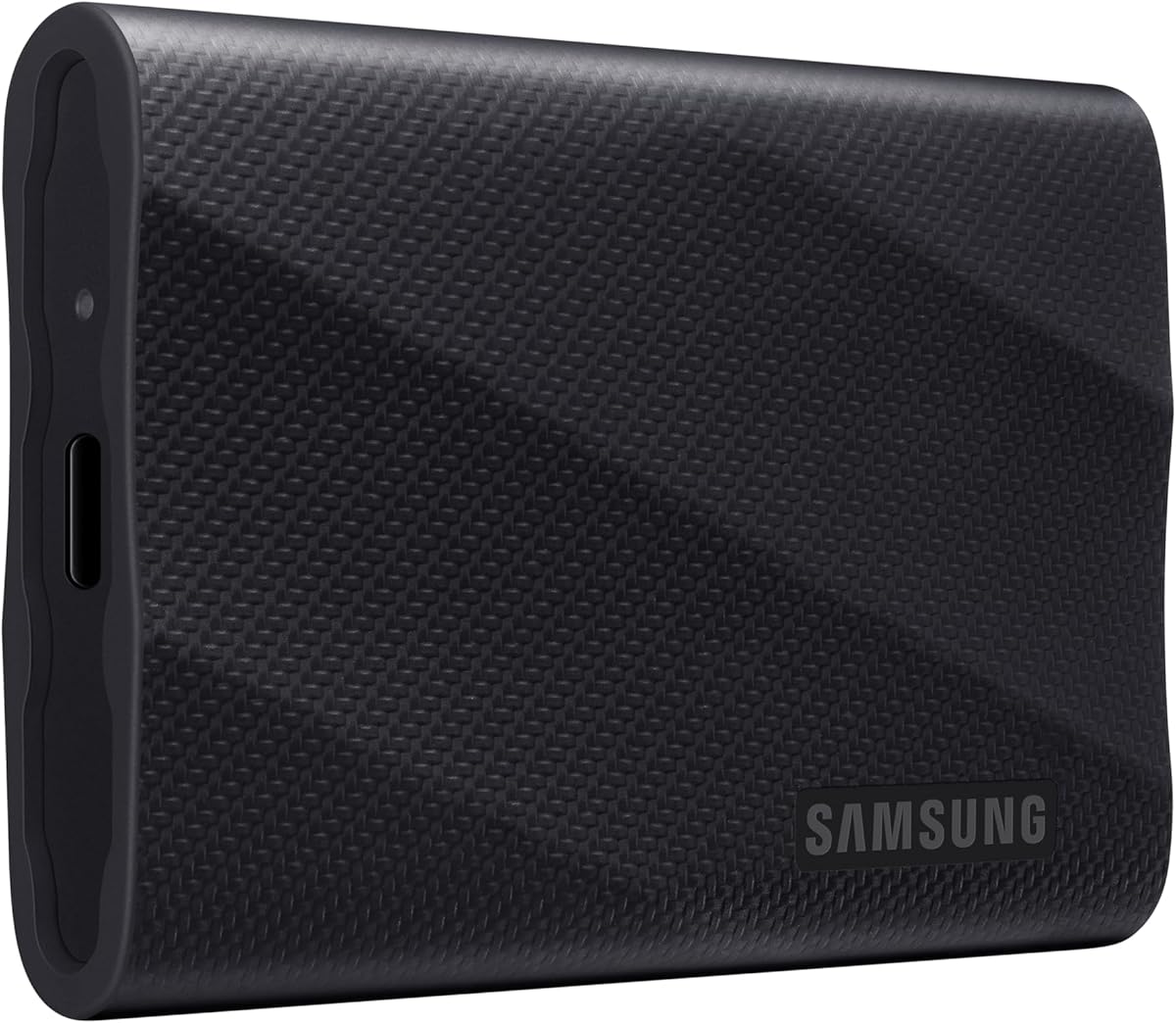
Samsung T9 Portable SSD 1TB
4.6Editor score
Up to 2,000MB/s transfer
Dynamic thermal management
Magician drive management
Military Grade Rugged External SSD guide comparing 10 portable drives for speed, durability, capacity, encryption, compatibility, and field use, with expert
Military grade rugged external SSDs are built for people who cannot afford to leave important files behind in rain, dust, vibration, or rough working conditions. The best examples combine solid-state speed with drop resistance, water and dust protection, hardware encryption, and enough capacity for demanding media workflows.
This guide compares ten portable SSDs based on their published specifications, including transfer speed, capacity, resistance ratings, drop protection, encryption, thermal management, device compatibility, and physical design. It covers both established and newer models so buyers can assess the trade-offs without relying on unsupported testing claims.
Each review explains who the drive is best suited for, why its features matter, and where it may fall short. Ratings and product information reflect the supplied listings, while prices and availability can change frequently, so readers should confirm current details before making a purchase.
4.6Editor score

4.6Editor score

5.0Editor score
The table below places the ten shortlisted drives side by side, emphasizing the specifications that most influence performance, portability, physical resilience, and suitability for demanding creative or professional workflows.


The SanDisk Extreme 2TB is a well-rounded portable SSD for buyers who need more than basic file storage and more resilience than an ordinary enclosure. It carries a 4.6 rating, with published performance reaching up to 1,050MB/s read and 1,000MB/s write. Its 2TB capacity is substantial enough for a working media library, project files, backups, and an operating system without forcing constant transfers to a computer.
We may earn a commission when you buy through this link, at no additional cost to you.
Physical protection is one of the model's defining strengths. The listing specifies an IP65 rating for resistance to water and dust, along with protection for drops up to three meters. A small carabiner loop also makes it practical to attach the drive to a belt loop, backpack, or field bag. These features do not prove formal military certification, but they create a practical level of protection for travel, fieldwork, and demanding everyday use.
Security and usability are handled thoughtfully. Password protection is based on 256-bit AES hardware encryption, which is more appropriate for sensitive client material than a simple software lock. The SanDisk Memory Zone app is also included for file management and automatically freeing space. The main compromise is speed: newer models in this guide claim transfers up to 2,000MB/s, and the SanDisk Extreme PRO goes considerably faster.
This is a strong recommendation for mobile professionals, students, photographers, and home users who want a generous capacity, a proven 10Gbps-class interface, and meaningful environmental protection. It is especially useful when fast bursts matter more than maximum throughput. Buyers wanting the newest speed class should compare the updated Extreme models, while those prioritizing mature physical design and balanced specifications will find this drive particularly straightforward.
The IP65 rating and three-meter drop specification make the drive better suited to bags, workbenches, and outdoor assignments than a standard external SSD. Secure it with the integrated loop and avoid submerging it; resistance ratings are not the same as complete waterproofing.
Two terabytes gives room for high-resolution media, active project files, and several local backups. Its compact enclosure keeps that capacity practical for daily transport, although large libraries may still benefit from a desktop-only external drive.
We may earn a commission when you buy through this link, at no additional cost to you.
This updated SanDisk Extreme 1TB combines a high claimed transfer rate with the ruggedness features expected from the Extreme line. The 4.6-rated model is advertised at up to 2,000MB/s and is positioned for workflows involving high-resolution photos, edited clips, and files associated with modern AI content. One terabyte is a sensible capacity for an active working set rather than a complete archival library.
We may earn a commission when you buy through this link, at no additional cost to you.
Its IP65 rating protects against dust and water, while the stated three-meter drop protection adds confidence for mobile use. The enclosure is designed to fit in a pocket or small bag, so the protection does not come at the expense of portability. Password protection uses 256-bit AES encryption, allowing the drive to hold sensitive working files without relying solely on operating-system permissions.
The principal limitation is capacity. High-resolution footage, caches, and AI-related project assets can consume space quickly, and a user who regularly moves entire shoots may prefer the 2TB or 4TB versions. In addition, the headline transfer rate depends on the host device, cable, interface generation, file sizes, and workload; systems without the required USB connection may deliver substantially less.
This model is a compelling choice for creators who want newer speed in a durable, pocketable drive. It works particularly well as a scratch disk for recent footage, a field transfer drive, or a portable library of active assets. The updated Extreme 2TB or 4TB versions make more sense when users need to retain larger collections while preserving the same speed and protection level.
The stated 2,000MB/s rate is especially relevant when moving high-resolution images and video between compatible computers. Real-world results vary, so the included connection method and host capabilities should be checked before planning a time-critical workflow around the maximum figure.
Dust resistance, water resistance, and three-meter drop protection make the enclosure appropriate for travel and fieldwork. Its small size also makes it convenient to keep available rather than leaving a larger drive at home.
We may earn a commission when you buy through this link, at no additional cost to you.
The SanDisk Extreme 4TB is the high-capacity member of the updated portable line, aimed at users who need to carry a substantial working archive without moving to a desktop enclosure. It retains a 4.6 rating and is advertised at up to 2,000MB/s, with 256-bit AES encryption for password-protected access.
We may earn a commission when you buy through this link, at no additional cost to you.
Four terabytes is the standout specification. It can hold large quantities of 4K or high-resolution source material, photo libraries, project files, and multiple working sets. The drive retains an IP65 rating and protection for drops up to three meters, so the added capacity does not come with a visibly less rugged design. Its pocket-sized form remains a major advantage over conventional external hard drives.
The tradeoff is obvious: this is more capacity than many buyers need, and the larger configuration will generally demand a larger outlay than the 1TB version. Users should also remember that advertised speed applies to supported interfaces and favorable file operations. Sustained behavior can vary with thermal conditions, drive fill level, workload, and the connected computer.
For traveling filmmakers, archivists of small businesses, and media professionals who regularly operate away from a desk, the 4TB model is an attractive balance of capacity, speed, and protection. It is less compelling for email, documents, and a lightweight backup, where a smaller SanDisk Extreme would leave more room for unrelated data and offer a simpler purchasing decision.
The four-terabyte capacity reduces the need to delete completed footage or copy it back to a workstation immediately. It is particularly useful when consolidating cards after a shoot and maintaining a local working copy of large media sets.
Combining AES encryption with physical protection addresses two different risks: accidental exposure and damage during transport. Keeping another backup is still advisable, since ruggedness and encryption do not make any drive immune to loss or failure.
We may earn a commission when you buy through this link, at no additional cost to you.
The updated SanDisk Extreme 2TB occupies the useful middle ground between the smaller 1TB model and the 4TB version. With a 4.6 rating, up to 2,000MB/s claimed transfer performance, and an IP65 protection rating, it is aimed at users who need both mobility and a generous working capacity.
We may earn a commission when you buy through this link, at no additional cost to you.
The two-terabyte configuration can comfortably hold a substantial edit timeline, recent photo assignments, game files, or a second working copy of important documents. The drive remains small enough for pockets and small bags, while the stated three-meter drop protection and water and dust resistance suit travel, construction sites, outdoor recording, and shared workspaces.
Compared with the original 1,050MB/s SanDisk Extreme in this list, this model offers a notable speed increase. Compared with the Extreme PRO, however, it gives up a large portion of the maximum transfer rate and advertised sustained write performance. That makes it more appropriate for general creative work and mixed file transfer than for continuous high-volume production with the shortest possible workflow times.
This is a strong all-around recommendation for buyers who want one portable drive for both active work and a meaningful local library. The capacity is easier to justify than 4TB for many people, while the faster rating makes it more future-facing than the earlier Extreme generation. Ensure that the host device and connection support the interface needed to take advantage of the additional speed.
Two terabytes is large enough for many working libraries without making the drive unnecessarily heavy or expensive. It is a practical middle point for users who may otherwise need to shuttle between a one-terabyte drive and a much larger archive.
The combination of high transfer speed, pocket-sized construction, and environmental protection works well for photographers and video professionals. The drive also remains useful for general backups, course materials, and a portable game library.
We may earn a commission when you buy through this link, at no additional cost to you.
The Samsung T7 Shield 1TB combines a strong 4.7 rating with one of the most clearly described durability packages in this roundup. It is rated for water and dust resistance under IP65, withstands falls up to 9.8 feet, and uses a rugged exterior intended to handle demanding travel and outdoor conditions.
We may earn a commission when you buy through this link, at no additional cost to you.
Performance reaches up to 1,050MB/s read and 1,000MB/s write through USB 3.2 Gen 2. That remains fast enough for most external storage tasks, including large photo transfers, edited video, and a portable application or game library. Compatibility is a major strength: the listing identifies PCs, Macs, Android devices, and gaming consoles among supported systems, with an included SSD cable recommended for compatible iPhone workflows.
Samsung Magician adds drive-health monitoring, firmware updates, protection options, and LED customization. For a buyer who values management software and a mature ecosystem, this is a more complete package than a bare drive. The trade-off is transfer speed, because the T7 Shield does not match the 2,000MB/s class or the 4,000MB/s maximum claimed by the SanDisk Extreme PRO.
Choose the T7 Shield when broad compatibility, recognizable rugged construction, and Samsung's software support matter more than reaching the newest headline speed. It is particularly attractive for mobile creators, Android users, console owners, and travelers who want a drive that can move between several types of equipment without becoming a specialized storage tool.
The stated resistance to water, dust, and drops up to 9.8 feet distinguishes the Shield from a conventional slim SSD. It still should be connected with its cover and cable properly, and the rating should not be interpreted as permission to submerge it.
Support for computers, mobile devices, and gaming consoles makes the T7 Shield easy to integrate into a mixed-device workflow. The one-terabyte capacity is adequate for active files and libraries, but frequent 4K editors may need a larger Samsung option.
We may earn a commission when you buy through this link, at no additional cost to you.
The Samsung T9 2TB is built primarily for creators who need fast sustained transfers and sustained performance during longer editing and file-processing jobs. Its 4.6 rating and advertised read and write performance of up to 2,000MB/s place it in the modern high-speed portable SSD class. Two terabytes is enough for a substantial working library without reaching the bulkier 4TB options.
We may earn a commission when you buy through this link, at no additional cost to you.
Samsung's Dynamic Thermal Guard is a meaningful feature for sustained workloads. Rather than focusing only on a brief maximum speed, the design is intended to control heat and maintain performance during extended processes. Samsung Magician provides firmware updates, encryption options, and drive-health monitoring, adding a maintenance layer that can be valuable for professional libraries.
The important limitation is physical ruggedness. Unlike the SanDisk Extreme models and T7 Shield, the supplied specifications for the T9 do not state an IP water and dust rating or a specific drop-resistance distance. It is described as strong, solid, and stable, but those words should not be confused with a quantified environmental rating. Buyers working in harsh conditions should favor a model with clearly published protection standards.
The T9 2TB is a strong choice for video editors, photographers, and heavy users who care more about throughput and sustained performance than formal field protection. It can also serve as a fast general-purpose drive around the home or office. For genuinely rugged travel use, keep it in a protective sleeve or choose one of the IP65-rated alternatives in this guide.
The Dynamic Thermal Guard is designed to manage heat during lengthy transfers and editing-related storage tasks. This makes the T9 more relevant to sustained workflows than buyers focused only on short burst benchmarks.
The 2,000MB/s interface and two-terabyte capacity make the T9 useful for moving source clips, opening recent projects, and maintaining a local media cache. Software support and broad device compatibility further strengthen its creator-focused proposition.
We may earn a commission when you buy through this link, at no additional cost to you.
The Samsung T9 1TB delivers a compelling mix of high speed, portability, and thermal management. It shares the T9's up-to-2,000MB/s performance class and Dynamic Thermal Guard, but its smaller capacity makes it more appropriate for active projects, game libraries, and focused backups than for consolidating years of media.
We may earn a commission when you buy through this link, at no additional cost to you.
The drive is positioned for sustained read and write activity, with heat control intended to preserve performance through long transfers. It supports desktop, camera, and gaming-console use according to the listing, while Samsung Magician adds firmware, encryption, and drive-health management. That combination makes it a strong general-purpose portable drive for creators who already have other storage for long-term archives.
Unlike the rugged alternatives, no IP or numeric drop rating appears in the supplied product data. The enclosure may still be durable, but buyers who transport drives into rain, dust, or physically demanding environments should not assume formal protection. A padded carrying case can reduce accidental impact, although it cannot replace the quantified resilience of an IP65-rated model.
This is a good choice for users who want the speed of a modern Gen 2×2 drive without carrying excess storage. It is especially attractive for laptop-based editing, console gaming, camera offloading, and fast working backups. Buyers who routinely work in harsh environments should look to the SanDisk Extreme line or Samsung T7 Shield instead.
The advertised transfer rate comfortably supports demanding file movement while remaining more compact than a multi-terabyte option. It works well for recent shoots, edited project files, and applications that benefit from fast local storage.
The Dynamic Thermal Guard helps the drive manage heat during sustained workloads. Users undertaking long transfers should still leave ventilation around the enclosure and avoid covering it with fabric or placing it inside a tightly packed pocket while active.
We may earn a commission when you buy through this link, at no additional cost to you.
The Lexar ES5 2TB stands apart through its magnetic design, which is intended for direct attachment to compatible smartphones and for use with a supplied metal ring accessory. It carries a 4.5 rating and claims up to 2,000MB/s for both reads and writes, positioning it as a high-speed drive for mobile media production.
We may earn a commission when you buy through this link, at no additional cost to you.
The drive is rated IP65 for dust and water resistance, with drop resistance stated up to three meters. That gives it a credible rugged specification alongside the Sandisk Extreme family. Its thin liquid-silicone body should also be more comfortable to handle during mobile transfers, while the included cable organizer doubles as a lanyard to reduce the chance of leaving the drive behind.
Lexar highlights support for Apple ProRes at 4K120FPS and Samsung Pro Video at 8K30FPS. The included app provides automatic media backup and mobile storage expansion, which is a meaningful advantage for creators who regularly move footage from a phone. Performance will be lower on Mac and other systems that do not support USB 3.2 Gen 2×2, so the host interface remains a critical consideration.
The ES5 is best for mobile creators who want a drive that attaches directly to a compatible phone, combines physical protection with high speed, and can serve as an automated backup target. It is less suitable for buyers without a MagSafe-compatible or metal-ring-equipped device. Its 4.5 rating is also slightly lower than the leading models, although the product's distinct mobile features compensate for that in the right workflow.
The MagSafe-compatible format reduces cable friction when the phone supports it, while the included metal ring provides an attachment surface for other devices. Compatibility should be confirmed before purchase, particularly for users who need a particular recording application or workflow.
Published support for demanding formats makes the ES5 relevant to high-resolution mobile video. The Lexar app adds automatic backup and storage expansion, giving the drive a useful role beyond simple file transfer.
We may earn a commission when you buy through this link, at no additional cost to you.
This earlier SanDisk Extreme 2TB remains a capable rugged portable SSD for users who already benefit from its mature design and 10Gbps-class performance. It carries a 4.6 rating and advertises up to 1,050MB/s read and 1,000MB/s write, which remains fast for most file-transfer, backup, and media-storage tasks.
We may earn a commission when you buy through this link, at no additional cost to you.
The physical and security features are the main reasons to consider it over a conventional external drive. IP65 water and dust resistance, three-meter drop protection, an integrated carabiner loop, and 256-bit AES hardware encryption create a package suited to mobile and sensitive work. SanDisk Memory Zone is included for file management and automatic space recovery.
Its disadvantage is clear when compared with the updated Extreme versions. Those newer drives claim up to 2,000MB/s, while the SanDisk Extreme PRO pushes much further. The older model's speed may feel modest when moving very large batches of high-resolution files or maintaining an active edit timeline on a modern workstation.
For buyers who do not need the newest interface generation, this model can still offer a strong combination of capacity and physical protection. It may be appealing as a secondary field drive, a separate encrypted backup, or a general-purpose portable drive where sustained maximum speed is not the primary concern. Newer Extreme models are the better choice when a new purchase and future-facing performance are priorities.
A 1,050MB/s read rate is comfortably above many external hard drives and sufficient for everyday active workflows. It makes more sense for file storage and backup than for users who routinely move multi-hundred-gigabyte projects and need every available second.
The old and updated Extreme models share important physical protections, including IP65 resistance and three-meter drop protection. Buyers comparing listings should check the exact model because firmware, interface generation, and included accessories may differ.
We may earn a commission when you buy through this link, at no additional cost to you.
The SanDisk Extreme PRO 2TB is the performance-focused choice in this guide. It has a perfect 5.0 supplied rating and claims up to 4,000MB/s transfer speed, while 2TB models are advertised to sustain an average of 3,100MB/s writes during long, high-volume transfers. Those figures target professionals moving serious media and data rather than ordinary document storage.
We may earn a commission when you buy through this link, at no additional cost to you.
The product is also designed for demanding AI editing, rendering, and post-production. It retains an IP65 rating for water and dust resistance and protection for drops up to three meters, so buyers do not have to give up physical resilience to obtain the leading performance class. Password protection based on 256-bit AES hardware encryption helps protect sensitive project material.
The most significant limitation is the need for capable host hardware and a suitable connection. A computer that cannot sustain the necessary interface bandwidth will not deliver the advertised 4,000MB/s, and the premium tier may be excessive for backups, school files, or a modest game library. Buyers should also consider cooling, file size, workload, and available free capacity when interpreting maximum performance.
This is the best recommendation for high-volume professionals whose work justifies premium portable storage. It is particularly relevant to 12K and high-resolution video workflows, large media libraries, and intensive post-production. For most users, the updated SanDisk Extreme or Samsung T9 offers a more balanced path, but the Extreme PRO stands apart when transfer time and sustained writing are the central priorities.
The claimed 4,000MB/s rate can reduce waiting time when moving very large video sets, project folders, or machine-learning assets. The benefit is most visible with high-performance hosts and suitable storage workflows, rather than many small files.
The stated average sustained write performance of 3,100MB/s on 2TB and 4TB models is designed to support long, high-volume transfers. This specification makes the drive more relevant to continuous production than a model marketed mainly around brief maximum-speed results.
We may earn a commission when you buy through this link, at no additional cost to you.
Choosing a rugged external SSD means balancing physical protection, sustained performance, capacity, security, and the devices you need to support. The phrase military grade is not a universal certification, so standardized IP and drop specifications deserve more attention than broad marketing language.
A rugged-looking enclosure is not necessarily protected against water, dust, impact, vibration, or extreme temperature. Buyers should look for a published IP rating, a stated drop distance, and a clear description of the enclosure's protective qualities. The SanDisk Extreme family and Samsung T7 Shield list IP65 protection, while the Lexar ES5 also specifies IP65 and three-meter drop resistance. The Samsung T9 listings emphasize strong, stable construction and thermal management but do not provide an IP rating in the supplied information. No drive should be assumed to satisfy a formal military procurement standard unless the manufacturer or certifying organization expressly says so.
Maximum transfer figures are useful for comparison, but the drive cannot exceed the limitations of the host computer, port, cable, operating system, and file workload. USB 3.2 Gen 2 drives in this guide claim around 1,050MB/s, while USB 3.2 Gen 2×2 models can reach up to 2,000MB/s. The SanDisk Extreme PRO goes further with a claim of up to 4,000MB/s. A host without the necessary port or controller will produce lower results, and many small files will not achieve headline rates. For a new workstation, checking the exact port standard and cable requirements is essential before paying for a faster model.
Capacity should reflect the files that must travel with you, not merely the archive you hope to store. One terabyte is enough for a focused working set, games, documents, and recent footage, while two terabytes offers more breathing room for active edits and local backups. Four terabytes is compelling for mobile archivists, traveling filmmakers, and creators who want to consolidate multiple cards before returning to a studio. Remember that capacity affects cost, and no single drive should be the only copy of irreplaceable data. A rugged external SSD can protect a drive from impact, but it cannot prevent theft, accidental deletion, or catastrophic loss.
Peak read speed is only one part of a large transfer. Sustained write behavior matters when copying long video files, moving backups, caching edit data, or running production workloads. The Samsung T9 specifically highlights sustained performance and a Dynamic Thermal Guard. The new SanDisk Extreme models advertise up to 2,000MB/s, while the Extreme PRO lists average sustained writes of 3,100MB/s for the 2TB and 4TB configurations. Reviewers and buyers should distinguish short burst results from longer transfers, and should allow adequate ventilation around the enclosure during intensive tasks.
Hardware encryption is valuable when a portable drive may be lost or left in a shared environment. The SanDisk Extreme models and new Extreme PRO use 256-bit AES encryption with password protection, while Samsung Magician can add encryption options to supported T9 drives. Lexar focuses its mobile backup features on the app rather than describing the same hardware encryption package. Buyers handling client records, financial information, personal photographs, or proprietary media should verify the exact security features, set a strong password, and learn how to recover access before the drive is needed.
The best portable SSD is one that works reliably with the devices in your workflow. Samsung lists broad compatibility for the T7 Shield and T9, including PCs, Macs, Android devices, cameras, and gaming consoles, with an included cable recommended for supported iPhone use. The Lexar ES5 is designed for magnetic attachment to compatible phones and supports modern high-resolution capture formats. Interface generation matters as well: Mac and other systems without USB 3.2 Gen 2×2 may deliver lower Lexar performance. Check the connector type, supported file system, device limitations, and any requirement for an included or separately sold cable.
Small dimensions are valuable because a drive people are willing to carry is more likely to remain available when needed. The SanDisk Extreme 2TB includes a carabiner loop for attachment to a bag, and the Lexar ES5 includes an organizer that doubles as a lanyard. The Samsung models are similarly portable, although the T7 Shield emphasizes its rugged enclosure. Consider whether your workflow involves attaching the drive directly to a phone, keeping it in a jacket pocket, or storing it in a padded case. Accessories can prevent loss, but they should complement—not replace—a sensible backup plan.
A drive that is used for critical work should offer a way to check its condition and receive firmware improvements. Samsung Magician supports drive-health monitoring, firmware updates, protection features, and LED configuration on compatible Samsung products. SanDisk Memory Zone provides file-management and automatic space features for the relevant Extreme models. Management software does not guarantee that a drive will never fail, but it can make it easier to identify warnings, keep firmware current, and maintain sensible storage practices. Install the appropriate utility before a deployment and confirm that the computer has the permissions needed to run it.
Before the first transfer, check the drive for physical damage, connect it with the appropriate USB-C cable, and confirm that the computer recognizes its format. For a new drive, create a secure password if the model supports hardware encryption, install the relevant management application, and update the firmware when necessary. Save the recovery information for an encrypted drive in a separate, secure location. Use the drive as a working file store while retaining separate backups of important material.
When transferring large workloads, connect the drive directly to the computer rather than through an unpowered hub, and confirm that the host port supports the model's interface generation. Avoid changing the enclosure or cable during an active write. Allow airflow around the drive, particularly during long transfers, and do not place it under heavy objects or inside a sealed bag while it is running. Eject it through the operating system before disconnecting it to reduce the risk of filesystem errors.
Rugged ratings are not a substitute for sensible handling. Keep ports clean and dry, use the protective cover when available, and avoid exposing the drive to chemicals, extreme heat, or direct submersion. Inspect the cable and enclosure for wear, and retire the drive if the operating system reports repeated I/O errors. For especially valuable files, maintain at least two copies in different locations and use a synchronization service or secondary drive as an additional safeguard.
Not necessarily, but buyers should distinguish marketing language from measurable protection. An IP65 rating, a stated drop distance, and a clear operating-temperature range are more useful than a claim of being military grade. None of the supplied listings establishes universal military certification. A field user should confirm the exact environmental limits and whether the manufacturer, reseller, or another organization provides formal certification.
IP65 indicates protection against dust ingress and water jets under the conditions defined by the standard. It does not mean the drive can be submerged, washed in a sink, or operated in all weather without precautions. The enclosure should also be properly closed, and ports should be free of debris. Drives in this guide with IP65 specifications include the SanDisk Extreme family, Samsung T7 Shield, and Lexar ES5.
Usually not if the primary need is documents, general backups, or occasional photo transfers. A faster interface only helps when the host computer, cable, controller, and workload can all support it. The SanDisk Extreme PRO makes the most sense for high-volume media, AI workflows, 12K video, and sustained production transfers. For many buyers, the regular Extreme or Samsung T9 provides a better balance.
No. Ruggedness reduces the chance of damage from drops, dust, and water exposure, while encryption helps protect confidentiality, but neither feature prevents theft, logical failure, accidental deletion, or loss of the device. Important files should have at least one additional copy stored somewhere separate. A local working drive can complement cloud sync or a second physical backup rather than serving as the only copy.
The answer depends on bitrate, frame rate, codec, and how much footage you need to carry. A one-terabyte drive may be adequate for a focused editing session, while two or four terabytes is more practical for multiple cards, proxy files, project assets, and backups. Buyers should estimate their own file sizes rather than relying on a generic rule, and keep an additional copy of critical footage.
No. The cable must support the interface and bandwidth used by the drive and host. A Gen 2×2 SSD can be limited by a host that lacks Gen 2×2 support, and some cables or hubs may reduce usable throughput. Check the computer's port specification, the drive's requirements, and the included cable. Sustained write performance and the type of files being moved also influence the result.
They can add a useful layer of protection, particularly for a portable drive that may be lost. The listed SanDisk models use 256-bit AES hardware encryption and password protection, while Samsung Magician provides encryption options for supported drives. Effective use requires a strong password, updated management software, and a tested recovery process. Encryption does not replace careful handling or redundant backups.
The two products have different published emphases. The T7 Shield has an explicit IP65 rating and falls up to 9.8 feet, while the supplied T9 information emphasizes strong construction, sustained speed, and thermal management without stating an IP or numeric drop rating. Buyers needing documented environmental protection should choose the T7 Shield or a clearly rugged Sandisk or Lexar model rather than assuming similar ratings.
The strongest overall balance in this guide is the SanDisk Extreme 2TB, with useful capacity, 1,050MB/s-class performance, IP65 protection, three-meter drop resistance, and hardware AES encryption. The updated SanDisk Extreme 1TB and 2TB models are better choices for buyers who want the newer 2,000MB/s class, while the 4TB version prioritizes a large portable media library. The Samsung T7 Shield stands out for quantified drop resistance, broad compatibility, and its strong 4.7 rating.
The Samsung T9 models are best understood as fast creator drives rather than the most clearly documented field-hardened options in this list. The 1TB version offers a compact high-speed configuration, and the 2TB model provides more room for sustained work. The Lexar ES5 is differentiated by magnetic phone attachment and mobile backup features, while the SanDisk Extreme PRO is the premium selection for maximum throughput, sustained writes, and heavy professional workloads.
Before ordering, check the current listing, host interface, capacity needs, environmental rating, encryption support, and compatibility with your devices. Product prices and configurations can change, so the final choice should reflect both your workflow and the specifications available at the time of purchase. Regardless of model, keep a separate backup of anything that cannot be replaced.