
TOWOT Liquid Solder Flux
4.2Editor score
Advanced no-clean RMA formula
Precision dropper for controlled application
Designed for electronics and PCB repair
Our expert guide compares liquid flux for soldering options for electronics repair, jewelry work, stained glass, HVAC, and hard-to-solder metals safely.
Liquid flux for soldering helps heat reach and join metal surfaces by removing oxides that prevent solder from flowing smoothly. A useful formula should wet the work area, produce clean joints, suit the metals and process involved, and leave residue that is appropriate for the finished project. Bottle size, applicator design, and chemical type also affect convenience.
This guide compares ten liquid fluxes based on their stated composition, intended uses, packaging, and customer ratings. It covers no-clean RMA rosin fluxes for electronics, zinc and acid fluxes for demanding metals, and specialty products for jewelry and stained glass. The comparison emphasizes application fit rather than treating every flux as an interchangeable general-purpose choice.
The top selections represent three practical buying priorities: an affordable electronics option, a feature-rich repair bundle, and a premium bench flux. Each review explains the product's strongest benefits, limitations, and ideal user. Product ratings and availability can change, and current prices should be checked before making a purchase.
4.2Editor score

4.8Editor score

4.7Editor score
The table below compares the ten liquid fluxes by chemistry, intended application, packaging, and practical trade-offs. Rosin fluxes are optimized for electronics, while zinc and acid formulas address jewelry, stained glass, stainless steel, and other difficult-to-solder metals.




This RMA liquid rosin flux earns the leading position because it combines broad material compatibility with a practical 30 ml dropper. Its 4.6 customer rating reflects a generally favorable reception, while its stated ability to remove oxides from tin-lead, lead-free, gold, silver, and copper alloys makes it unusually versatile for a bench-top electronics flux.
We may earn a commission when you buy through this link, at no additional cost to you.
The mildly activated rosin chemistry is designed to improve wetting and solder flow without the aggressive cleaning associated with some acid or chloride fluxes. Its neutral-pH, non-corrosive formulation is particularly attractive for circuit boards, while the lead-free, zinc-chloride-free, and ammonium-chloride-free composition suits users seeking a more conventional electronics workflow.
The main drawback is capacity. A 30 ml dropper is ideal for hobby electronics, repair benches, and occasional projects, but it may empty quickly in a busy repair shop or production setting. The product also needs to be matched to the user's process: a rosin formula optimized for electronics is not automatically the right choice for large jewelry or stained glass assemblies.
This is an excellent general pick for PCB repair, component installation, rework, and mixed leaded or lead-free electronics work. Choose it when one bottle must handle several common solder alloys and the low-residue, non-corrosive properties matter more than having a large reservoir at the bench.
The stated compatibility with tin-lead, lead-free, gold, silver, and copper alloys reduces the need to keep several specialized electronics fluxes on hand. That makes the bottle a practical choice for mixed repair work where different conductors and component leads may appear on the same bench.
A dropper helps place flux only where it is needed, which is valuable around small pads, leads, and crowded circuit boards. Less material is wasted during occasional jobs, and the user can begin with a small quantity before heating the joint.
We may earn a commission when you buy through this link, at no additional cost to you.
Aquiflux is a specialized liquid flux for jewelers, metalsmiths, and repair technicians who regularly work with gold, silver, and platinum. Its 4.6 rating and low-residue positioning make it a focused choice for fine assemblies where joint quality and visibility are more important than a broad range of electronics compatibility.
We may earn a commission when you buy through this link, at no additional cost to you.
The clear liquid offers a practical advantage during intricate work. A craftsperson can see the seam, setting, or component as the flux flows into the area, helping judge coverage without repeatedly stopping to inspect an opaque coating. It is also formulated to support smooth solder flow for clean and reliable jewelry joints.
This product is less versatile than the general-purpose options in the guide. Its feature set centers on precious-metal jewelry rather than PCB repair, stainless steel fabrication, or lead-free electronics. The 8 fl oz bottle is also less precise for tiny joints than a dropper, so users may need a suitable brush or applicator for controlled placement.
For jewelry makers, repair shops, and serious hobbyists working consistently with precious metals, Aquiflux is a strong fit. It is especially compelling when joint visibility and low residue are priorities. Buyers whose projects span electronics, industrial steel, and glass should consider a more specialized general flux instead.
The transparent formula allows the jeweler to observe the joint while flux is present. That visibility is particularly helpful when filling small seams, soldering settings, or working around detailed components on finished pieces.
Gold, silver, and platinum compatibility is the defining advantage. It gives jewelry-focused users a formula chosen for their materials rather than forcing a general electronics rosin flux or an aggressive industrial acid flux onto delicate work.
We may earn a commission when you buy through this link, at no additional cost to you.
Novacan Old Masters Flux is a strong premium selection for users who want a general-purpose zinc flux with an easy cleanup story. It has a 4.7 rating, the highest among the ten products, and its stated all-purpose positioning makes it less narrowly specialized than the jewelry, electronics, and stained glass options.
We may earn a commission when you buy through this link, at no additional cost to you.
The defining practical advantage is the water-soluble residue. After completing a job, the user can clean the work with water instead of relying on a more demanding solvent-cleaning process. The 8 oz bottle also offers a practical capacity for repeated bench work, repairs, and fabrication tasks where a small dropper would run out quickly.
The description provides less detail than some competing listings. It does not enumerate specific base metals, soldering temperatures, or residue characteristics, so users with a highly specialized application should confirm suitability before committing. Its zinc-based chemistry is also different from the no-clean RMA rosin behavior promised by the electronics products.
Novacan is a compelling choice for a serious bench that handles varied soldering jobs and values simple cleanup. It is particularly attractive to metalworkers who prefer a larger container and water-based cleaning over a precision electronics dropper. Those needing a fully specified PCB-grade formula should look to an RMA product instead.
A flux that cleans up with water can reduce the need for specialized cleaning agents after suitable projects. The benefit is most valuable at a shared or frequently used bench where residue removal should be straightforward.
The 8 oz container is more substantial than the 30 ml droppers in this guide. It better supports a steady workflow involving multiple assemblies, frequent soldering, or a technician who prefers not to replace a small bottle frequently.
We may earn a commission when you buy through this link, at no additional cost to you.
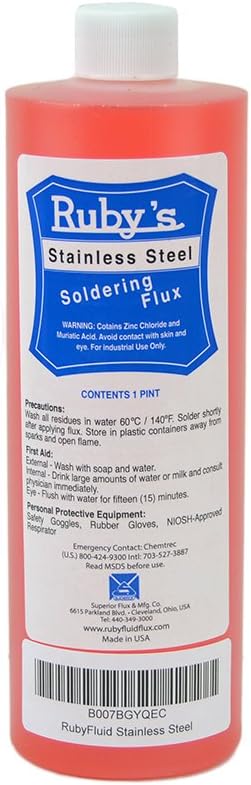
Rubyfluid is designed for the situations where standard electronics rosin flux may struggle: stainless steel, nickel, brass, and other hard-to-solder surfaces. Its 4.6 rating supports its reputation as a practical industrial option, and the stated uses include fabrication, repair, HVAC, and metalworking shops.
We may earn a commission when you buy through this link, at no additional cost to you.
The acid-based formula is the key differentiator. It is intended to act quickly, remove barriers to wetting, and help solder flow uniformly across demanding surfaces. A one-pint resealable bottle also feels appropriate for professional use because it can remain on a shop floor without the limited capacity of a precision dropper.
That aggressiveness creates the main caution. Acid flux should not be treated as interchangeable with a no-clean electronics flux, particularly around sensitive circuit boards or products that must remain electrically clean. Users should follow the maker's directions and account for post-solder residue rather than assuming that no cleaning is required.
Choose Rubyfluid when soldering stainless steel, nickel, brass, or another difficult alloy is the central task and professional-level cleaning discipline is possible. It is less attractive for a basic electronics kit, but for hard-to-solder fabrication work, its targeted chemistry and substantial container give it a clear role.
The acid formula is built to deal with surfaces that resist general-purpose flux. It is therefore a more relevant option for demanding industrial joints than a no-clean rosin product formulated primarily for electronic component leads and PCB pads.
A resealable one-pint bottle supports heavy or repeated use while limiting exposure during storage. It is a more practical format for fabrication, HVAC, and metalworking professionals than a small precision dropper.
We may earn a commission when you buy through this link, at no additional cost to you.
TOWOT offers a straightforward no-clean RMA rosin flux for electronics, PCB repair, and everyday DIY soldering. Its 4.2 rating is the lowest in this group, but the product still provides a focused set of benefits: fast wetting, smooth solder flow, and minimal non-conductive, non-corrosive residue.
We may earn a commission when you buy through this link, at no additional cost to you.
The precision dropper is especially useful for electronics work because it helps target small pads, component leads, and repair sites without flooding the area. Its no-clean position can also reduce post-solder cleanup time, making the formula convenient for users who want to complete several small projects without setting up a solvent-cleaning routine.
Its 30 ml bottle and narrower application focus limit it for professional volume work. The rating is also lower than that of the other rosin options, so buyers with demanding expectations may want to consider products with stronger customer feedback or more detailed compatibility information.
This is a sensible budget-oriented pick for students, hobbyists, and home repairers working on lead-free electronics. It is particularly attractive when a precision applicator and reduced cleanup are priorities. For dense professional production, a larger container or a flux with a longer track record may be preferable.
The precision dropper makes it easier to limit flux to the joint area. This helps keep nearby components cleaner and is useful for repair work involving small leads or closely spaced pads.
The stated minimal residue is a convenience benefit for routine electronics work. A no-clean formula can reduce bench time spent removing flux after a successful repair, although local safety or inspection requirements should still guide the final process.
We may earn a commission when you buy through this link, at no additional cost to you.
This 30 ml RMA liquid flux combines a 4.6 rating with one of the most detailed product descriptions in the group. It is formulated for lead-free and leaded solder applications across tin, copper, silver, and nickel alloys, giving it broad relevance for electronics soldering, rework, wave soldering, and reflow-related tasks.
We may earn a commission when you buy through this link, at no additional cost to you.
Its squeeze-bottle format offers direct flow control without a separate brush. Two tapered tips are included, which can help reach confined spaces or apply smaller amounts around leads and pads. The formula is described as non-corrosive, nonflammable, halogen-free, chloride-free, and RoHS compliant, with a mild odor and stable low volatility.
Squeeze bottles require a little more care than droppers because a sudden press can release too much liquid. Overapplication is generally unnecessary and can create unnecessary residue or cleanup work. The 30 ml capacity also makes this a personal bench product rather than a high-volume supply.
This flux is a strong all-around choice for hobby and professional electronics users who want detailed chemical positioning and flexible applicator tips. It suits PCB soldering, connector work, SMD tasks, and mixed leaded or lead-free repairs. Buyers who prefer a neutral-pH formula with multiple metal compatibility will find its feature set particularly compelling.
The two tapered tips can direct flux into tight areas around leads, pads, and connectors. They also allow the user to change the dispensing style without finding a separate precision instrument.
The stated use across soldering, desoldering, rework, wave soldering, and reflow processes gives this flux more relevance than a product tied to one repair scenario. It also supports both leaded and lead-free solder applications.
We may earn a commission when you buy through this link, at no additional cost to you.
IMPRESA targets stained glass artists with a zinc flux that works with copper, zinc, and lead foil. Its 4.6 rating and inclusion of a dedicated brush make it an easy-to-use craft product, while the 8 oz bottle is appropriately scaled for regular studio or hobby-table work.
We may earn a commission when you buy through this link, at no additional cost to you.
The included precision brush is a meaningful convenience. Flux can be spread directly over copper foil before the solder is introduced, helping beginners apply an even layer without searching for a separate brush. Water solubility is another major benefit because the listing advises washing the project within six to eight hours.
That cleanup window requires attention. Users who leave flux on a finished piece longer may find cleanup more difficult, so the product is most convenient within an organized craft workflow. The formula is also specialized; it is not presented as a no-clean electronics flux or a precious-metals jewelry product.
IMPRESA is a strong choice for stained glass hobbyists, teachers, repair artists, and small studios working with copper foil. It combines relevant metal compatibility, an included brush, and straightforward cleanup. Those who need a multi-purpose bench flux should choose a broader zinc or acid alternative instead.
The dedicated brush helps users spread flux consistently across foil before heating. This is convenient for beginners and saves the need to source a separate applicator as part of a new stained glass kit.
A water-soluble formula can simplify finishing stained glass after soldering. Washing within the stated six-to-eight-hour window helps the user remove residue while the material is still readily cleanable.
We may earn a commission when you buy through this link, at no additional cost to you.
This repair bundle pairs a 30 ml no-clean RMA liquid flux with two rolls of 2.5 mm desoldering wick. Its 4.8 rating is the highest in the guide, and the pairing addresses two common tasks in one purchase: adding solder to a joint and removing unwanted solder from a pad.
We may earn a commission when you buy through this link, at no additional cost to you.
The flux portion uses a halogen-free, chlorine-free, non-toxic, environmentally friendly formula with low residue and a mild scent. Applicator tips allow precise placement around leads, pads, and fine-pitch components. The copper braid is described as flat for fast heat transfer, resistant to oxidation and corrosion, and useful for removing solder bridges or preparing pads for replacement parts.
Buyers interested only in a larger liquid flux bottle should note that the included wick rolls do not increase the flux volume. The set is still highly useful for electronics repair because soldering and desoldering are often performed during the same component-change job, reducing the need to buy two related supplies separately.
This is the most complete repair-oriented selection in the guide. It is well suited to PCB work, console repair, audio cable connections, smartphone or computer repair, and other precision electronics tasks. It is less relevant for jewelry, stained glass, or industrial metals where the chemistry and included accessories do not match the job.
The liquid flux supports joint formation, while the copper braid removes excess solder and helps clear bridged pads. Together they cover common steps in component replacement and general electronics rework.
Replacement needles and a sealing cap support controlled dispensing. The tips let the user direct a small amount of flux into confined areas where a brush could overspray or leave unnecessary residue.
We may earn a commission when you buy through this link, at no additional cost to you.
Kester 186 is a rosin-based organic flux developed specifically for conventional and surface-mount circuit board rework. Its 4.6 rating and detailed emphasis on low residue distinguish it as a focused electronics option for users who work with assemblies that may later undergo electrical testing.
We may earn a commission when you buy through this link, at no additional cost to you.
The low-solids and activator system is designed to leave minimal residue after soldering. According to the product information, that residue does not interfere with electrical testing, while improved soldering performance helps minimize solder bridges during rework operations. Those are meaningful advantages when repairing dense or inspection-sensitive assemblies.
The 2 oz bottle is compact and may require frequent replacement for production work. Its stated purpose is circuit board rework, so it lacks the broad industrial or precious-metal positioning seen elsewhere in the guide. It is not a substitute for a water-soluble zinc flux or a dedicated acid flux for hard metals.
Kester 186 is a strong choice for electronics technicians, repair specialists, and serious hobbyists who prioritize low residue and rework performance. Select it for conventional or surface-mount board work where reduced residue and bridge control are central requirements. A high-volume line would need a larger supply arrangement.
The low-residue design is useful when assemblies must pass inspection or electrical testing after rework. A flux that leaves less material behind can reduce the chance that residue becomes an unexpected variable in the verification process.
Improved wetting and flow are particularly valuable when removing or replacing surface-mount components. Better-controlled solder behavior supports the goal of forming clean joints without unwanted connections between nearby conductors.
We may earn a commission when you buy through this link, at no additional cost to you.
Oatey No. 11 is a liquid soldering flux centered on fast, effective operation and strong cleaning action. Its 4.5 rating places it among the well-regarded choices in this guide, and its stated ability to work with oxidized copper gives it particular relevance for plumbing, heating, and HVAC-related work.
We may earn a commission when you buy through this link, at no additional cost to you.
The formula is intended to remove the need to manually clean oxidized copper before soldering. That focus can save preparation time on copper fittings and components where surface contamination or oxidation would otherwise slow solder flow. The compact 4 oz container is practical for service kits and compact workbenches.
The product listing provides less detail about composition and residue behavior than the most thoroughly specified rosin options. It is also not positioned as a no-clean flux for delicate electronics. Users working on PCBs or fine surface-mount parts should favor a product explicitly formulated for those applications.
Oatey No. 11 is most appropriate for HVAC technicians, plumbers, copperworkers, and maintenance professionals who want effective cleaning before joining oxidized copper. It is a focused tool for practical service work rather than a universal electronics flux, but it fills an important gap for copper-based jobs.
The strong cleaning agent is intended to remove oxidation from copper before heating. This can simplify preparation and help solder flow more consistently on copper components and fittings.
The stated HVAC application and four-ounce size make this product a natural fit for maintenance and repair kits. It is easy to carry and keeps a useful amount of flux available for repeated copper-soldering tasks.
We may earn a commission when you buy through this link, at no additional cost to you.
The right liquid flux depends primarily on the material being joined, the required residue tolerance, and the soldering environment. Begin with a chemistry designed for the project, then consider dispensing control, capacity, safety information, and cleanup needs.
Flux chemistry should follow the demands of the workpiece. RMA rosin fluxes are formulated for electronics and offer low-residue performance on circuit boards, component leads, and common conductive alloys. Zinc fluxes are often used for metalwork, stained glass, and other applications where a water-soluble residue is useful. Acid fluxes are more aggressive and are intended for difficult metals such as stainless steel or nickel. A precious-metal jewelry flux is formulated around clean, visible joints on gold, silver, or platinum.
Consider whether the main task is initial assembly, repeated rework, wave soldering, reflow, desoldering, jewelry fabrication, stained glass, or HVAC repair. Kester 186 is specifically described for conventional and surface-mount circuit board rework, while the RMA squeeze bottle lists soldering, desoldering, rework, wave soldering, and reflow processes. The bundle with copper wick is most relevant when component replacement and solder removal occur together.
Residue is a major selection criterion when electrical testing, inspection, or appearance matters. Kester 186 emphasizes low residue, while several RMA products are sold as no-clean formulas with minimal non-conductive residue. Aquiflux is positioned around low-residue jewelry joints. Other choices intentionally prioritize stronger cleaning or water-soluble cleanup, meaning the workpiece may need washing after the joint is finished. Users should follow the manufacturer's directions and account for local work requirements.
A 30 ml dropper or squeeze bottle works well for hobby projects, component-level repair, and occasional bench work. It offers precision and reduces the chance of leaving an open container of flux on a bench. An 8 oz or pint bottle is more appropriate for repeated professional work, jewelry production, stained glass studios, or metal shops. Larger packaging is not automatically better, however; it should match both the frequency of use and the storage arrangements available in the workspace.
Liquid flux can be brushed, dropped, or squeezed onto a joint. Droppers are useful for small electronics repairs because they limit the amount placed around each pad. Squeeze bottles offer variable flow and may include tapered tips for confined spaces. Brushes provide broad, visible coverage on foil or larger metal surfaces. The best applicator is the one that places only enough flux where needed and remains easy to control near the hot iron.
Compare the stated safety properties, required ventilation, handling precautions, and compatible materials. Some no-clean RMA products are described as non-corrosive, nonflammable, and free from lead, halogens, or chlorides, while industrial acid fluxes require more careful handling and post-work cleaning. Product claims do not replace the safety data supplied by the manufacturer, so users should read the label and instructions before use.
More flux is not always better. Excess liquid can spread onto nearby components, create unnecessary residue, or make cleanup more difficult. Precise dispensers help control the amount, and the user should normally begin with a small quantity. If solder does not flow smoothly after heating, the work should be inspected for surface preparation and compatibility instead of simply flooding the joint.
A useful purchase may include more than the flux itself. Copper desoldering wick helps remove solder bridges and prepare pads; brushes aid larger craft work; and a sealing cap helps protect a small bottle between sessions. The RMA and wick bundle is efficient for electronics component replacement because it provides both consumables in one set. Other users should avoid paying for unnecessary accessories and instead choose the container and applicator that suit their recurring projects.
Begin by identifying the base metal, solder type, and intended use of the finished assembly. Select a flux specifically approved for that combination, then work in a well-ventilated area with the manufacturer's safety guidance close at hand. Use a clean iron tip, appropriate eye protection, and any hand protection recommended for the specific flux chemistry. Acid-based products deserve particular care around finished electronics and ordinary work surfaces.
Clean the joint area before adding flux, then apply a small amount directly where the solder will travel. A dropper, squeeze bottle, or brush can all work, but the goal is to wet the surfaces without flooding the assembly. Heat the joint with the solder in place, allowing the flux to remove the barrier and the molten solder to flow into the connection. Avoid dragging hot solder across an unfluxed surface because that can spread oxidation and create a weak or uneven joint.
After the joint cools, inspect it for a smooth, continuous appearance and test the circuit when appropriate. Follow the product instructions for residue removal, and do not assume that every no-clean or water-soluble formula can be left indefinitely. Close droppers and squeeze bottles promptly, clean residue from applicator tips, and store the container upright in a cool, secure place away from heat, children, and incompatible materials. Wash hands after use and keep contaminated rags or tools away from ignition sources.
Flux is highly useful whenever oxides or contamination may prevent solder from wetting the metal evenly. It is especially important on circuit boards, oxidized copper, stainless steel, and similar difficult surfaces. Some clean, previously soldered joints may already flow readily, but having a suitable flux available helps the user recover when heat alone is not enough.
RMA means rosin mildly activated, referring to a rosin-based flux with a mild activator system. No-clean describes the intended residue behavior, meaning the dried residue is designed to remain manageable without mandatory removal. These terms are related but not identical, so users should still check the product's composition, residue statement, and required cleaning process.
Only choose a flux formulated for electronics when working on circuit boards. The RMA and no-clean rosin products in this guide are positioned for PCB repair, component soldering, and rework. Avoid using jewelry, stained glass, or industrial acid flux on sensitive boards unless the manufacturer specifically approves the application.
It is not advisable as a general rule because industrial acid flux is designed for difficult metals and may leave residue that is inappropriate for electrical assemblies. A product explicitly formulated for stainless steel, brass, or nickel may also be too aggressive for copper, plated parts, or fine surface-mount work. Match the flux to the assembly and follow the stated cleaning requirements.
Use enough to wet the connection and remove oxidation, but not enough to flood the board or workpiece. Precision droppers and squeeze bottles make it easy to start with a small amount and add more if needed. Excess flux can create unnecessary residue, complicate inspection, and make cleanup more demanding.
Ventilation and personal safety should be guided by the manufacturer's instructions for the specific formula. Even products described as having a mild odor or low volatility can produce fumes when heated. A properly ventilated work area, suitable eye protection, and sensible hand hygiene reduce risk during repeated soldering work.
A zinc flux formulated for stained glass is the most relevant choice, and IMPRESA is specifically designed for copper, zinc, and lead foil. Its included brush and water-soluble formula are convenient for even coverage and project cleanup. Users should wash the finished work within the stated cleanup window to avoid leaving residue on the glass.
A no-clean formula is intended to leave residue that does not require routine removal for many applications, but local inspection standards or coating requirements may still call for cleaning. Check the product instructions and consider whether the board will be coated, tested, exposed to moisture, or placed in a high-voltage environment before deciding.
The strongest all-around electronics choice in this guide is the 30 ml RMA Liquid Solder Flux Dropper because it combines broad alloy compatibility, a non-corrosive formulation, and controlled application. TOWOT is the budget-focused option for DIY electronics, while the RMA Flux and Desoldering Wick Set offers the most complete package for component repair.
For users outside electronics, Novacan provides a large general zinc flux with water-soluble cleanup, Aquiflux focuses on precious-metal jewelry, IMPRESA serves stained glass, and Rubyfluid targets difficult industrial metals. Oatey No. 11 is positioned around oxidized copper and HVAC work, while Kester 186 is particularly relevant to low-residue circuit board rework. The correct choice begins with the material and ends with the cleaning requirements.
Ratings, formulations, packaging, and availability can change, and current prices should be checked before buying. Compare the product's stated uses with the exact metals and process involved, review all manufacturer directions, and choose a container that will remain practical for the intended workload.