
Etekcity Lasergrip 774
4.6Editor score
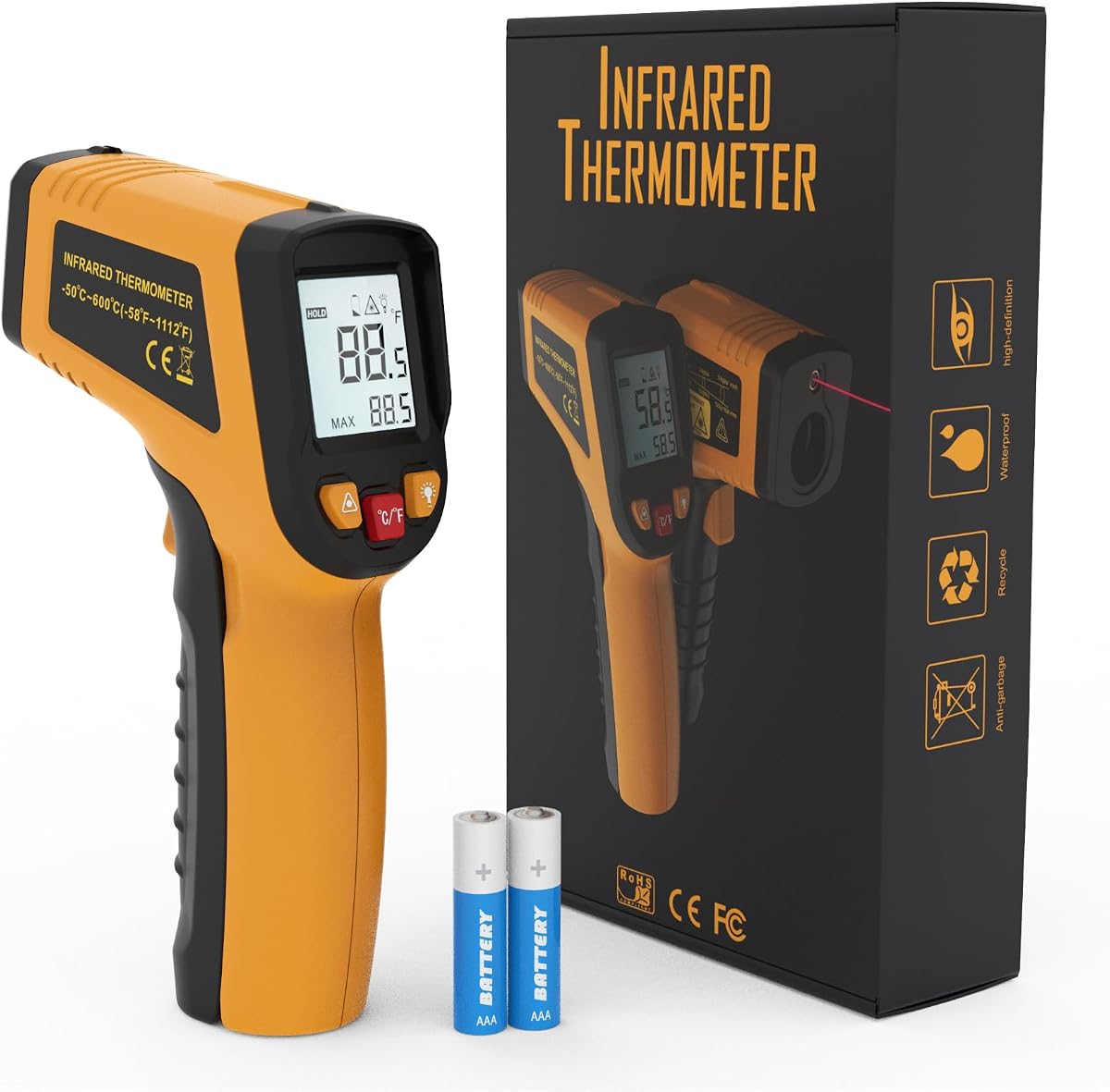
Real-time average temperature
Maximum temperature display
Bright backlit LCD
Twelve-to-one distance ratio
Included AAA batteries
Our best thermometer gun for reptile tank guide compares models for accuracy, targeting, display quality, emissivity control, and ease of use in everyday
A thermometer gun for a reptile tank gives keepers a convenient way to check surface temperatures without opening the habitat or disturbing the animal. The most useful model combines accurate readings, precise laser targeting, an easy-to-read display, and controls that make repeated spot checks practical in a room with changing light conditions.
We compared ten infrared temperature guns using the information supplied for each model, focusing on measurement range, stated accuracy, distance-to-spot ratio, emissivity adjustment, display features, alarms, battery design, and suitability for terrarium surfaces. The list includes reptile-specific products, general-purpose thermometers, and multipurpose models designed for cooking, HVAC work, vehicles, and other household tasks.
Each review explains the strongest reasons to consider a particular thermometer, along with limitations that matter when monitoring a reptile enclosure. The top three receive overall or value-oriented distinctions, while the remaining entries provide alternatives for different needs. Product listings, specifications, and availability can change, so readers should verify current details before purchasing.
4.6Editor score

4.6Editor score

4.6Editor score
This side-by-side comparison highlights each infrared thermometer's range, targeting system, readout features, and practical considerations for reptile habitat monitoring.


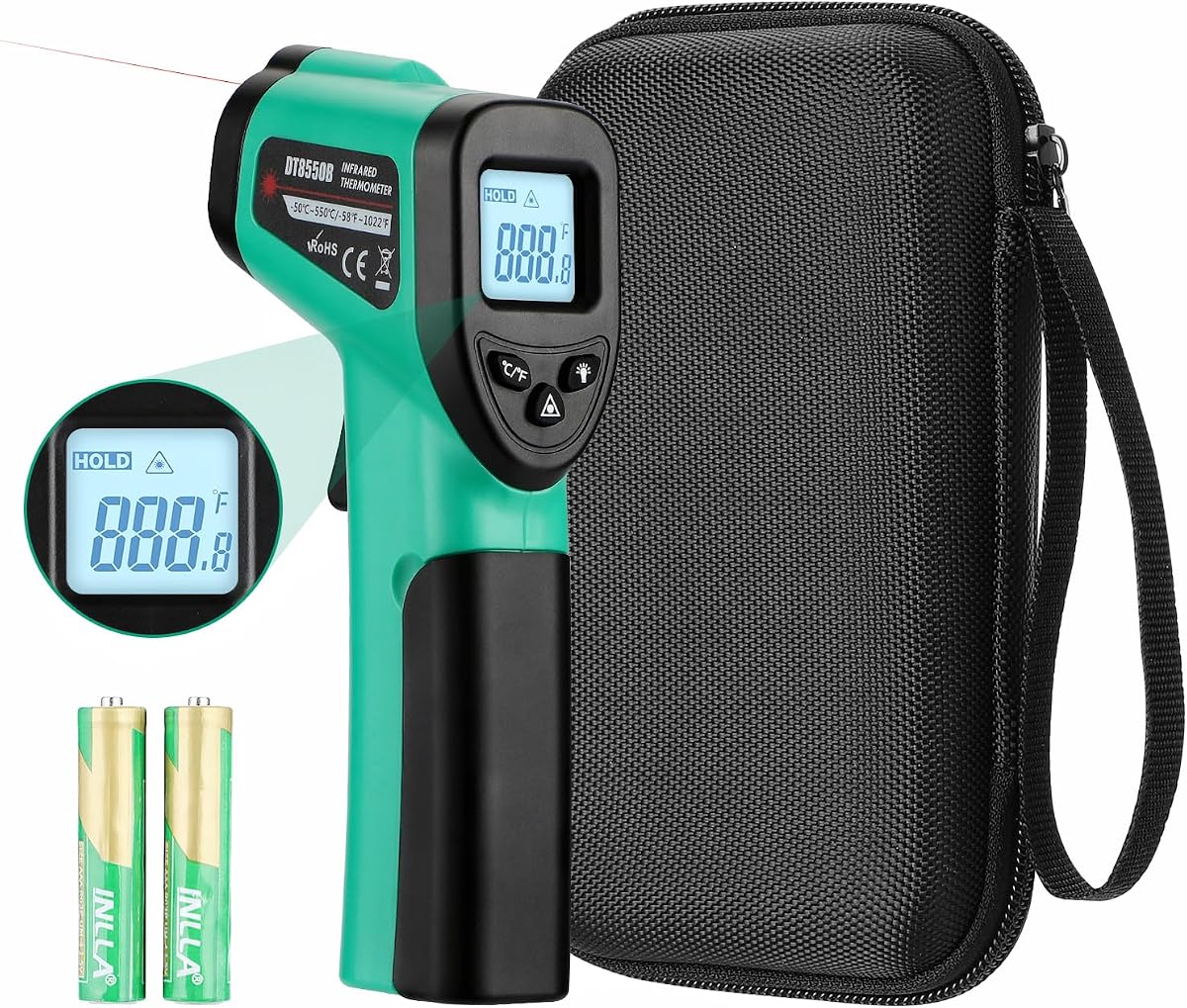


The Metris MMM-2 stands out as the most directly relevant option in this guide because its supplied description explicitly identifies reptile tanks, snakes, terrariums, and aquariums as intended applications. It carries a 4.6 rating and uses infrared measurement with a single-point laser, making it well suited to checking a warm rock, floor panel, wall, or basking surface without making physical contact.
We may earn a commission when you buy through this link, at no additional cost to you.
Its measurement range extends from minus 58F to 1112F, far beyond the temperatures normally encountered in a reptile habitat. The stated accuracy is plus or minus two percent or plus or minus 3.6F, with readings shown at one-tenth of a degree. A 12:1 distance-to-spot ratio allows the laser to be aimed from a short distance while keeping the measured area small enough for meaningful spot checks.
The model offers high and low temperature alarms with both audible and visual notifications. It can also retain minimum and maximum readings, which is useful when comparing a basking area with a cooler zone or identifying a brief temperature spike. The display includes a white backlight, Celsius and Fahrenheit selection, and an automatic shutoff. The laser can be turned off when a keeper does not want to aim a visible beam at the animal.
Its main drawback is the single 9-volt battery, which is less convenient to replace than the AAA cells used by many competing models. Adjustable emissivity is not listed, so the fixed setting may be less versatile when measuring surfaces with very different finishes. Even so, the reptile-specific design, alarms, single-point targeting, and measurement memory make this a particularly coherent choice for everyday enclosure monitoring.
The combined audible and visual alarms are more useful than a simple thermometer display when a keeper needs to notice that a surface has moved outside a preferred zone. Users can set thresholds, perform other habitat tasks, and periodically verify the reading without having to interpret every number as it appears.
A one-point laser is valuable when comparing the same basking location, heating pad target, or rock surface during routine checks. Consistent aim points make sequential readings easier to compare and help avoid the broad-area averaging that can occur with general-purpose thermometers.
We may earn a commission when you buy through this link, at no additional cost to you.
The Etekcity Lasergrip 774 is a strong value-oriented choice for a keeper who wants quick, repeatable surface readings with a clear display. It has a 4.6 rating and is advertised for reptiles among its many uses. Its 12:1 distance-to-spot ratio and recommended measurement distance of approximately 14.17 inches make it convenient for checking surfaces from outside a terrarium.
We may earn a commission when you buy through this link, at no additional cost to you.
This model differs from many laser thermometers because it displays real-time temperature based on the average of the circular surface area targeted by the infrared sensor rather than promising a single-point measurement. That can be helpful for assessing a general zone, such as a broad floor area or the top of a basking rock. A maximum-temperature display provides an additional way to compare readings during a scan.
The bright LCD responds in less than half a second, and the backlight helps with readings in dim rooms or at night. Two AAA batteries are included, reducing the need to source replacements separately. The stated range is minus 58F to 842F, with selectable Celsius and Fahrenheit presentation and a comfortable operating distance for enclosure checks.
The averaged circular target is the important trade-off. Reptile surfaces can have abrupt temperature differences, particularly near heat sources, so a broad average may conceal a small hot or cool area. The supplied information also does not mention adjustable emissivity. For keepers who prefer a quick overall zone check, however, the readable display, quick response, and simple battery arrangement make the Lasergrip 774 particularly practical.
Real-time averaging can be helpful when the goal is to understand the general temperature of a broader surface. It reduces the need to target one exact mark on a rock or floor panel, although fine-grained comparisons should still be made with a more narrowly targeted instrument.
A bright backlit LCD makes the model useful for evening spot checks when a keeper does not want to turn on an overhead lamp. The quick response and simple trigger-based operation also reduce the effort required for repeated observations.
We may earn a commission when you buy through this link, at no additional cost to you.
This digital infrared thermometer gun provides a straightforward way to measure surface temperature, with a 4.6 rating and a range from minus 58F to 932F. It is not marketed specifically for reptiles, and it is explicitly not intended for human use, but its non-contact measurements and backlit display can still suit terrarium maintenance.
We may earn a commission when you buy through this link, at no additional cost to you.
One notable feature is the one-tenth-degree display resolution in either Fahrenheit or Celsius. A data hold function keeps the last reading after the trigger is released, reducing the chance of losing a result while the keeper writes it down or prepares another tool. The backlight activates with any operation, making the gun convenient to use at night without additional lighting.
The preset emissivity is 0.95, a level the supplied description associates with many organic materials and painted or oxidized surfaces. This makes it relevant for measuring common enclosure furnishings such as painted panels, wood, stone, and similar textured surfaces. The limitation is equally important: shiny or polished surfaces can generate inaccurate readings unless a small patch of masking tape or flat black paint is applied and allowed to match the underlying material's temperature.
An automatic shutdown after approximately eight seconds helps conserve battery power, and the unit runs on two AAA batteries. There is no mention of adjustable emissivity, alarms, or a maximum and minimum mode. Nevertheless, the clear resolution, hold function, and backlight provide a useful basic toolkit for a keeper who primarily checks textured warm surfaces and wants a simple non-contact thermometer.
Keeping the reading on screen after the trigger is released gives the keeper time to record a measurement before taking another sample. This is especially helpful during enclosure audits involving several warm zones, basking surfaces, and nighttime ambient readings.
The 0.95 preset is appropriate for many painted, organic, and oxidized materials. For glossy or highly reflective components, placing a small piece of masking tape on the target and measuring the tape can provide a more representative surface reading.
We may earn a commission when you buy through this link, at no additional cost to you.
The KNINE OUTDOORS Infrared Gun is a general-purpose thermometer whose most valuable feature for reptile keepers is adjustable emissivity. It carries a 4.6 rating and measures from minus 58F to 1112F. That flexibility allows users to compensate for different surface finishes, an important consideration when a terrarium contains painted wood, natural stone, glass, or differently textured materials.
We may earn a commission when you buy through this link, at no additional cost to you.
Emissivity can be adjusted from 0.1 to 1.0 by holding the appropriate control for more than three seconds. Users can also switch between Celsius and Fahrenheit. The 12:1 distance-to-spot ratio supports measurement from a safe distance, and the single laser provides a defined aiming point for comparing consistent locations inside an enclosure.
The eye-protect LCD is designed to offer a clear readout while reducing eye strain. Two AAA batteries power the device, making battery replacement more familiar than a proprietary cell arrangement. The stated measurement range covers normal reptile habitat temperatures and is also useful for cooking, pool maintenance, oven checks, and candy making.
This model is not presented as a dedicated reptile accessory, and the supplied information does not describe alarms, memory functions, or maximum and minimum tracking. Those omissions make it less tailored than the Metris MMM-2. Its compensating strength is adjustability: for a keeper working with varied surfaces, the ability to tune emissivity can be more valuable than a collection of convenience features.
A habitat may combine natural stone, painted wood, plastic hides, glass, and ceramic fixtures, all of which can reflect infrared energy differently. An adjustable emissivity control gives the user a way to tune readings more closely to the measured material instead of relying on one universal preset.
The broad measurement span is more than sufficient for checking basking zones, floor temperatures, and heating equipment surfaces. It also allows the same thermometer to serve other household or hobby tasks without restricting it to a narrow temperature category.
We may earn a commission when you buy through this link, at no additional cost to you.
TempPro TempScan combines a stated accuracy of plus or minus 1.5 percent with fast scanning and useful data-retention features. Its 4.6 rating and broad measurement range make it a credible all-purpose surface thermometer. Although its supplied information focuses on pizza ovens, griddles, and HVAC work, the measurement functions translate well to routine terrarium checks.
We may earn a commission when you buy through this link, at no additional cost to you.
The gun can display the maximum, minimum, and average temperatures of the latest scan. That makes it useful when surveying several warm surfaces and identifying whether the hottest or coldest part of an enclosure differs substantially from the overall average. A 12:1 distance-to-spot ratio and response time below 500 milliseconds support quick repeated measurements without entering the habitat.
Emissivity is adjustable from 0.1 to 1.0, so the thermometer can be tailored to different finishes. The backlit LCD improves readability, and the automatic 90-second shutoff conserves battery life during inactivity. Its range extends from minus 58F to 1022F, easily encompassing the temperatures found in heated reptile habitats and many other practical tasks.
The product is not specifically identified as a reptile thermometer and no audible or visual alarm is listed. Its most useful contribution for enclosure work is the scan-data display, particularly when a keeper wants to compare a group of surfaces rather than isolate one reading. For consistent basking-spot monitoring, however, a single-purpose laser option may offer more intuitive targeting.
Maximum, minimum, and average readings help a keeper understand the spread across several checked surfaces. This is particularly useful during a full habitat scan or when comparing a heated zone with a shaded side that should remain cooler.
The 0.1-to-1.0 adjustment range allows users to account for more reflective or differently finished materials. It makes the model more adaptable when the enclosure includes a mixture of natural, painted, and synthetic surfaces.
We may earn a commission when you buy through this link, at no additional cost to you.
The OnniOne Digital Laser Gun is explicitly marketed for aquarium and fish-tank use, making it a natural fit for keepers who also maintain aquatic habitats. It has a 4.6 rating, a minus 58F to 1022F measurement range, and a measurement response within approximately half a second. It is clearly not a medical or animal-body thermometer and should be used to read surfaces.
We may earn a commission when you buy through this link, at no additional cost to you.
Its most immediately useful feature is the large-font LCD. A larger number can reduce interpretation errors during routine checks, while the backlight makes the screen readable in dim conditions. Mute mode removes beeping sounds, which may be helpful for evening monitoring because a sudden audible signal might otherwise startle a reptile or disturb the room.
The product also improves battery access with a battery cover that drops down a full 90 degrees. It uses AAA batteries, which many households already keep on hand, and the wider opening should make replacement easier. The ABS shell and ergonomic handle are designed for a secure grip and basic resistance to handling damage.
The recommended target distance is 14 inches, so users should establish a repeatable distance rather than varying it widely between readings. Although the product lists reptiles among broader applications in its supplied description, it is not packed with reptile-specific alarms or temperature memory. Its strengths are instead readability, quiet operation, quick access to batteries, and straightforward non-contact measurement.
The enlarged display is especially helpful when a keeper is comparing readings across several enclosure locations. Clear digits make it easier to notice small changes quickly without moving the thermometer closer to an uncomfortable area or opening the habitat.
Disabling audible feedback is useful for nighttime checks in a bedroom, living room, or other quiet space. The backlight preserves visibility after sound is muted, so the model remains practical for checking a heated zone without creating unnecessary noise.
We may earn a commission when you buy through this link, at no additional cost to you.
The Etekcity Lasergrip 1080 has the widest temperature range among the listed products, extending from minus 58F to 1130F. Its 4.6 rating, adjustable emissivity, and 12:1 distance-to-spot ratio make it a flexible general-purpose thermometer that can comfortably handle reptile habitat surfaces as well as cooking, automotive, and household jobs.
We may earn a commission when you buy through this link, at no additional cost to you.
The gun can display the maximum surface temperature during a scan, helping a keeper identify the hottest location encountered while comparing several points. Emissivity can be adjusted from 0.1 to 1.0 using the up and down controls, which is useful across surfaces with different reflective properties. The recommended measurement distance is approximately 14.17 inches.
A large backlit LCD is designed for easy reading, and the unit converts between Fahrenheit and Celsius. A 15-second auto-off function reduces unnecessary battery drain. A low-battery indicator gives the user advance notice before the reading display becomes unreliable, while the laser provides a clear reference for aiming.
Unlike the Metris, it is not presented as a reptile-specific device and lacks documented high and low alarms. Its supplied feature list mentions maximum temperature but not minimum or average modes. Nevertheless, the broad range and adjustable emissivity make it an attractive option for a keeper who wants a thermometer capable of measuring more than just a wooden basking platform or stone ledge.
The maximum display is useful when scanning an enclosure for the highest observed surface temperature. It can help compare warm furnishings or locate a localized hot area that a single point reading might otherwise miss.
The wide emissivity adjustment range is particularly valuable in mixed-material habitats. Users can tune the thermometer for different finishes instead of accepting the same preset result for glass, stone, painted wood, and textured plastic.
We may earn a commission when you buy through this link, at no additional cost to you.
The hito Infrared Thermometer Gun is a balanced multipurpose model whose supplied title explicitly includes reptiles. It has a 4.5 rating, a minus 58F to 1112F range, and a stated accuracy of plus or minus two percent. Those characteristics place it comfortably within the group of thermometers suitable for non-contact terrarium monitoring.
We may earn a commission when you buy through this link, at no additional cost to you.
Its 12:1 distance-to-spot ratio provides a practical balance between reach and target size. The emissivity setting is adjustable from 0.1 to 1.0, and the instruction manual includes a material list to guide users. That combination makes the gun practical for habitats containing several finishes and reduces the need to guess which setting is most appropriate.
Other convenience features include a large, handheld design, a backlit LCD, a low-battery indicator, maximum temperature retention, and data displayed for 15 seconds. Auto power-off helps conserve the batteries, while two AAA batteries are included. These details support quick readings and give keepers time to record a result without immediately losing it from the screen.
Its 4.5 rating is the lowest in this roundup, though it remains a strong consumer rating. The model does not list audible alarms, minimum and average readings, or a dedicated single-point emphasis beyond the general laser specification. Still, it combines reptile relevance, adjustable emissivity, useful memory behavior, and readable controls in a well-rounded package.
The included emissivity list helps users select a setting based on the measured surface rather than relying entirely on trial and error. This is particularly helpful when a keeper is measuring several different furnishing materials across the same enclosure.
Keeping the maximum reading and related data on the display for 15 seconds gives the user enough time to note the result. The backlit screen and low-battery indicator work together to keep the information accessible during routine checks.
We may earn a commission when you buy through this link, at no additional cost to you.
This Infrared Temperature Gun offers a simple, approachable way to check object surfaces without touching them. It carries a 4.6 rating and measures from minus 58F to 1022F. Its 12:1 distance-to-spot ratio allows users to target a location from a reasonable working distance, which is helpful when checking the surface of a heated rock or enclosure panel.
We may earn a commission when you buy through this link, at no additional cost to you.
The stated accuracy varies with temperature: plus or minus two percent at readings of 100C or higher and plus or minus two degrees Celsius at lower readings. Emissivity is adjustable for different object types, providing more control than a fixed setting. The high-resolution LCD includes a backlight, maximum temperature display, and low-power indication.
Two AAA batteries are included, and the unit automatically turns itself off within 15 seconds to extend battery life. The non-contact design keeps the user's hands away from hot surfaces, which is advantageous when checking equipment surfaces or warm habitat components. It is also usable for cooking, barbecue work, automotive engines, appliances, and home maintenance.
The product is not suitable for measuring human or animal body temperature, and it cannot determine the internal temperature of a living reptile. That distinction matters: the reading represents an object's surface only. No alarms, average mode, or reptile-specific guidance is listed, but the adjustable emissivity and readable screen make this a straightforward choice for keepers focused on surface temperature.
Measuring from a distance allows a keeper to check warm surfaces without placing a hand close to a heating element or a hot rock. It also makes repeated observations around the enclosure easier to perform with less disruption.
Adjustable emissivity helps account for surfaces that absorb and emit infrared energy differently. For a terrarium containing several materials, this feature makes a single handheld thermometer more adaptable than one with a fixed preset.
We may earn a commission when you buy through this link, at no additional cost to you.
The Klein Tools IR1 is the premium conventional-tool choice in this guide. It has a 4.6 rating and brings a practical 10:1 optical resolution, targeting laser, backlit display, auto-hold, and automatic power-off to reptile habitat monitoring. Its measurement range is minus 4F to 752F, which comfortably covers normal heated enclosure conditions.
We may earn a commission when you buy through this link, at no additional cost to you.
Auto-hold is especially helpful for documentation. Once the user completes a measurement, the result remains available instead of disappearing immediately, allowing time to record the value or compare it with another reading. The targeting laser provides a defined point to follow, which supports consistent comparisons on the same surface or within the same heated zone.
The infrared sensor has a fixed emissivity of 0.95. That preset is practical for many painted, oxidized, and organic surfaces, including many common wooden, stone, and textured plastic furnishings. It removes a control that some advanced users might want, but it also reduces setup complexity for keepers who simply need a dependable general-purpose reading.
This is explicitly a non-medical device and is not intended for people or animals, so its readings should be treated as surface measurements. The range begins at minus 4F rather than the much lower limits offered by several competitors. Nevertheless, the IR1's recognizable tool-brand positioning, automatic hold, readable screen, and straightforward controls make it a polished choice for keepers who prefer a conventional professional instrument.
Holding the reading automatically makes it easier to maintain a consistent record of basking spots, room surfaces, and ambient zones. The keeper can keep the gun pointed safely at a surface while checking the number and entering it into a monitoring log.
A fixed 0.95 setting removes the need to select a material value before every measurement. It is a sensible compromise for common textured surfaces, although highly reflective materials may still require a tape or paint reference method.
We may earn a commission when you buy through this link, at no additional cost to you.
Choosing a thermometer gun for a reptile tank requires balancing measurement accuracy, target size, surface compatibility, and display convenience. The following factors explain the features that have the greatest practical effect on daily habitat monitoring.
Infrared thermometers estimate temperature from emitted infrared energy, and different materials behave differently. Painted wood, natural stone, textured plastic, ceramic, glass, and reflective metal can each produce a different result. A model with adjustable emissivity from 0.1 to 1.0 offers more control when a terrarium contains several surface types. Fixed settings such as 0.95 are convenient for common organic, painted, and oxidized materials but may require reference tape on shiny surfaces. Accuracy should always be interpreted alongside the target material and the manufacturer's stated tolerance.
The distance-to-spot ratio describes how quickly the measured area grows as the thermometer moves away from its target. A 12:1 ratio provides a relatively narrow spot from a convenient working distance, while a 10:1 model is still useful but may cover a broader area. A model that averages the targeted circle is useful for a general zone scan, while single-point aiming is preferable for comparing one exact basking location. Establish a repeatable distance and aim point so readings can be compared meaningfully over time.
A reptile habitat normally requires only a modest temperature span, but a wider range makes the tool more useful for other household tasks. The stated accuracy is also important. Specifications in this guide include figures such as plus or minus two percent, plus or minus 1.5 percent, or a temperature-dependent tolerance. These ratings indicate the instrument's stated performance rather than a guarantee of identical results on every enclosure surface. Consider the readings as one part of a monitoring system that also includes reliable thermostat and probe equipment.
The display should be readable at a glance, particularly when checking a habitat in a dim room or at night. A backlit LCD is highly useful, and a large font can reduce transcription errors. Some models add audible or visual alarms, while others retain maximum, minimum, or average readings. Data hold and automatic hold prevent a result from disappearing before it has been recorded. Choose the display features that make your routine easier rather than assuming the most complex interface will be used every day.
High and low alarms can make temperature monitoring more proactive. Rather than repeatedly reading a display, a keeper can configure thresholds and be notified when a measured surface exceeds a selected level. Maximum and minimum functions serve a different purpose, helping identify extremes during a scan of several points. Neither feature replaces regular observation, but both can improve consistency. Reptile-specific models are more likely to include alarms, while general-purpose tools often emphasize scan statistics and versatile controls.
A laser helps the user identify where the thermometer is aiming, but it does not guarantee that every model measures that exact point. Some thermometers calculate an average across a circular area, while others emphasize a more focused spot. If a habitat has small warm rocks, vents, or heating pads, single-point behavior is usually easier to interpret. For a general floor or basking-platform survey, averaging can give a more representative overview. Read the product's targeting description carefully before comparing readings from different models.
A thermometer is only useful when it is ready to operate. Models using AAA batteries are generally easy to replenish because common household batteries are widely available. A 9-volt battery can also work well, but it is a different format and may be less convenient for some users. Automatic shutdown, low-battery warnings, and a battery cover that folds fully open simplify upkeep. Consider storage as well: keep the device dry, protect it from abrupt temperature changes, and replace batteries before prolonged storage.
Infrared thermometers measure surfaces, not the internal temperature of animals. The laser is a visible aiming aid and should never be directed into an animal's eyes. Do not allow the reading from a reptile's skin to be treated as a body temperature, because the surface temperature may not represent the animal's internal condition. Take readings from enclosure furnishings, basking surfaces, heating equipment, and room surfaces. For animal-specific health monitoring, use appropriate veterinary or husbandry thermometers instead of an infrared gun.
Before the first reading, read the instructions for the selected model, confirm the temperature units, and identify the correct emissivity setting for the target material. Remove any protective film from the display, install the batteries, and test the unit in a safe location. Learning the trigger, hold, backlight, and power controls in advance prevents accidental changes during an enclosure check.
Aim the laser at the relevant surface rather than at the reptile. Keep a consistent distance and angle, avoid placing the laser directly in an animal's eyes, and wait for the display to stabilize before recording the value. Check several meaningful locations, including the basking surface, floor, warm wall, and exterior heat source. When comparing readings, use the same spot, distance, and surface each time.
After use, switch the unit off or allow its automatic shutdown to activate. Keep the lens clean and free of dust, condensation, and sticky residue, because a dirty sensor window can distort readings. Store the thermometer in a dry location at a moderate temperature. Remove batteries for extended storage, periodically check stored readings against a trusted reference, and replace the batteries when the low-power indicator appears.
No. An infrared thermometer gun measures surface temperature rather than internal body temperature, so it should not be used to diagnose overheating, illness, or any other health condition in a reptile. Use it for enclosure surfaces, basking areas, heating equipment, and room conditions. A reptile's skin temperature can differ significantly from its internal temperature, especially when scales, posture, or environmental exposure affects the surface.
The Metris MMM-2 is the most directly tailored choice because its supplied features include reptile and terrarium applications, single-point laser aiming, high and low alarms, and minimum and maximum readings. The Etekcity Lasergrip 774 is a useful alternative for general zone checks, while the KNINE OUTDOORS model offers the strongest supplied emissivity adjustment range. The best fit ultimately depends on whether precise hot-spot targeting or broader surface averaging matters more to the keeper.
They may differ in measurement accuracy, target size, response behavior, emissivity settings, angle, distance, and sensor design. Reflective or glossy surfaces can also return misleading readings because they do not emit infrared energy like matte materials. Comparing the same surface at the same distance, using a suitable emissivity value, and applying a reference tape to shiny targets can make results more consistent.
No. The laser indicates the measurement area, and directing it into a reptile's eyes can cause irritation or distress. Aim at the basking rock, floor, wall, heat lamp, thermostat probe, or another enclosure surface relevant to the check. A laser also allows you to measure safely without placing a hand near a hot heating component.
Use a consistent distance appropriate for the device's distance-to-spot ratio and the size of the surface being checked. Several models recommend approximately 14 inches, while one specifically recommends 14 inches for best results. Moving closer produces a smaller target, while moving farther away covers more area. Record your distance and use it consistently whenever comparing readings.
Yes. For shiny or reflective surfaces, place a small piece of masking tape or flat black paint on the target and allow it to reach the same temperature as the underlying material. Measure the tape or painted patch rather than the reflective surface. This method is especially helpful when a thermometer has a fixed emissivity setting that does not match the enclosure material.
A wide range is convenient but not essential for normal habitat monitoring. Most reptile enclosures operate well within a much narrower span, so accuracy, targeting, display readability, and emissivity control often matter more. A wide range can still be useful if the same device will also be used for cooking, automotive work, HVAC inspections, or other household tasks.
Check at least the critical warm and cool zones at appropriate intervals for the species and enclosure design, including after changing heating equipment or thermostat settings. Daily visual observation of the reptile and habitat is important, while instrument readings should follow a consistent schedule and documented locations. If the enclosure includes thermostat probes, use them alongside the infrared gun because they measure different things.
The Metris MMM-2 is the strongest all-around recommendation because it combines reptile-specific positioning with single-point targeting, adjustable alarms, backlighting, and minimum and maximum readings. The Etekcity Lasergrip 774 offers a useful alternative for keepers who prefer a fast average reading and maximum temperature display, while the Klein Tools IR1 provides polished construction, automatic hold, and a targeting laser for users who value a conventional professional-tool design.
Prioritize the features that match your actual monitoring routine. Accurate single-point checks are important for basking surfaces and small heated areas, adjustable emissivity is valuable in mixed-material habitats, and a broad display with backlighting helps during quiet nighttime checks. Remember that an infrared gun reads surfaces rather than an animal's internal temperature, and use appropriate husbandry probes alongside it for complete environmental monitoring.
Before making a final selection, verify the current product listing, included accessories, battery requirements, warranty information, and any changes to the stated specifications. Keeping a consistent aim point, distance, and emissivity setting will produce more meaningful results than repeatedly switching among measurement locations or target surfaces.
