
Built-in GPS Distance Watch
4.2Editor score
Phone-free GPS tracking
Large AMOLED display
Week-long heavy-use battery
Distance Tracker for Running guide comparing 10 GPS watches and pedometers for accuracy, battery life, training insights, comfort, and ease of use.
A distance tracker for running should provide dependable measurements without complicating every workout. The right device can log pace, distance, heart rate, routes, laps, calories, and recovery signals while remaining comfortable, readable, and easy to operate. The best choice depends on whether you need advanced training guidance, simple step counting, or phone-free outdoor tracking.
We compared ten running trackers using the supplied product details, focusing on built-in GPS, measurement capabilities, battery life, display quality, training features, water resistance, and compatibility. The list covers dedicated running watches, multipurpose fitness watches, budget smartwatches, and a clip-on pedometer, giving beginners and experienced runners distinctly different options.
Each review explains the strongest reasons to consider the product, along with its practical limitations. The top selections highlight the best balance of features, the strongest value, and the most advanced running experience. Features and availability can change, so readers should verify current specifications, compatibility, and pricing before purchasing.
4.2Editor score

4.8Editor score

4.6Editor score
The comparison below highlights the major differences in positioning, navigation, training depth, health features, and battery life, making it easier to identify the tracker that matches your running routine.


The Garmin Forerunner 165 is a compact running smartwatch with a 4.6 rating, built-in GPS, wrist-based heart-rate tracking, and a bright AMOLED touchscreen. Its combination of dedicated running tools, health features, notifications, and contactless payments makes it a strong all-around option for runners who want more analytical feedback than a basic activity tracker without moving into the largest premium running-watch category.
We may earn a commission when you buy through this link, at no additional cost to you.
Its main strengths center on useful daily measurement and adaptive guidance. The watch tracks pace and distance, offers personalized suggested workouts, and includes Garmin Coach and race-adaptive training plans. More than 25 activity profiles cover running, cycling, HIIT, strength, and other exercise types, while training effect, recovery time, morning reports, sleep information, and HRV status help connect workouts with recovery. The traditional buttons remain available alongside the touchscreen, which is useful when you need to operate the watch without relying entirely on touch input.
The 43mm case is described as lightweight, and its battery specifications are practical for regular training: up to 11 days in smartwatch mode and up to 19 hours in GPS mode. It also supports incident detection, Assistance, smart notifications, and Garmin Pay when paired to a compatible smartphone. The trade-offs are that this model is not described as offering full-color onboard maps, a titanium bezel, advanced running dynamics, or a built-in speaker and microphone, so users seeking the most extensive navigation or multisport hardware may want to consider another Forerunner.
This is a compelling recommendation for a runner who wants GPS-based distance measurement, training adaptation, recovery feedback, and a polished display in a relatively compact form. It is especially suitable for regular road running, treadmill-plus-outdoor routines, and general fitness tracking. Those wanting a phone-free watch with advanced maps should move up the range, while budget shoppers who do not need adaptive training may prefer the more generic GPS smartwatch covered later.
Personalized daily workouts adapt to performance and recovery, while Garmin Coach plans can support a specific event. This makes the Forerunner 165 useful for runners who want structure without manually creating every session.
The lightweight 43mm format balances a readable AMOLED screen with a smaller wrist presence. It is an appealing option for runners who want more capability than a small fitness band but prefer a less bulky watch.
We may earn a commission when you buy through this link, at no additional cost to you.
This Built-in GPS Distance Tracking Watch has a 4.2 rating and stands out for offering phone-free navigation, a large AMOLED screen, extensive sport modes, and a generous battery specification. It is aimed at runners and active users who want pace, distance, route, calories, and other basic measurements without relying on a smartphone during every outing.
We may earn a commission when you buy through this link, at no additional cost to you.
The watch includes real-time pace and distance tracking, a digital compass, altimeter, and barometer. Interval timer, lap counter, and stopwatch functions support structured sessions and track workouts. Its 2.06-inch square AMOLED display uses large numbers and touch controls, while 170-plus activity modes extend the device beyond running. Five ATM water resistance supports pool laps, open-water swimming, rain, and heavy sweat, although the product guidance excludes hot showers, diving, and high-velocity water sports.
Bluetooth connectivity adds calls, texts, reminders, weather, music control, and a one-tap SOS function, but the watch is not a standalone phone. That distinction matters because its core GPS measurements do not require the phone, yet safety and communication features depend on a paired device. The claimed heavy-use battery lasts up to seven days, while lighter use and standby can extend to 20 and 30 days respectively. Training analysis is less sophisticated than on the Garmin running watches, so this model is better suited to straightforward tracking than nuanced load management.
For budget-conscious runners who want a readable, feature-rich watch with built-in GPS, this is one of the strongest options in the list. It is also useful for swimmers, hikers, and walkers because its sport modes and outdoor tools go beyond running. Buyers seeking evidence-based coaching and advanced running dynamics should choose a more specialized watch, but those who mainly need dependable everyday measurements will find this package unusually complete.
Built-in GPS, route recording, pace, and distance make the watch useful for runs where carrying a phone would be inconvenient. The compass, altimeter, and barometer also support navigation beyond the track.
Interchangeable silicone and fabric bands provide flexibility for different activities. The 50-meter water resistance and dedicated swim tracking broaden its appeal beyond ordinary road running.
We may earn a commission when you buy through this link, at no additional cost to you.
The Garmin Forerunner 70 earns a 4.4 rating and combines built-in GPS, adaptive training plans, detailed recovery information, and a 43mm AMOLED display. It is especially compelling for runners who want structured coaching but do not necessarily need the maps, advanced sensors, and metal construction found in the range's premium models.
We may earn a commission when you buy through this link, at no additional cost to you.
Garmin Coach plans range from beginner-friendly run-and-walk workouts to higher-volume and higher-intensity sessions. Daily suggested workouts adjust to performance and recovery, while the quick workout feature can create a session on the watch based on desired time and intensity. Training readiness draws on sleep quality, recovery, training load, and HRV status. Training status, training effect, and recovery time give the runner a structured way to understand workload rather than relying on distance alone.
Its battery figures improve on many standard running watches, reaching up to 13 days in smartwatch mode and 23 hours in GPS mode. More than 80 activity profiles cover running, cycling, HIIT, strength, and other activities. Safety and tracking features can share live location with selected contacts after an incident is detected, provided setup is complete and the paired phone has data coverage. The lack of listed onboard maps and a built-in speaker or microphone keeps it below the Forerunner 965 and 570 in hardware versatility.
The Forerunner 70 is an excellent fit for runners who want adaptive plans, readiness guidance, and recovery insights in a lightweight 43mm watch. It also works well for people beginning structured training because beginner-friendly plans are included. If a runner's main priority is full-color navigation or premium running dynamics, the higher-ranked advanced models are stronger, but for coaching and recovery this watch delivers a particularly focused feature set.
Training readiness and adaptive suggested workouts use multiple signals to help determine appropriate daily effort. The result is a more responsive training experience than a watch that merely records a completed run.
Sleep score, sleep stages, energy estimates, HRV status, and recovery time help show how demanding training has been. These features make the watch useful even on days when the decision is to rest.
We may earn a commission when you buy through this link, at no additional cost to you.
The Zeacool Fitness Tracker has a 4.5 rating and provides a straightforward alternative to watches built around advanced running metrics. It records steps, distance, calories, heart rate, blood oxygen, sleep stages, temperature, and other wellness data, while offering 123 sport modes through the Da Fit app.
We may earn a commission when you buy through this link, at no additional cost to you.
Its 1.47-inch AMOLED HD touchscreen gives the device a modern appearance without the large footprint of a full-size running watch. A stopwatch, remote photography, mobile search, hydration reminders, sedentary reminders, menstrual reminders, and real-time weather are included. The fitness straps are designed to be skin-friendly, and the product works with both iPhone and Android smartphones. Magnetic fast charging supports up to 10 to 14 days of regular use and up to 30 days on standby.
The central limitation is that no built-in GPS is listed. The tracker records distance and activity data, but the product information does not claim the same phone-free route mapping provided by dedicated GPS running watches. IP68 water resistance is suitable for exposure to water and dust, and the health-monitoring feature set is broad for this category. However, there are no stated adaptive plans, advanced running dynamics, or recovery load models comparable to those on Garmin devices.
This tracker is a reasonable choice for casual runners, walkers, and people who want a light health and activity monitor with a long battery. It may also appeal to users who prefer many selectable modes and straightforward app-based records over navigation. Serious road runners who need exact route capture, pace-based analysis, and training structure should favor a watch with built-in GPS and dedicated running metrics.
Continuous heart rate, blood oxygen, sleep staging, temperature, and a nightly sleep score make the tracker useful for general wellness monitoring. These functions add context to activity totals without requiring a full running computer.
With 123 selectable sport modes, users can tailor the tracker to different activities. The mode variety makes it convenient for people whose routine alternates among running, walking, workouts, and casual fitness sessions.
We may earn a commission when you buy through this link, at no additional cost to you.
The Garmin Forerunner 965 carries a 4.6 rating and is the most technically advanced runner in this guide. It combines a brilliant AMOLED touchscreen, full-color onboard maps, multi-band GPS, race-aware training suggestions, and wrist-based running dynamics in a lightweight titanium-bezel design.
We may earn a commission when you buy through this link, at no additional cost to you.
Multi-band GNSS with SatIQ technology is designed to improve accuracy in challenging environments while managing battery use. Full-color maps allow runners to navigate without depending on a phone. Wrist-based running dynamics include cadence, stride length, ground contact time, running power, and other measurements, giving serious runners a more granular view of technique and output than basic pace and distance displays.
Training depth is another major strength. Garmin Coach plans, daily suggested workouts, training readiness, training status, recovery time, HRV status, and a morning report create a connected view of preparation and workload. Users can input a race and course in Garmin Connect, review a race widget, and follow daily suggestions that adapt after runs. The battery specification reaches up to 23 days in smartwatch mode and 31 hours in GPS mode, which is particularly useful for long runs and race preparation.
The 47mm size is larger than the Forerunner 165 and 70, although the titanium bezel helps maintain a refined appearance without excessive bulk. This watch is intended for dedicated runners, multisport athletes, and users who value navigation and granular performance analysis enough to accept a premium-tier purchase. Those seeking premium features but not advanced maps may find the Forerunner 570 more streamlined, while true beginners can start with a simpler Garmin or budget watch.
Full-color onboard maps and multi-band GPS make route exploration a major strength. Runners can move through unfamiliar areas while retaining access to course guidance and precise route recording.
Cadence, stride length, ground contact time, and continuous running power reveal more about technique than distance alone. These measurements can help experienced athletes identify changes in form and output across different sessions.
We may earn a commission when you buy through this link, at no additional cost to you.
The Garmin Forerunner 570 has the highest rating in this selection at 4.8 and offers a balanced combination of running analytics, smart features, safety tools, and polished hardware. Its 47mm aluminum-bezel design and bright AMOLED touchscreen give it a modern appearance, while built-in GPS, heart-rate tracking, and adaptive workouts serve dedicated runners.
We may earn a commission when you buy through this link, at no additional cost to you.
Garmin Coach provides personalized running and triathlon plans that adapt based on performance and recovery. Training readiness uses sleep quality, recovery, training load, and HRV status, and daily suggested workouts respond to the runner's current condition. Training status adds indicators including recent exercise history, performance, and VO2 max. The morning report summarizes sleep, recovery, training outlook, HRV, readiness, and weather, while the evening report highlights sleep needs and the next day's workout.
A built-in microphone and speaker allow paired-phone calls from the wrist, and the voice assistant can help respond to text messages. Safety and tracking features can send live location to emergency contacts after an incident is detected during supported outdoor activities. The watch also provides up to 11 days in smartwatch mode and 18 hours in GPS mode. Its main omissions relative to the Forerunner 965 are listed onboard maps and more advanced wrist-based running dynamics.
This is an excellent all-round recommendation for a runner who wants adaptive training, recovery analysis, wrist calls, and strong everyday smartwatch capability. The 47mm case is larger than the Forerunner 165 and 70, but the aluminum bezel and bright screen create a more premium feel. It is a particularly good match for runners who want modern conveniences without the map-focused complexity and advanced performance sensors of the top-tier model.
The speaker, microphone, voice-assistant support, and emergency communication features make the Forerunner 570 useful between runs as well as during workouts. Paired smartphone connectivity keeps essential communication close at hand.
Readiness, training status, daily suggestions, and evening reports work together to show whether a planned session is appropriate. This level of feedback is especially useful for runners balancing intensity, recovery, and schedule changes.
We may earn a commission when you buy through this link, at no additional cost to you.
The POLAR Pacer Pro has a 4.3 rating and emphasizes low weight, endurance, and focused running performance. At 41 grams, it is among the lightest devices here, while its claimed training-mode battery reaches 35 hours. It tracks time, pace, distance, laps, and more on a clear color display.
We may earn a commission when you buy through this link, at no additional cost to you.
Polar Precision Prime optical heart-rate monitoring is paired with sleep and recovery tools intended to provide a broader view of performance. The device supports more than 150 sports, making it useful for runners who also cycle, train at the gym, or participate in other endurance activities. Its high-speed processor helps process basic workout information promptly, and the long training battery can accommodate frequent sessions without frequent charging.
The watch is simple in a deliberately focused way. No touchscreen, onboard maps, or premium metal bezel is listed, so it may not satisfy buyers seeking rich maps, media controls, or smartphone-style interaction. Its 100-hour power-save battery and seven-day watch mode offer flexibility, though the 35-hour training figure remains the most relevant specification for frequent GPS runs. The S-L sizing and unisex design may require checking wrist fit before ordering.
Runners who place a premium on lightweight wear and long battery life should pay particular attention to this model. It is well suited to daily road running, interval sessions, and users who prefer straightforward screens over dense dashboards. It is less compelling for route exploration or advanced performance analysis, but within those priorities the Pacer Pro delivers a compelling combination of endurance and low weight.
A 41-gram body reduces bulk on the wrist, which can improve comfort during long sessions. The watch is designed specifically with runners in mind rather than as a general-purpose device with running functions added.
The 35-hour training battery and support for more than 150 sports suit athletes who rotate activities. A runner can switch between road sessions, endurance training, and other activities without treating the watch as a single-purpose device.
We may earn a commission when you buy through this link, at no additional cost to you.
The Nike+ SportWatch GPS has a 3.9 rating and offers a deliberately simple way to record speed and distance. TomTom GPS provides the core positioning, while water resistance and a rechargeable battery make it suitable for regular running and other athletic use.
We may earn a commission when you buy through this link, at no additional cost to you.
The watch is designed to continue providing speed and distance information when the GPS signal is interrupted, according to the supplied product details. That focus makes it attractive for runners who do not want advanced menus, training dashboards, or complex smartphone integration. The core experience centers on dependable run information without overwhelming the athlete with unrelated features.
Battery life is the main limitation for active users. The device provides up to eight hours of runtime when GPS and the sensor are both active, although standby can last as long as 50 days. The rechargeable lithium-polymer battery charges through USB. Compared with the Garmin models, the Nike+ SportWatch lacks the listed AMOLED displays, adaptive coaching, recovery load tools, extensive activity profiles, and modern safety features.
This watch is best for a minimalist runner who primarily wants speed and distance, values a simple interface, and does not need extensive training analysis. It can also work as a secondary option for casual runs. Buyers who want long GPS endurance, heart-rate insights, smartphone notifications, or advanced performance metrics should choose one of the more feature-rich alternatives, such as the Forerunner 70 or POLAR Pacer Pro.
Speed and distance remain the central functions, allowing users to record a run without navigating a large menu system. The experience is best suited to athletes who value immediate information and uncomplicated operation.
The compact, water-resistant design can complement a more advanced device or serve casual runners who do not need advanced recovery metrics. It is particularly relevant for users willing to charge the watch between frequent active sessions.
We may earn a commission when you buy through this link, at no additional cost to you.
The Garmin vívoactive 5 has a 4.3 rating and is designed as a health and fitness smartwatch with running GPS, more than 30 built-in sports applications, and a bright 42mm AMOLED display. It offers a gentler transition into Garmin tracking for people who want running measurements alongside comprehensive wellness features.
We may earn a commission when you buy through this link, at no additional cost to you.
Body Battery energy monitoring considers sleep, naps, stress, and workouts, while a sleep score, personalized sleep coaching, HRV status, wrist heart rate, morning reports, stress tracking, and menstrual and pregnancy tracking broaden its daily role. The watch also provides fitness age, meditation, automatic nap detection, and nap logging. These details make it more of a general wellness companion than a narrowly focused running computer.
Running remains well supported through built-in GPS sports applications, advanced training features, workout benefit, and recovery time. Preloaded cardio, yoga, strength, HIIT, and Pilates workouts are available, and users can create their own in Garmin Connect. Garmin Coach provides adaptive plans, while compatible playlists from Spotify, Amazon Music, or Deezer can be downloaded for phone-free listening. Battery life reaches up to 11 days in smartwatch mode, with five days when the display is always on.
This is a strong recommendation for a runner whose priorities include health data, sleep, stress, activity variety, and music. It is less suited to runners seeking advanced dynamics, full-color navigation, or race-course mapping. The 42mm case is relatively compact, and the broad feature set makes it particularly attractive for users who want one watch to cover exercise, recovery, and everyday wellness.
Sleep coaching, stress, HRV, naps, and Body Battery make the watch useful beyond recorded workouts. The data helps users balance activity with recovery throughout the day.
Offline playlist support and more than 30 sports applications create a broad fitness experience. Runners can move between running, strength, yoga, Pilates, and other activities without changing devices.
We may earn a commission when you buy through this link, at no additional cost to you.
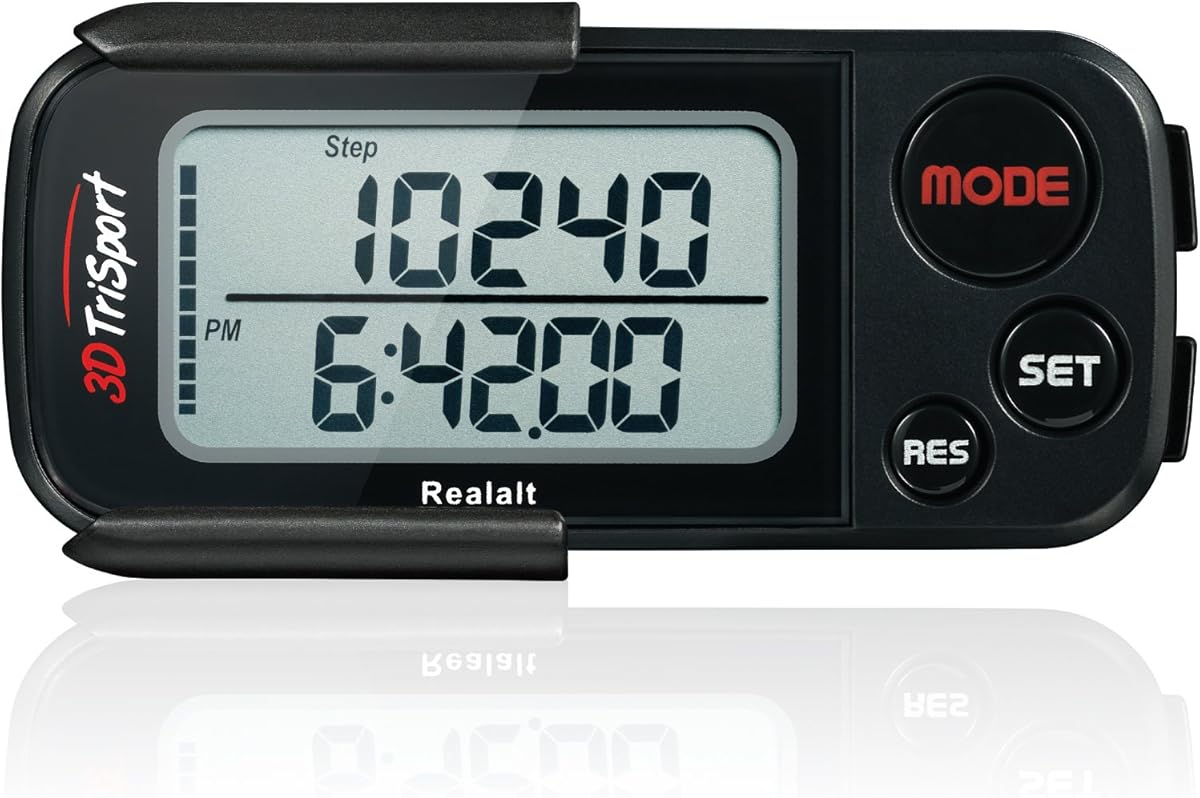
The 3DTriSport Walking Pedometer has a 4.0 rating and provides the simplest form of activity tracking in this guide. It records steps for walking and running, distance in kilometers and miles, calories burned, and exercise time without requiring Bluetooth, an app, or a smartphone connection.
We may earn a commission when you buy through this link, at no additional cost to you.
A three-axis sensor allows activity to be recorded in different positions. The included clip can attach to the waist, the lanyard supports neck wear, and the device can also be carried in a pocket or bag. This flexibility is useful for anyone who may not want to wear a smartwatch constantly, including adults, seniors, and children. The simple setup process and lack of a screen make the device easy to understand and operate.
Up to 30 days of daily records can be stored, and the battery is described as lasting up to 12 months. That maintenance-free approach contrasts with rechargeable fitness watches that need regular charging. However, no built-in GPS, route mapping, heart-rate sensor, pace alerts, running dynamics, or adaptive training system is listed. Distance is inferred from movement rather than satellite positioning, making it a basic activity aid rather than a dedicated GPS running watch.
This pedometer is best for casual walkers, light runners, seniors, and anyone seeking effortless step and distance tracking. It can also serve as a secondary device for someone who wants a simple backup without notifications or smartwatch distractions. Serious runners should choose a GPS watch, while those who want effortless tracking across walking and running will find its long battery life and simple design compelling.
No Bluetooth, downloads, or phone connection are required, which removes common barriers to getting started. The device can begin serving as a basic activity record with minimal setup.
The clip, lanyard, pocket, and bag options make it easy to keep the pedometer positioned in a way that suits the user's routine. This flexibility is helpful for users who cannot or prefer not to wear a watch.
We may earn a commission when you buy through this link, at no additional cost to you.
The right distance tracker depends on navigation needs, training ambitions, comfort preferences, battery expectations, and how much health information you want. Comparing these factors before shopping prevents a basic activity tracker from feeling underpowered and a complex running watch from becoming unnecessarily burdensome.
A dedicated GPS running watch records pace, distance, and routes without requiring a phone. Devices with multi-band GPS, such as the Forerunner 965, are especially attractive for runners who train in cities, wooded areas, or other places where a simple satellite lock may be less dependable. The budget GPS watch also offers open-air route tracking, while the Zeacool tracker and pedometer do not list built-in GPS.
Choose built-in GPS when routes, pace, and phone-free operation are priorities. Choose a simple pedometer when counting steps and estimating distance is enough.
Basic trackers show how far you ran and how long it took. Advanced running watches go further with training readiness, training status, training effect, recovery time, HRV status, personalized workouts, and adaptive Garmin Coach plans. These features are most valuable to runners who adjust intensity, prepare for events, or want to understand the relationship between workload and recovery rather than simply archive each run.
Prioritize adaptive coaching and recovery metrics if your training is structured. Stick with simple distance and health records if you mainly want a low-maintenance log.
Active GPS battery life is the figure that matters most for frequent runners, while smartwatch-mode duration determines how often the watch must be connected to a charger. The listed GPS runtimes range from eight hours for the Nike+ SportWatch to 31 hours for the Forerunner 965. The Zeacool tracker and 3DTriSport pedometer use very different charging models, with the pedometer offering a battery that can last up to 12 months.
Compare real-world use with the stated maximum. Choose a long-running model if you train for many hours or prefer fewer charging interruptions.
A bright AMOLED display can improve visibility during daylight runs, while a clear color screen may be enough for runners who prioritize simple data. Larger cases offer roomier screens and touch controls, whereas a 41-gram design such as the POLAR Pacer Pro minimizes wrist bulk. The 2.06-inch square display on the budget GPS watch is particularly suited to users who want large, easy-read numbers.
Balance screen visibility against comfort. Touchscreens add navigation convenience, but button controls and lightweight cases can be preferable during fast-paced sessions.
The products range from the lightweight 41-gram POLAR Pacer Pro to 47mm Garmin models and a bulky clip-on pedometer. Wrist size, band preference, and activity type all influence comfort. The budget GPS watch includes sporty silicone and soft fabric bands for wrists between 5.5 and 8.5 inches, while the Pacer Pro is offered in an S-L size. A watch that is secure and comfortable is more likely to be worn consistently.
Check case dimensions, wrist range, and included bands. Choose a smaller lightweight model for minimalism or a larger screen when quick on-wrist reading matters most.
Runners who also swim need different water-resistance capabilities from walkers who simply encounter rain. The budget GPS watch supports pool laps and open-water swimming with a stated 5ATM or 50-meter rating, but its guidance excludes hot showers, diving, and high-velocity water sports. The Nike+ SportWatch is water resistant, while the Zeacool uses an IP68 rating. Each has a different level of protection.
Match water resistance to the activities you perform. Do not assume a rain-resistant fitness band is suitable for prolonged pool or open-water sessions.
Wrist heart rate, blood oxygen, sleep stages, stress, HRV, and recovery can make a running tracker useful throughout the day. Smart notifications, contactless payments, music control, calls, and emergency features are available in selected devices, although some require a paired smartphone and network coverage. The Forerunner 570 adds a speaker and microphone, while the Forerunner 165 supports notifications and Garmin Pay.
Decide which extras genuinely improve your routine. More features can make a watch more useful, but they may also add complexity, notifications, and charging demands.
Some trackers work entirely as standalone devices, while others rely on companion apps for profile setup, workouts, music, and deeper records. The 3DTriSport pedometer requires no smartphone connection, and the Nike+ SportWatch focuses on straightforward core tracking. The budget GPS watch uses Bluetooth pairing for notifications and calls while allowing GPS runs without a phone. Garmin devices integrate with Garmin Connect for coaching, race setup, and workout downloads.
Favor the ecosystem that matches your comfort with technology. Simple users should minimize setup, while adaptive-training users should value a mature app and data history.
Start by fully charging the tracker and installing the appropriate companion app if the model requires one. Create your user profile with current age, weight, activity preferences, and any relevant training goals. For GPS watches, wait outdoors with a clear view of the sky before beginning a run so the device can acquire satellite signals. Confirm that the correct running profile is active and that the units for distance, pace, and calories match your preferences.
Secure the watch or pedometer in the intended position. A wrist device should feel snug without restricting movement, while the 3DTriSport can be clipped to the waist, worn on its lanyard, or carried in a pocket or bag. Start with a short outdoor session to confirm that pace, distance, heart rate, and lap data are recording. Review the completed activity in the companion app, and check how the watch handles interruptions before relying on it for a long run or race.
Keep the device clean and dry after sweaty workouts, and avoid exposing it to hot showers, diving, or high-velocity water unless its specifications specifically allow those uses. Use the supplied charging cable and clean the charging contacts if the battery gauge becomes inconsistent. Review battery indicators before long sessions, update the companion app when prompted, and check that safety contacts, emergency settings, and notification permissions remain configured on the paired phone.
Built-in GPS is highly useful if you want pace, distance, and route information without carrying a phone. It also makes a watch more independent during outdoor runs. A basic step tracker is sufficient for casual activity monitoring, but it cannot provide the same route-based running experience as a dedicated GPS device.
A watch with built-in GPS is generally the most appropriate choice for outdoor running because it can calculate movement from satellite positioning. The Forerunner 965 adds multi-band GPS for demanding environments. Accuracy can still vary with signal conditions, terrain, device placement, and movement, so consistent settings and proper wear are important.
That depends on the model. The Garmin running watches and the budget GPS watch can record core outdoor data independently, although some smart and safety features still require a paired phone. The Zeacool tracker and 3DTriSport pedometer are not described as phone-free GPS devices, and app features may require connectivity for setup or detailed viewing.
Look first at GPS runtime because it determines how much continuous outdoor tracking you can record. The products here offer active GPS figures from eight to 31 hours, while smartwatch-mode life varies separately. If you run daily or train for long periods, a model with at least a full day of realistic GPS use and convenient charging will cause the least interruption.
No. The 3DTriSport records steps, walking and running distance, calories, and exercise time without a smartphone, while the Zeacool adds 123 sport modes and health monitoring. A smartwatch becomes more valuable when you want GPS route capture, heart-rate trends, sleep and recovery data, adaptive training, notifications, or safety features.
They are enough for many recreational runners who want a simple record of each workout. More advanced users may also value cadence, stride length, ground contact time, running power, training readiness, and recovery time. The Forerunner 965 provides the deepest listed performance metrics, while the Forerunner 165 and 70 emphasize adaptive guidance and recovery.
Not all devices have the same water-resistance rating or swimming support. The budget GPS watch explicitly includes swim mode, pool laps, open-water use, and a 5ATM or 50-meter rating. The Nike+ SportWatch is described as water resistant, and the Zeacool has an IP68 rating. Always follow the specific exclusions and care instructions for each model.
Choose a dedicated running watch when GPS accuracy, pace, route recording, recovery analysis, and training structure are central to your routine. Choose a general fitness tracker when you want broad health measurements, many exercise modes, simple step tracking, or a lighter multipurpose device. Your training goals and preferred screen complexity are the most useful starting points.
The Garmin Forerunner 570 is the strongest all-around recommendation because it combines an excellent rating, bright display, adaptive coaching, recovery guidance, wrist calls, and safety features. The Built-in GPS Distance Tracking Watch is the best value-oriented option, providing phone-free GPS, a large display, extensive sport modes, and a flexible battery. For advanced runners, the Garmin Forerunner 965 leads with onboard maps, multi-band GPS, race planning, and detailed running dynamics.
Prioritize the type of information that will change your training. Casual users may be well served by the Zeacool Fitness Tracker or 3DTriSport pedometer, while dedicated runners should consider accurate pace and distance, recovery feedback, reliable heart-rate data, and battery life. The POLAR Pacer Pro is worth checking for its exceptionally light construction, and the Nike+ SportWatch suits runners who want a minimalist experience without advanced analytics.
Before buying, verify the current specifications, account and connection requirements, included bands or accessories, water-resistance guidance, and compatibility with your phone. Features, software behavior, ratings, and prices can change over time, so checking the current listing helps ensure that the selected distance tracker still matches your running goals and daily routine.