
GOSKY Spotting Scope Phone Adapter
4.0Editor score
Simple three-step setup
Eyepieces from 28 to 47mm
Durable zinc alloy body
Broad smartphone width support
A phone mount for spotting scope can turn a view through an eyepiece into a photograph or video your phone can capture and share. A useful adapter needs a secure optical connection, accurate camera alignment, broad phone compatibility, and enough adjustability to eliminate dark edges. Construction, weight, and setup also influence how comfortably it works in the field.
This guide compares ten adapters using the specifications and features listed for each product. The evaluation focuses on supported eyepiece diameters, phone-width ranges, adjustment axes, materials, mounting methods, included controls, portability, and compatibility with scopes, binoculars, monoculars, telescopes, and microscopes.
The recommendations range from premium three-axis metal systems to lightweight plastic designs and budget options for smaller eyepieces. Each review explains the product's strongest use case and limitations. Product availability, features, and prices can change, so confirm current listings and compatibility before purchasing.
4.0Editor score

4.4Editor score

3.7Editor score
As an Amazon Associate we earn from qualifying purchases.
The comparison below highlights each adapter's fit range, mounting approach, materials, and principal convenience feature to help you match a phone adapter to your optical equipment.




The tridaptor Universal Phone Scope Digiscoping Adapter combines a rigid aluminum body with three-axis control, giving it the most comprehensive adjustment system in this guide. Its 4.4 rating reflects a strong balance of alignment control, broad compatibility, and field-oriented construction. It is positioned as a general-purpose solution for digiscoping with spotting scopes, telescopes, monoculars, binoculars, and microscopes.
We may earn a commission when you buy through this link, at no additional cost to you.
Left-right, up-down, and forward-back movement make it possible to bring the phone camera into the optical axis and achieve suitable eye relief. That third Z-axis movement is especially valuable when dark edges or vignetting appear around a captured image. Rubber pads help protect the phone and eyepiece, while the rigid aluminum structure is intended to resist flexing and sagging under the weight of a modern smartphone.
The included Bluetooth remote adds a practical degree of control by allowing photos and videos to be started without touching the phone. Its listed compatibility is broad: most iPhone and Android phones from 60 to 87.5 millimeters wide, plus eyepieces from 22 to 61 millimeters in outer diameter. The product information also names common eyepiece brands such as Vortex, Swarovski, Celestron, Nikon, Zeiss, Kowa, and Leupold, although actual fit still depends on measurement.
This is the strongest general recommendation for someone who wants fine alignment and a stable connection rather than the smallest possible accessory. It is particularly appropriate for larger eyepieces within the stated range and for users who will regularly switch among several optical devices. It is not suitable for every short eyepiece, so measure the outside diameter before buying, and expect a more substantial metal adapter than compact plastic alternatives.
Independent movement in three directions helps place the camera over the correct portion of the eyepiece. The forward-back Z-axis adjustment is valuable for obtaining proper eye relief and reducing dark borders in captured images.
The included Bluetooth remote lets the user start a recording or take a picture without tapping the phone. Avoiding contact with the phone is useful because a bump can shake the entire optical and mounting assembly.
We may earn a commission when you buy through this link, at no additional cost to you.
This tridaptor Universal Digiscoping Adapter is a metal, three-axis alternative for users who prioritize camera positioning and rigid support. Its 4.2 rating makes it a credible all-purpose option, particularly for users with eyepieces in the middle and upper portions of its stated 22-to-61-millimeter range.
We may earn a commission when you buy through this link, at no additional cost to you.
The adapter supports the same broad phone-width category as the other listed tridaptor model, accommodating most iPhone and Android phones between 60 and 87.5 millimeters. Three-axis movement makes it possible to align the phone camera with the eyepiece and adjust eye relief, which can help reduce vignetting and dark edges. The aluminum body is intended to maintain alignment without the flex associated with less rigid designs.
Its scope extends beyond spotting scopes to telescopes, monoculars, and microscopes. The listed compatibility includes many eyepieces from Vortex, Swarovski, Celestron, Nikon, Zeiss, Kowa, and Leupold. As with any universal adapter, compatibility is a dimensional issue rather than a guarantee, so measuring the eyepiece and checking its shape remains important.
Compared with the first tridaptor option, this model shares the major strengths of metal construction and three-axis control but does not list a Bluetooth remote. It remains a sensible pick for users comfortable triggering the camera directly and needing a stable, precisely adjustable holder. It may be especially attractive for microscope and telescope owners who want one metal adapter for multiple optical devices.
The metal frame is designed to limit flex and sagging while a phone is attached. That stability is valuable when a scope is supported on a tripod or when a user is capturing a distant subject that magnifies small movements.
Compatibility with several optical categories makes the adapter practical for mixed-use households. A user can move it between compatible eyepieces instead of maintaining separate phone holders for each instrument.
We may earn a commission when you buy through this link, at no additional cost to you.
The CELTICBIRD Upgrade Smartphone Scope Adapter uses an adjustable-distance design intended to make camera alignment easier. Its 3.8 rating places it below the leading tridaptor models, but its scale-inspired layout and wide dimensional ranges make it an interesting option for larger eyepieces and broad phone compatibility.
We may earn a commission when you buy through this link, at no additional cost to you.
A key feature is the adjustable distance between the eyepiece and phone lens. That movement helps users find a clearer image and makes centering the camera over the optical exit more approachable. Its scale design is specifically intended to help align the phone camera with the center of the eyepiece, addressing a frequent source of uneven framing.
The listed eyepiece range is 34 to 62 millimeters, so it is unsuitable for smaller eyepieces. Phone support is exceptionally broad at 54 to 90 millimeters, covering the stated models from iPhone, Samsung, Huawei, LG, and Sony. The main body is aluminum, while the clamp uses high-strength plastic, creating a balance between a rigid optical connection and a lighter phone holder.
This adapter suits users who want a straightforward metal-bodied mount without the complexity of a full three-axis system. It works with most binoculars, monoculars, telescopes, spotting scopes, and microscopes that fall within the size range. The main trade-off is its lower rating and the fact that its high-strength plastic clamp is not as rigid as an entirely metal phone support.
Moving the phone relative to the eyepiece gives the user another variable when resolving uneven borders. The design gives beginners a more intuitive way to locate the camera's sweet spot.
A supported phone width of up to 90 millimeters is among the broadest ranges listed. This makes the clamp useful for large modern smartphones as well as many smaller models.
We may earn a commission when you buy through this link, at no additional cost to you.
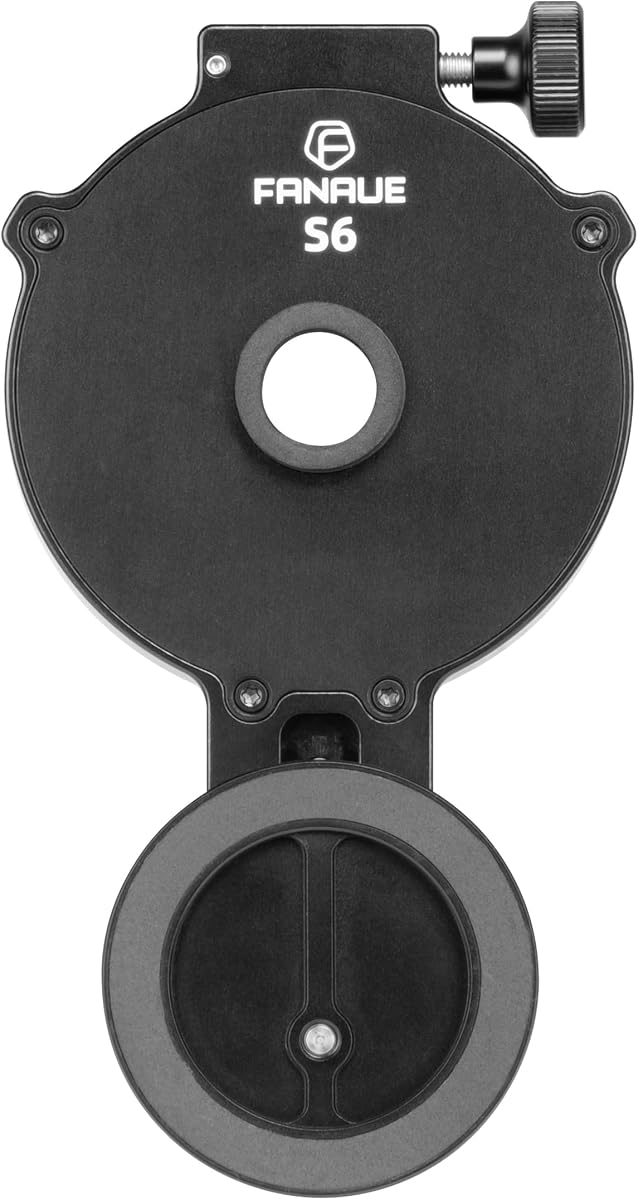
The FANAUE Telescope Phone Adapter is a magnetic, rotating option for users who value quick phone placement and simple directional adjustment. Its 4.0 rating reflects a balanced design suited to birdwatching, stargazing, wildlife observation, and general digiscoping.
We may earn a commission when you buy through this link, at no additional cost to you.
Once the adapter is secured to an eyepiece, the magnetic connection lets the user position the phone without repeatedly operating a mechanical clamp. A rotating adjustment mechanism helps set the viewing angle and align the camera with the optical path. The eyepiece range is 30 to 60 millimeters, covering a useful middle range of common spotting scope and telescope eyepieces.
Its frame is described as precision-machined aluminum, which should provide a stable connection to the optical device. The product information specifically notes that microscope users should measure the eyepiece's outer diameter first. It is also described as lightweight and portable, making it easier to carry during outdoor activities without adding unnecessary bulk.
FANAUE is a good fit for users who favor magnetic convenience over a conventional screw-style phone clamp. The main consideration is case compatibility: a magnetic interface depends on the phone or case allowing the correct attachment. There is no listed remote, so users will trigger the camera directly, and careful centering remains essential for the cleanest results.
The magnetic interface makes attaching and removing the phone fast once the eyepiece connection is secure. This is convenient for users who switch between shooting and handheld viewing.
The rotating mechanism allows the phone angle to be adjusted without relying solely on the camera's native orientation. That flexibility is useful for landscape scenes and portrait recordings.
We may earn a commission when you buy through this link, at no additional cost to you.
The for Magsafe Digiscoping Adapter stands out for its precision-machined 6061-T6 aluminum body and strong magnetic phone interface. Its 3.7 rating is not the highest in the guide, but the product offers a distinctive premium construction and a broad 28-to-64-millimeter eyepiece range.
We may earn a commission when you buy through this link, at no additional cost to you.
Two-direction adjustment lets the user move the phone up, down, forward, and backward relative to the eyepiece. The Z-axis positioning helps establish suitable eye relief for cleaner images of wildlife, celestial objects, and other distant subjects. Built-in 20 N52 neodymium magnet rings create a secure connection intended to resist the weight of the phone during use.
The adapter is machined from solid 6061-T6 aluminum blocks, anodized for durability, and finished with beveled edges intended to reduce snagging. Its listed dimensions are 133 by 90 by 34 millimeters, and it weighs 123 grams. It supports eyepieces from 28 to 64 millimeters across telescopes, spotting scopes, monoculars, binoculars, and microscopes.
This is most relevant to users with compatible magnetic cases, especially newer and larger iPhone models. It also includes a metal ring for iPhone 11 and earlier devices, Android phones, and cases that lack a native magnetic arrangement; the ring should be left in place for 24 hours before use. The adapter does not support MagSafe charging, and its rating should be weighed alongside those design choices.
The solid aluminum construction and anodized finish distinguish this model from lightweight ABS adapters. Precision machining and beveled edges are particularly useful for a device that will be handled repeatedly in the field.
Compatible iPhone cases attach directly, while the included ring extends support to older iPhones and Android devices. This broadens the adapter's usefulness without changing the core magnetic design.
We may earn a commission when you buy through this link, at no additional cost to you.
The APEXEL 360° Universal Digiscoping Phone Adapter combines a 5.0 rating with a notably light, pocket-oriented design. It is positioned as a quick setup option for birders, casual observers, and families who want to capture views without carrying a heavy metal rig.
We may earn a commission when you buy through this link, at no additional cost to you.
The adapter weighs 0.22 pound and is described as up to 60 percent lighter than bulky all-metal alternatives. A snap-on installation and a 360-degree rotation collar make it possible to change between landscape and portrait framing without removing the phone. These features are especially convenient for quickly recording birds, moon craters, distant landscapes, or other changing subjects.
Its specified eyepiece range is 23 to 50 millimeters, which excludes larger eyepieces. The product guidance recommends using the phone's 2x magnification to reduce black edges and selecting the main lens on applicable Pro and Samsung S models. It also advises disabling Macro or Auto-Switch behavior because camera selection can otherwise interfere with alignment. Minimal dark corners may remain because phone optics vary.
The included Bluetooth remote is a notable addition for a lightweight adapter. It allows photos and videos to be started without touching the phone, reducing the chance that a tap will shake the system. The combination of quick installation, low weight, remote control, and rotation makes this an excellent choice for casual users, provided the target eyepiece falls within the stated range.
At 0.22 pound, the adapter adds little bulk to a birding pack or hiking kit. The absence of bulky screw components also simplifies the amount of hardware users need to carry.
The 360-degree collar allows a phone to move between horizontal and vertical positions while remaining attached. This helps users reframe content without repeating the initial installation.
We may earn a commission when you buy through this link, at no additional cost to you.
The GOSKY Spotting Scope Phone Adapter emphasizes a straightforward installation with a 4.0 rating. It is a practical choice for beginners and for users who want a conventional phone-and-eyepiece mount without a complex three-axis mechanism or magnetic case requirement.
We may earn a commission when you buy through this link, at no additional cost to you.
Installation follows three steps: place the phone in the holder, align its camera with the eyepiece, and turn the knob to secure the assembly. The listed eyepiece range is 28 to 47 millimeters, so compatibility is narrower than the ranges offered by several larger adapters in this guide. It is aimed at everyday eyepieces and compatible binoculars, monoculars, telescopes, spotting scopes, and microscopes.
The main body uses zinc alloy with a grooved metal case, while the phone clip is high-strength PA plastic. This construction is described as durable enough for field use and harsh weather conditions. Phone compatibility is unusually broad, covering devices from 54 to 90 millimeters wide and a long list of iPhone and Samsung models.
The trade-off is precision. Without listed three-axis movement, the user must do more of the centering work manually. However, the simpler process and broad phone-width range make GOSKY a compelling choice for standard-sized eyepieces, beginners, and anyone who prioritizes a familiar clamp-and-knob design. Measuring the eyepiece first is essential.
The process avoids the complexity of multi-axis calibration. A user can position the phone, line up the camera, and tighten the knob before beginning an observation session.
A zinc alloy body supports the optical connection, while the high-strength plastic clip handles the phone. This combination keeps the adapter relatively straightforward without using an entirely plastic frame.
We may earn a commission when you buy through this link, at no additional cost to you.
The New Universal Binocular Phone Adapter is a lightweight, tool-free option with 360-degree rotation and a 3.5 rating. It offers an unusually low stated eyepiece minimum, making it potentially useful for smaller binocular, telescope, spotting scope, and microscope eyepieces.
We may earn a commission when you buy through this link, at no additional cost to you.
Its 16-to-50-millimeter eyepiece range is the broadest on the lower end among the listed products. The high-strength clamp is designed to accommodate most iPhone, Samsung, and Android phones, including many fitted with slim-to-medium cases. A single alignment window positions the phone while limiting how much of the screen is covered, and the frame can rotate through 360 degrees for different shooting orientations.
Installation requires no tools and uses a quick-release connection. Non-slip rubber pads protect the phone, while a dual-lock system secures both the eyepiece and phone. The all-ABS construction is less rigid than the machined aluminum models, making it best suited to users who prioritize portability, low cost, and fast setup over premium durability.
The single-window design requires careful alignment with the phone's main wide camera. Secondary ultra-wide and telephoto lenses will not align by design, so users with multi-camera phones must slide the device until the correct lens sits over the eyepiece. The adapter's broad fit and easy rotation are compelling, but users handling valuable equipment may prefer a stiffer metal frame.
A minimum diameter of 16 millimeters expands compatibility with smaller optics that many rigid adapters cannot grip. Measuring the eyepiece remains necessary because the listed range does not guarantee every shape will fit.
The tool-free quick-release design removes small screws from the setup process. That is useful for casual birdwatching, travel, and quick field demonstrations.
We may earn a commission when you buy through this link, at no additional cost to you.
The Snakelook Spotter Scope Phone Adapter is designed specifically for spotting scopes with larger eyepieces, including examples from SWAROVSKI and VORTEX. Its 3.1 rating is the lowest among the ten products, but its 31.75-to-67-millimeter eyepiece range makes it relevant for a clearly defined category of equipment.
We may earn a commission when you buy through this link, at no additional cost to you.
The adapter accommodates phone widths from 2.2 to 4 inches, one of the broadest phone ranges listed. Soft material surrounds the phone in three directions to shield it from impacts, while secure screw locks provide a firm grip. This combination is designed to prevent the phone from shifting after the camera has been aligned over the eyepiece.
Its compact and lightweight format makes it convenient to carry and quick to set up for travel or outdoor observation. It can be used as a telescope or spotting scope phone mount to photograph wildlife, astronomy subjects, and other distant views. The product's defining advantage is not fine mechanical adjustment but its ability to fit some of the larger eyepieces that narrower adapters cannot accommodate.
Buyers should be aware of two limitations. The phone is held by screw locks rather than a magnetic or spring-based mechanism, and the lower rating suggests less consistency than the more highly rated products. Nevertheless, if your scope has a large eyepiece and your phone falls within the generous width range, Snakelook addresses a fitting problem that many other options in this guide leave unsolved.
The upper limit of 67 millimeters offers room for large spotting scope eyepieces. The product information specifically highlights larger SWAROVSKI and VORTEX spotting scopes as target applications.
Three-sided soft material helps cushion the phone against impacts. Screw locking then maintains the grip once the desired camera position has been established.
We may earn a commission when you buy through this link, at no additional cost to you.
The SVBONY Universal Cell Phone Adapter is a long-standing-style universal holder built around an aluminum alloy shell and an adjustable steel-bolt clamp. Its 4.0 rating reflects a simple, durable approach for phones and eyepieces that fall within the specified dimensions.
We may earn a commission when you buy through this link, at no additional cost to you.
The eyepiece clamp supports diameters from 25 to 48 millimeters and does not fit two-inch eyepieces. Compatible equipment includes telescopes, microscopes, binoculars, monoculars, spotting scopes, and night-vision monoculars. Phone support is listed from 52 to 100 millimeters, with tested compatibility including many iPhone, Sony, Samsung, Motorola, and other models from earlier product generations.
Unlike a spring clamp, the steel-bolt mechanism can be adjusted and tightened to suit the device. High-density EVA pads protect the phone, while the aluminum shell is described as sturdy, durable, and lightweight. The holder can be used in up-and-down positions to take photographs and record sideways or in a more distant orientation.
This is a practical choice when a user values a simple locking mechanism and an exceptionally broad phone-width range. It is not the right choice for two-inch eyepieces or for users who require multi-axis optical alignment. Within its smaller-eyepiece target category, however, it offers a clear, durable design with straightforward setup.
The adjustable steel bolt gives users direct control over the clamp tension. Unlike a spring, it can remain stable without depending on the phone's case thickness for friction.
A supported width of 52 to 100 millimeters accommodates a wide assortment of phones. The extensive tested-device list also provides useful context for older models.
We may earn a commission when you buy through this link, at no additional cost to you.
The right phone mount for spotting scope depends primarily on eyepiece dimensions, camera position, attachment style, and the way you will carry and operate it. Measuring before buying is more important than choosing a broad compatibility claim on its own.
Start by measuring the outside diameter of the eyepiece or ocular barrel, not the advertised magnification or the diameter of a different removable component. The listed products support different ranges, from 16 to 50 millimeters in the APEXEL and New Universal designs to 28 to 64 millimeters for the Magsafe model and 31.75 to 67 millimeters for Snakelook. A mount that sounds universal is useless if the eyepiece falls just outside its range or has an unusual shape.
Measure the maximum portion expected to enter the holder and compare it with the product's stated range. Microscope eyepieces deserve particular care because several manufacturers advise checking their dimensions first. Also consider removable eye caps, adapters, or larger housings that may change the usable diameter.
Phone width is another critical dimension because a clamp that touches the screen edges, buttons, or rear camera bump may not work as intended. Supported ranges vary substantially: GOSKY and CELTICBIRD accommodate up to 90 millimeters, SVBONY lists 52 to 100 millimeters, while the tridaptor models list 60 to 87.5 millimeters. Magnetic products introduce an additional requirement because the phone or case must provide a compatible magnetic surface.
Measure the width of the phone with its everyday protective case rather than relying only on the bare model dimensions. Check whether the mount's clamp or rail can hold the device without covering the camera lens. For magnetic adapters, confirm case compatibility and whether a separate metal ring is required before expecting a secure attachment.
Precise alignment determines whether the phone camera captures a centered, evenly illuminated field or a dark, partially obstructed image. The two tridaptor adapters offer three-axis movement, the Magsafe model offers two-direction adjustment, and the FANAUE adapter uses a rotating mechanism. Simpler products still require manual positioning, but may offer less control over eye relief and camera centering.
Look for forward-and-back movement as well as side-to-side and vertical movement. Eye-relief adjustment helps the phone reach the correct distance from the eyepiece, while lateral and vertical adjustment center the active camera lens over the optical image. Consider how difficult the controls will be to operate with gloves or in changing outdoor conditions.
A rigid adapter helps keep the camera aligned with the eyepiece, but additional material adds weight and pocket bulk. Machined aluminum options such as the Magsafe and FANAUE adapters, the zinc alloy GOSKY body, and the tridaptor aluminum frames are intended to limit flex. The APEXEL adapter takes the opposite approach at 0.22 pound, while the New Universal adapter uses an ABS frame for tool-free portability.
Think about how far you walk and how often you will carry the adapter. A lightweight plastic design may be ideal for casual backyard birding or a short hike, while a metal mechanism can be worthwhile for regular wildlife photography, astronomy sessions, or a scope already supported on a tripod. The best balance is the one you will actually carry and use.
Phone retention methods include spring clamps, adjustable knobs, screw locks, magnetic interfaces, and quick-release frames. Each has distinct implications. A knob or bolt can be tightened securely but requires more deliberate setup. A magnetic adapter is fast and position-flexible but depends on a compatible phone or case. A screw-locked holder offers positive retention but adds assembly steps.
Think about whether you will switch between handheld viewing and camera operation. Rapid magnetic attachment can be useful in that situation, while a mechanical clamp may be preferable when the phone is being used only for a fixed recording session. Look for non-slip pads, protective foam, or rubber surfaces that keep the device from contacting bare metal.
A remote shutter can improve the odds of a sharp photo because the user does not need to touch the phone after framing. The first tridaptor model and APEXEL adapter include Bluetooth remotes, while the other listed products do not state that a remote is included. Rotation functions add convenience for switching between landscape and portrait formats, and quick-start guidance may be valuable for first-time digiscopers.
Do not assume a Bluetooth remote will replace careful setup. It only becomes useful after the camera is aligned and the phone is stable. If you plan to record long videos, make sure the phone has adequate battery life and storage, and verify that the selected app can respond to the included control.
Phones with several rear lenses need special attention because the adapter's alignment window may fit over the main camera but not over an ultra-wide or telephoto lens. The New Universal adapter explicitly requires the main wide lens, and APEXEL advises selecting the main lens on applicable Pro and Samsung S models. It also recommends turning off Macro or Auto-Switch functionality to prevent the software from changing lenses unexpectedly.
If you normally shoot with a secondary lens, check whether it can be selected and centered over the eyepiece. Software switching can also change the field of view after the physical mount has been aligned. Stabilization, digital zoom, or lens-selection behavior may therefore affect framing in ways that are not obvious from the adapter's dimensions alone.
Birdwatching and wildlife photography benefit from fast alignment, stable support, and a remote shutter. Astronomy can involve longer sessions and larger astronomical telescopes, making a broad eyepiece range and rigid body valuable. Microscopy may involve smaller eyepieces and delicate equipment, making measured fit and careful adjustment especially important. Casual observation may only require a simple, portable phone holder.
Also consider the environment. Outdoor users may encounter moisture, cold, dust, and uneven terrain, making a durable metal body or a lightweight design that is easy to handle worthwhile. Indoor microscope users may value compactness and short setup time more than field portability. Match the adapter's construction and features to the environment in which it will be used most often.
Begin by measuring the eyepiece and phone, then compare both with the adapter's listed limits. Assemble the holder around the eyepiece and tighten its locking mechanism evenly. Avoid forcing the adapter if the eyepiece does not slide in easily, because a misfit can damage the ocular housing or leave the mount unstable.
Place the phone in the holder with the intended camera centered over the optical path. Adjust the side-to-side, vertical, and distance controls if available, then check the phone screen for a centered, evenly illuminated circle. On multi-camera phones, select the main wide lens manually and disable automatic lens switching where the manufacturer provides that option.
Stabilize the scope on a tripod or a suitable support, use the included remote if one is provided, and avoid touching the phone while recording. After use, loosen the clamp carefully, remove the phone, and inspect the pads and fasteners for dirt. Wipe surfaces gently, keep the optical glass clean, and store the adapter in a dry case so that grit does not scratch the phone or eyepiece.
Choose based on both your eyepiece's outer diameter and your phone's width, including the case. Adapter ranges vary widely, from a 16-to-50-millimeter eyepiece range to as high as 67 millimeters. A mount that supports your phone but cannot grip the eyepiece is not usable, so measure the optic before making a selection.
No universal description can guarantee a fit because eyepieces differ in diameter, shape, and removable housing. Measure the maximum outside diameter and consider any eye cap or adapter that will remain attached. The listed products also support different minimums, so a large-eyepiece design may be unsuitable for a smaller binocular ocular.
Dark edges usually indicate that the phone camera is not centered over the eyepiece or has not reached the correct eye relief. Adjust the camera laterally, vertically, and forward or backward, then zoom the phone camera if appropriate. Some adapters recommend using 2x magnification or selecting the main lens, but minimal dark corners can remain because phone optics vary.
The main wide camera is usually the easiest lens to center over a single-window adapter. Ultra-wide and telephoto cameras sit in different positions and may not line up with the eyepiece. Disable Macro and automatic lens-switching modes when possible so the phone does not change lenses after you have carefully aligned the image.
A metal mount is generally preferable when minimizing flex and maintaining camera alignment is important. It also tends to feel more robust, although it can be heavier. A lightweight plastic design may be more convenient for casual use, travel, and long walks, provided its dual locks and eyepiece fit are secure.
A remote is helpful but not required. It allows you to start a photo or recording without tapping the phone, which reduces vibration and helps preserve alignment. Adapters without a remote can still work, but steady support and careful button presses become more important during longer recordings.
Most of the listed adapters state that they can be used with microscopes, but you should measure the microscope eyepiece first. Microscope oculars may have unusual shapes or dimensions, and some manufacturers specifically recommend confirming compatibility. A secure fit and careful camera centering are essential at high magnification.
Support the spotting scope on a tripod or stable surface, tighten every connection, and avoid touching the phone while operating the camera. Use a Bluetooth remote when included and wait for the phone to settle before beginning a recording. Stable mounting and remote triggering are generally more effective than trying to correct shake through software afterward.
The tridaptor Universal Phone Scope Digiscoping Adapter is the leading all-around recommendation because its three-axis adjustment, rigid aluminum construction, broad compatibility, and included remote address the core demands of digiscoping. The APEXEL adapter is the strongest lightweight option for small eyepieces, while the Magsafe adapter offers premium machining and a strong magnetic connection for compatible phone setups.
Before buying any model, measure the eyepiece and phone, then prioritize the features you will actually use. Fine three-axis control and a remote favor image quality, magnetic attachment favors quick changes, and a lightweight plastic or hybrid body favors portability. The best adapter is not necessarily the one with the broadest specification; it is the one that fits your exact equipment and suits your normal observation routine.
Check the current listing, included accessories, compatibility notes, and product details before ordering because availability and design information can change. Confirm that the selected adapter supports your eyepiece diameter, phone width, protective case, and preferred camera lens. With those details verified, you can choose a phone mount for spotting scope that feels dependable in the field and produces more satisfying images.