
ezcap386 4K HDMI Video Capture Card
4.8Editor score
4K60 capture and passthrough
1440p144 and 1080p240 support
HDR and VRR passthrough
Ultra-low latency streaming
Bundled ezcap Link software
This Low Latency Capture Card guide compares ten options for resolution, passthrough, latency, audio, compatibility, and streaming performance.
A low latency capture card can make the difference between responsive gameplay and a stream that feels disconnected from the action. The best models combine fast signal processing, dependable passthrough, useful resolution options, and software compatibility, but the right choice depends on your console, computer, display, and recording goals.
We compared ten capture cards using their stated specifications and feature details, focusing on capture and output resolution, maximum frame rate, HDMI capabilities, latency claims, passthrough behavior, audio support, operating-system compatibility, and suitability for gaming or live production. The list covers compact USB devices, portable cards, and PCIe models for more demanding workflows.
Each review explains the product's strongest capabilities, practical limitations, and ideal user profile. Ratings reflect the supplied customer feedback, while features such as 4K60 passthrough, 1080p240 capture, VRR support, and ultra-low latency can make a substantial difference. Product listings and technical details may change, so confirm current specifications before buying.
4.8Editor score
4.5Editor score

4.5Editor score
The comparison below highlights the most important differences among ten capture cards, including connection type, maximum stated resolution, passthrough capabilities, and the kinds of creators or gaming setups each model is designed to serve.


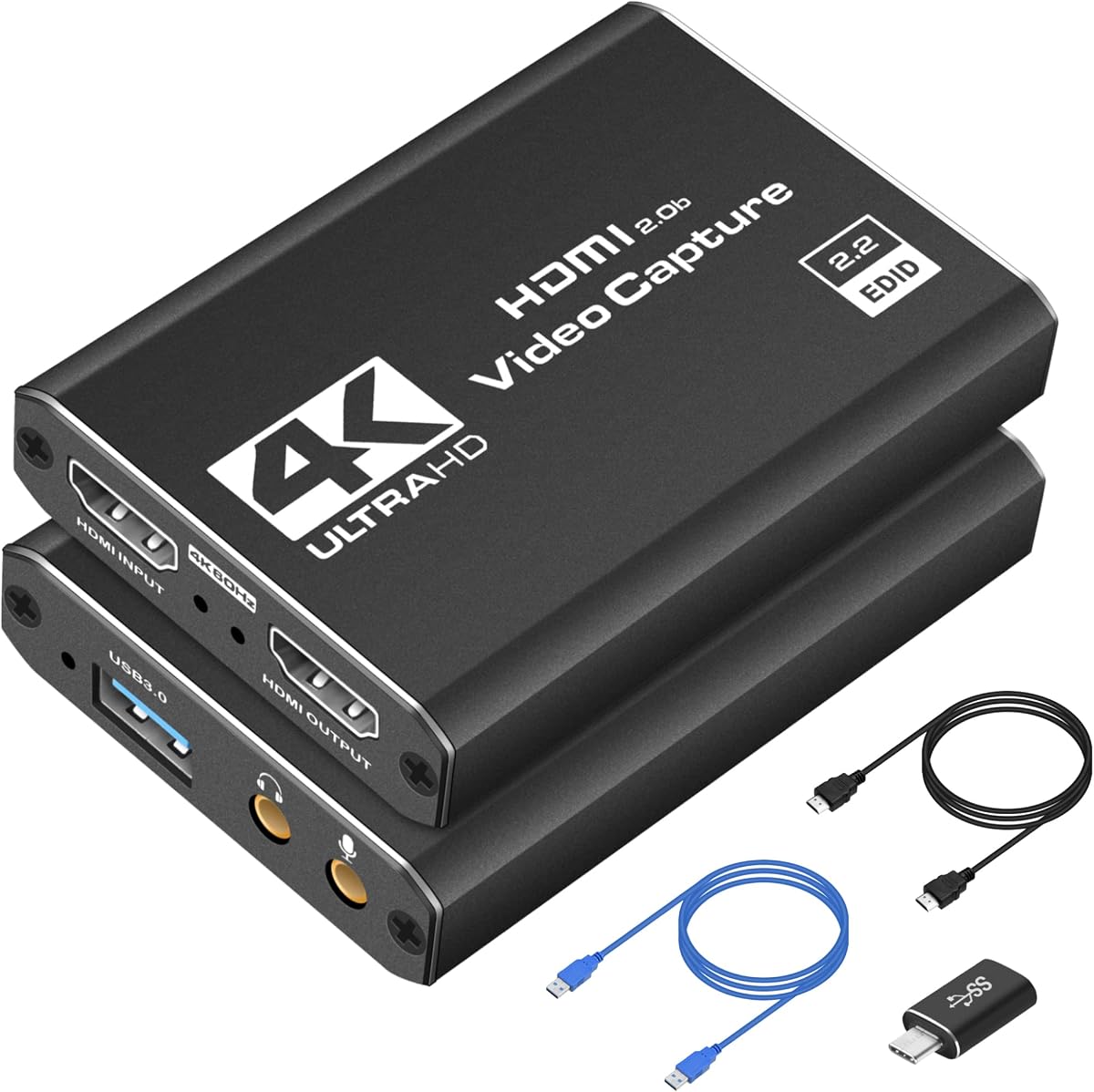


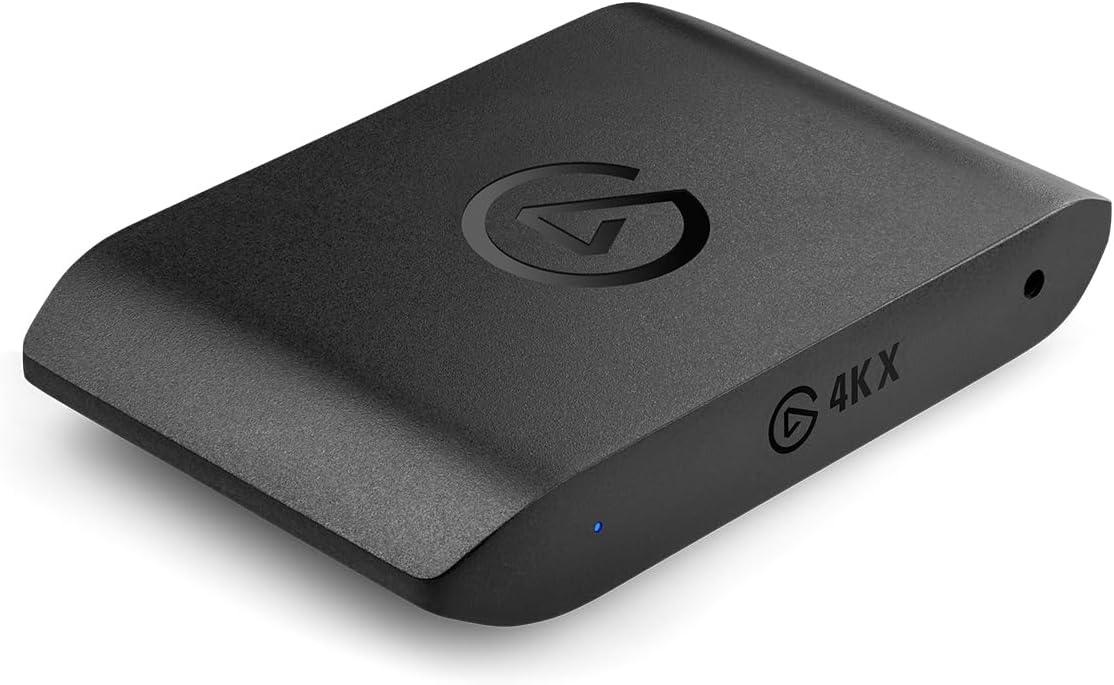
The Elgato 4K X Capture Card is a high-performance external capture solution aimed at gamers and creators who want more flexibility than a basic 1080p device can provide. Its supplied rating is 4.5, and the standout specification is support for 4K144 capture alongside HDMI 2.1 input and output. That combination makes it a strong candidate for fast-paced gaming, competitive streams, and high-refresh production workflows.
We may earn a commission when you buy through this link, at no additional cost to you.
Its headline capabilities extend beyond raw resolution. The card can document high frame rates up to 240fps in 1080p, giving fast-action recordings a smoother, more detailed look. VRR passthrough helps maintain a tear-free playing experience on compatible displays, while ultra-low latency is delivered through a USB 3.2 Gen 2 connection. It also works with major streaming and communication applications, including OBS, Streamlabs, Twitch Studio, Restream, Zoom, Teams, Discord, and YouTube.
The tradeoff is that this capability is more than many casual streamers need. Users must ensure their source, display, computer, cables, and streaming software all support the selected resolution and frame rate. HDMI 2.1 features also require compatible equipment, and high data volumes can place demands on both USB bandwidth and processing. Even so, these are reasonable constraints for a product positioned around advanced 4K and high-refresh capture.
This is the strongest all-around recommendation for a user who wants high frame rates, modern passthrough features, and extensive streaming compatibility in one device. It is particularly appealing to console owners using high-refresh displays and to PC creators who need rapid 1080p capture for competitive footage. Those seeking only straightforward 1080p recording can choose a simpler model, but the 4K X offers considerably more headroom.
Capture up to 4K144 or record up to 1080p240 when the full source chain supports those modes. This gives fast games and esports-style content more temporal detail without forcing every project into the same standard frame rate.
HDMI 2.1 and VRR passthrough support modern consoles and high-refresh displays, while USB 3.2 Gen 2 provides the bandwidth needed for demanding capture modes. Compatible accessories remain important for reliable operation.
We may earn a commission when you buy through this link, at no additional cost to you.
The Elgato 4K Pro Internal Capture Card is designed for creators with a compatible desktop who want a permanent, high-bandwidth capture path. It carries a supplied rating of 4.5 and supports 4K60 recording while allowing gameplay to pass through at up to 8K60. That makes it particularly relevant to PC-based streamers and owners of demanding consoles who want room for future display upgrades.
We may earn a commission when you buy through this link, at no additional cost to you.
Its internal PCIe connection is a major distinction from the USB cards in this list. Rather than relying on a device connection between the capture hardware and PC, the card communicates directly through the motherboard's expansion infrastructure. It can also record high frame rates up to 240fps in 1080p, and its HDMI 2.1 in/out arrangement supports advanced console and display workflows.
The obvious limitation is portability. Installing the card requires opening a compatible desktop, identifying a suitable PCIe slot, and fitting the hardware into the system. Users also need to confirm motherboard, operating system, software, and display support. Those constraints make the 4K Pro less convenient for laptop creators or anyone who changes gaming systems frequently.
It is best for a dedicated streaming or production desktop where reliable internal connectivity and top-tier specifications justify the installation effort. Users prioritizing a simple setup should look toward USB 3.0 models, while creators who routinely record demanding 4K or high-frame-rate content will find the 4K Pro more suitably equipped.
Installing the capture card inside a compatible desktop reduces reliance on external USB capture links. That can suit a stationary production system where stable throughput and a tidy internal connection are priorities.
The combination of 8K60 passthrough and 4K60 capture supports advanced display setups without requiring a constant reduction in console output. The hardware is designed to remain relevant as high-resolution and high-refresh ecosystems develop.
We may earn a commission when you buy through this link, at no additional cost to you.
The Rybozen capture card is a practical USB 3.0 option for users who want uncomplicated console or camera capture at 1080p60. It has a supplied rating of 4.3 and accepts HDMI signals from a broad collection of devices, including current and older consoles, PCs, cameras, security cameras, set-top boxes, and other HDMI sources.
We may earn a commission when you buy through this link, at no additional cost to you.
Its no-driver installation process is one of its most attractive features. The device is recognized as a webcam and works with common services such as OBS, VLC, and PotPlayer on Windows and Mac systems. The HDMI loop-out allows a connected display to continue showing the source while the video is captured. A 3.5mm microphone input also makes it possible to add commentary without routing a separate audio interface.
The main limitation is output and capture resolution. Although the HDMI input supports 4K30 and several high-refresh input modes, the capture output is limited to 2K30, while 1080p60 is the practical target. The absence of 1080p240 capture, advanced HDR passthrough, and modern high-speed USB bandwidth means it is better suited to standard streaming than demanding professional recording.
This card makes sense for a first streaming setup, classroom presentation, camera feed, or budget-conscious console stream. It is a good fit when reliable 1080p60 capture, loop-out, and a straightforward setup matter more than advanced frame rates. Creators producing frequent high-resolution esports or cinematic footage should look higher in the range.
The device avoids driver installation and external power, reducing the number of setup barriers. It can be recognized automatically by a compatible computer and used with familiar streaming and media applications.
The 3.5mm microphone input provides a convenient route for adding a headset or external commentary. It is especially helpful for gamers who want live narration without adding another large piece of equipment to the desk.
We may earn a commission when you buy through this link, at no additional cost to you.
The UGREEN 2K30 1080p60 Video Capture Card is an adaptable USB device for creators who need to capture from many different source types. Its supplied rating is 4.5, and the combination of 4K30 HDMI input, 2K30 output, and backward-compatible 1080p60 capture provides useful flexibility for ordinary streaming and recording tasks.
We may earn a commission when you buy through this link, at no additional cost to you.
A major advantage is the inclusion of both USB-A and USB-C connections. The card can work with laptops, desktops, tablets, smartphones, and compatible Quest devices without requiring the user to commit to one connector type. Five gigabit transfer speed helps minimize delay, and the card remains backward compatible with USB 2.0 when the computer lacks a faster interface.
The device supports Windows, macOS, Linux, phones, and tablets, along with widely used software including OBS Studio, XSplit, PotPlayer, and QuickTime. It also supports several console families, although protected content may need to be disabled. Because its signal path is one-way, it cannot accept a USB-C-to-HDMI source or send a direct display signal back to a television.
This is a strong general-purpose choice for a beginner or a creator who moves between desktop and mobile systems. It is less suitable for projects that need 4K60 recording, 1080p240 capture, or sophisticated passthrough, but it delivers an unusually flexible connection package for a basic capture workflow.
Having USB-A and USB-C interfaces available makes the card useful across systems with different ports. It is particularly convenient for mobile creators and owners of mixed device collections who do not want to carry several adapters.
The aluminum alloy casing helps dissipate heat and resist electromagnetic interference. Its compact form and built-in cable also make the card easier to carry between home, event, and classroom setups.
We may earn a commission when you buy through this link, at no additional cost to you.
This compact capture card is aimed at entry-level streamers, mobile creators, and users who need a simple way to record HDMI gameplay or camera output. It has a supplied rating of 4.4 and captures at up to 1080p60 through a USB 3.0 connection. Its 4K HDMI input provides room for modern source devices, even though the recorded output remains at Full HD.
We may earn a commission when you buy through this link, at no additional cost to you.
The setup experience is refreshingly simple. No additional drivers are required, and the card is presented as compatible with OBS Studio, Streamlabs, and XSplit. It supports Nintendo Switch, PS5, Xbox Series X, DSLR cameras, and PCs, giving new creators a way to begin without replacing their entire capture ecosystem. Seamless passthrough is also highlighted for use during gameplay.
Its limitations come from its focus on core functionality. The listed specifications do not include advanced HDR or VRR passthrough, 1080p240 capture, surround-channel audio, or a dedicated microphone input. Users who depend on those features may find the absence of specific technical details frustrating when planning a more advanced production.
The card is best for standard 1080p60 live streams, portable recording sessions, and uncomplicated console capture. It is a sensible choice for someone beginning to learn OBS or streaming, while experienced creators should prioritize models with more explicit high-frame-rate, audio, and display specifications.
The small enclosure and driver-free design make the device easy to deploy quickly. It can move from a home console setup to an event or LAN gathering without requiring a separate power supply.
Compatibility with OBS Studio, Streamlabs, XSplit, and common HDMI sources reduces the learning curve. Users can keep the same basic workflow while choosing among consoles, PCs, and cameras.
We may earn a commission when you buy through this link, at no additional cost to you.
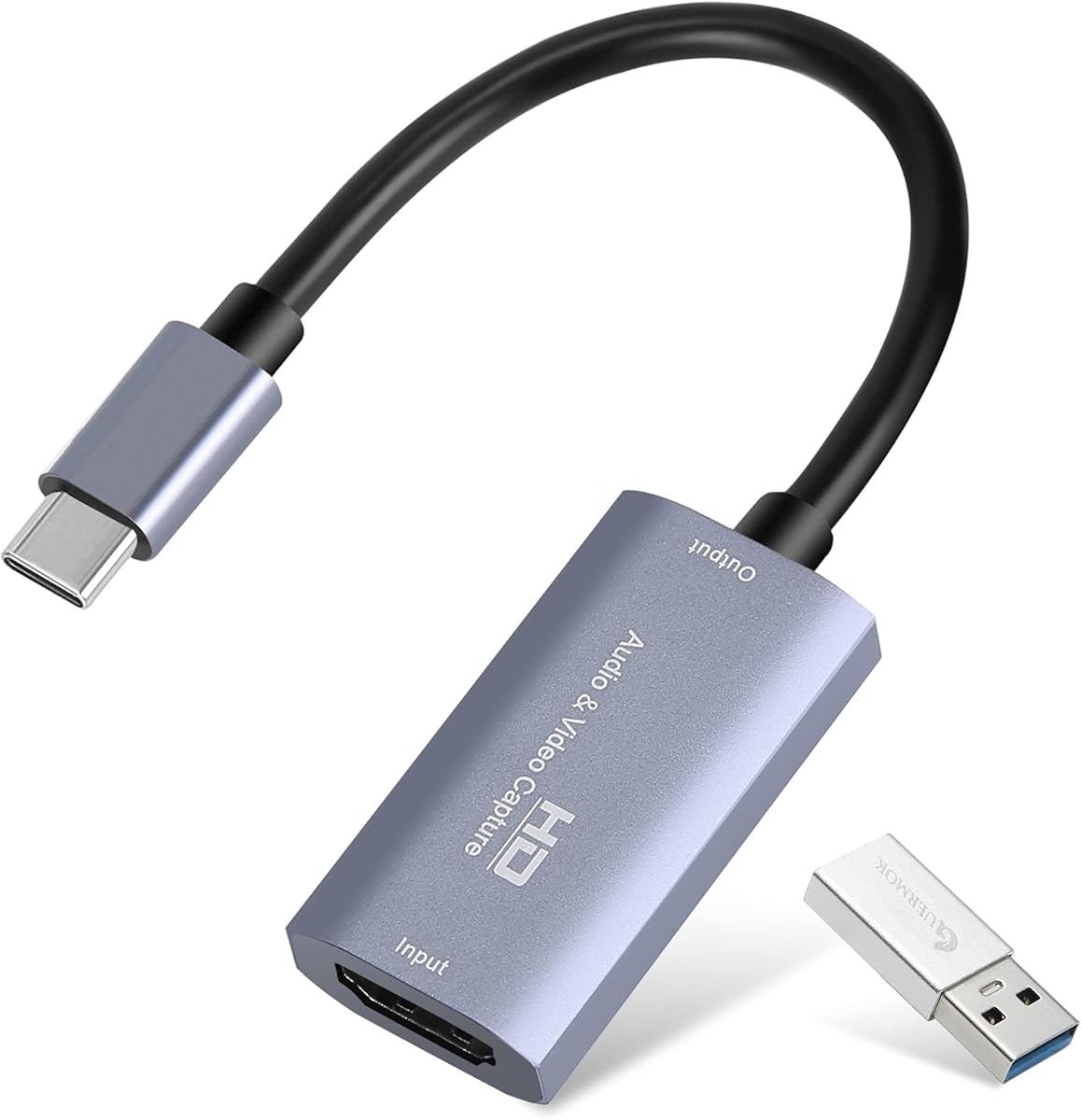
The Guermok Video Capture Card is a compact and flexible option for standard 1080p60 recording. Its supplied rating is 4.4, and it supports 4K30 HDMI input alongside 2K30 or 1080p60 output. The USB-C and USB interface coverage makes it useful with a wide range of computers, including systems that do not have USB-A available.
We may earn a commission when you buy through this link, at no additional cost to you.
Its aluminum alloy construction is designed to dissipate heat, while the small, lightweight body is easy to transport. No drivers or external power are required, and the device is compatible with Windows, macOS, Linux, Android, and several other device categories. It can be used for game recording, video conferencing, teaching, live streaming, and general video transfer.
There are important setup notes. It requires capture software and is not designed to cast directly to a monitor or television. The included USB 3.0-to-USB-C adapter may be recognized as USB 2.0 on one orientation, so the card may need to be flipped and reconnected. The product also introduces millisecond-level latency through video decoding, and supported resolution depends on whether the software uses MJPEG or YUY2.
This model suits creators who value portability and broad source compatibility more than professional passthrough features. It works well for teaching, meetings, and 1080p streaming. Users who need a direct display output, detailed surround audio, or consistent performance under heavy bandwidth loads should consider a more specialized capture card.
USB-C and USB-A support makes the card easier to use with contemporary and older systems. Its broad operating system coverage also allows the same device to move between a desktop, laptop, tablet, or compatible mobile workflow.
The supplied instructions recommend a native USB 3.0 port and explain how to identify whether an adapter is being recognized at the intended speed. This check helps prevent reduced resolution or signal loss.
We may earn a commission when you buy through this link, at no additional cost to you.
The AVerMedia Live Gamer Ultra S is a feature-rich capture card for creators who need more than basic 1080p recording. It has a supplied rating of 4.2 and supports capture and streaming at up to 4K60 while also providing passthrough for supported high-refresh modes. Its specification set is particularly thorough, with HDR, VRR, ultrawide input, high-frame-rate recording, and surround audio.
We may earn a commission when you buy through this link, at no additional cost to you.
The card can capture 1440p144 or 1080p240 passthrough and use Streaming Center to record VRR at up to 1440p60 or 1080p240. It supports 3440×1440 and 2560×1080 input for 21:9 displays. On Windows, its USB 3.2 Gen 1 Type-C connection can carry 5.1-channel audio through Streaming Center or the Streaming Center Plug for OBS.
That breadth also creates more setup variables. Streaming Center may be needed for certain recording and audio workflows, while supported source and display modes remain dependent on the console, GPU, monitor, game, and operating system. Compared with simpler driver-free cards, the Ultra S is less about instant connection and more about managing a capable production pipeline.
It is a strong option for streamers and recording artists who need 4K60, high-refresh gaming, ultrawide support, or multichannel audio. New users focused on straightforward 1080p streams may find a simpler model more convenient, but serious console and PC creators will find this card's feature set unusually complete.
Support for 4K60, 1440p144, 1080p240, and VRR recording makes the card suitable for modern high-performance displays. It allows gameplay to remain visually smooth while still being captured at a high frame rate.
The ability to capture 5.1-channel audio on Windows adds value for games, films, and live events. Streaming Center integration gives creators a more complete toolset than a basic webcam-style device.
We may earn a commission when you buy through this link, at no additional cost to you.
The Acer USB 3.0 HDMI Capture Card is an approachable option for gamers and presenters who want 1080p60 output, loop-out, and convenient microphone support. Its supplied rating is 4.5. The device accepts 4K HDMI input and produces 1080p60 output, using YUY2 processing that the product description says provides richer color than MJPEG.
We may earn a commission when you buy through this link, at no additional cost to you.
The built-in 3.5mm microphone input is a notable convenience for commentary. It allows a headset or microphone to feed the capture setup without a separate adapter, helping keep voice and video together for gaming streams, online classes, and vlogging. The HDMI loop-out also lets a local display remain connected while the computer receives the capture feed.
This is not a card for high-end 4K recording. Its output is limited to 1080p60, and the specifications do not include 1080p240 capture, HDR passthrough, VRR, or surround audio. It prioritizes ease of use and everyday compatibility with OBS, XSplit, VLC, and major streaming services, so high-resolution production specialists will want a more advanced model.
The Acer card is best for standard console streams, teaching, presentations, and compact recording setups where a microphone and local loop-out matter. Its small, driver-free, no-external-power design makes it easy to deploy, while its strong supplied rating reflects a favorable balance of useful features and straightforward operation.
A dedicated 3.5mm microphone connection simplifies voice capture for a headset or standard microphone. That convenience is especially useful for gameplay commentary and educational broadcasts.
HDMI loop-out allows the source to remain visible on a connected display while the computer captures it. This arrangement can provide a more natural playing experience in a multi-screen setup.
We may earn a commission when you buy through this link, at no additional cost to you.
The ezcap386 4K HDMI Video Capture Card is a feature-focused external solution with the strongest supplied rating in the group at 4.8. It supports HDMI loop-out and capture at 4Kp60, 1440p144, and 1080p240. Those specifications place it among the most flexible options for high-refresh gaming, detailed recordings, and live production.
We may earn a commission when you buy through this link, at no additional cost to you.
HDR and VRR passthrough are central to its appeal. On a compatible television and source, the card can preserve a smooth, tear-free gaming experience while capturing the same session. A high-speed USB-C 3.0 connection provides the transfer path, and the product supports OBS and Streamlabs for standard streaming workflows.
The included ezcap Link software provides dedicated support for capture configuration and streaming tasks, which can be helpful for users who want vendor-guided setup. However, software does not remove the need for compatible hardware. Achieving 4K60 or high frame rates requires a capable source, display, computer, and USB path. Users should also confirm which modes and platforms are supported by their chosen application.
This card is a particularly attractive choice for console streamers and competitive creators who want 4K60, high-frame-rate capture, and modern display features in a portable external design. It is also a strong option for users who appreciate bundled management software. The supplied rating and extensive feature set justify serious consideration for a modern gaming workflow.
Beyond 4K60, the card supports 1440p144 and 1080p240 capture for creators who need exceptionally fluid motion. This range offers useful options for action games, fast sports, and competitive footage.
HDR and VRR passthrough create a more polished playing environment on compatible hardware. Bundled ezcap Link software adds a guided path for configuring capture and managing professional streaming tasks.
We may earn a commission when you buy through this link, at no additional cost to you.
The Elgato Game Capture Neo Black is a highly portable capture card for console players, mobile creators, and users who want a simple connection to a computer or iPad. Its defining feature is a body described as being the size of a smartphone. Despite that compact footprint, it provides 4K60 HDR passthrough and records or streams at 1080p60.
We may earn a commission when you buy through this link, at no additional cost to you.
Setup is deliberately direct: connect the console or other source, connect a gaming screen, and then connect the capture card to the computer or iPad. It supports PlayStation, Xbox, Switch, and other compatible consoles, as well as a conventional PC source. That makes it appealing for people who want a tidy, travel-friendly streaming kit.
Its limitation is the distinction between passthrough and recording. While the console can maintain a 4K60 HDR image on a local display, the capture output is 1080p60. There are no stated advanced features for 1080p240 capture, high-frame-rate 4K recording, VRR passthrough, or surround audio in the supplied information, so it is not aimed at the same advanced workflow as the 4K X or ezcap386.
This is a strong choice for travel, console streaming, and creators who value compactness and quick setup over maximum recording specifications. The absence of a supplied rating means there is no customer feedback value to compare, but the stated feature set remains focused and easy to understand for its intended use.
The smartphone-sized enclosure minimizes desk space and fits easily into a travel bag. It is well suited to console players who stream from different locations or want a less permanent desktop arrangement.
The card can pass a 4K60 HDR console image to a compatible gaming screen while recording 1080p60. This provides a practical way to preserve console display quality without requiring every streaming project to use 4K capture.
We may earn a commission when you buy through this link, at no additional cost to you.
The right capture card depends on more than headline resolution. Source output, frame rate, passthrough, connection bandwidth, audio needs, software support, and portability all influence the experience, so the following factors deserve attention before making a selection.
Start with the resolution and frame rate you actually plan to record. A card that captures 1080p60 is sufficient for many streams, tutorials, meetings, and console sessions, while 4K60 provides more detail for cinematic footage, large displays, and future-proofed archives. High-frame-rate options such as 1080p240 or 1440p144 are valuable for competitive gaming, fast action, and slow-motion editing. Always distinguish input resolution from output resolution, because a device may accept 4K signals while recording at a lower format.
Passthrough lets you view the source on a local display while the computer captures it. Look for HDMI loop-out, HDR support, and VRR passthrough if you use a modern high-refresh gaming display. These features can preserve smooth console performance even when the captured file uses a different resolution. Compatibility matters: the source, capture card, display, firmware, and sometimes the game must all support the selected passthrough mode.
Capture speed is only as reliable as the connection carrying it. USB 3.0 and faster interfaces are necessary for many advertised modes, while a PCIe connection can provide more consistent bandwidth inside a compatible desktop. If a device includes adapters, verify that the correct side and port are being used because a fallback to USB 2.0 can reduce attainable resolution or cause instability.
Latency is the delay between an input action, the image on a local display, and the captured or streamed result. Some products advertise ultra-low latency, while others acknowledge millisecond-level decoding delays. The practical result depends on the entire chain, including the game, console, capture device, USB connection, encoder, software, and viewing platform. For competitive play, prioritize devices explicitly designed for low-latency passthrough and confirm that loop-out remains responsive.
A capture image without synchronized audio is rarely ready for publication. Check whether the device captures audio directly from HDMI, supports external microphones, accepts 3.5mm headsets, or handles surround channels. Higher-end models may provide dedicated software for 5.1-channel audio, while simpler cards may require separate routing through OBS or a digital audio interface. Also verify that the operating system and application recognize the selected audio format.
The capture hardware must be recognized by your computer and streaming application. OBS Studio, Streamlabs, XSplit, PotPlayer, VLC, QuickTime, Zoom, and Teams are mentioned across the featured products, but specific formats may differ. Check the required operating-system version, especially for iPadOS compatibility, and determine whether the card needs a vendor utility for advanced resolution, audio, or VRR recording.
Console output can include protected content, and capture cards cannot record protected broadcasts or games when restrictions remain enabled. The supplied details for several models mention enabling HDCP-disabled modes on supported consoles. Even when a console or game supports clean capture, exact behavior may vary by title and system. Treat the card as a capture tool rather than a universal way to bypass content protection.
External USB cards are easiest to move between systems, while an internal PCIe card usually provides a more permanent high-bandwidth installation. Compact aluminum housings can improve heat dissipation and durability, especially during long sessions. Consider the number and type of cables, whether the connection is fixed or detachable, and the space available around a laptop or console. A portable device is valuable only if its bandwidth and thermal design suit the selected recording mode.
Begin by confirming that the source device, capture card, display, and computer support the resolution and frame rate you intend to use. Connect the source's HDMI output to the card's HDMI input, connect the card's HDMI output to a compatible display when passthrough is needed, and attach the USB connection to the correct high-speed port. For a PCIe model, shut down the computer and install the card in a compatible slot before applying power.
Open the streaming or recording application and select the capture card as the video source. Choose the desired input and output format, then configure audio according to whether the signal comes from HDMI, a 3.5mm microphone, or another route. If the image is absent, check the source resolution, protected-content status, USB recognition, and any adapter orientation. After changing audio settings in some applications, restarting the software may be necessary for sound to appear correctly.
To protect the hardware, keep the capture card and cables away from pressure, moisture, excessive heat, and strong interference. Do not repeatedly reconnect the USB connection while a recording is active, and allow the aluminum housing to dissipate heat during long sessions. Periodically inspect connectors, update relevant software, and test a short recording before an important stream. When traveling, use a padded case and keep the device stored in a dry, cool environment.
The most important feature depends on how you will use the card. Competitive gamers should prioritize low-latency passthrough and a reliable loop-out, while content creators may value high-resolution capture, frame rate, and audio. A card is only effective when the source, display, computer, cable, and software support the selected mode.
No. Many devices accept a 4K HDMI input but record at 1080p or 2K. Review the output resolution separately from the input resolution. If 4K recording is essential, look for explicit 4K capture specifications and verify that the computer and streaming application can process the resulting data rate.
USB 3.0 is generally sufficient for many 1080p60 workflows when the card, source, and application are properly configured. The capture format also matters, and slower or incorrectly recognized connections can cause instability. Use the fastest native USB port available and avoid unnecessary adapters when possible.
Capture cards cannot record content that remains protected by HDCP or another content-protection system. Some supported consoles and games provide a separate capture-friendly mode, and certain product descriptions mention using those modes where available. Capture rules and game-specific behavior can change, so users should consult current console and title guidance.
Loop-out can introduce a small delay because the signal passes through the capture device, although cards designed for gaming are built to keep that delay very low. The exact experience also depends on the capture card, source, display, and viewing mode. A device with explicit ultra-low latency specifications and VRR passthrough is generally better suited to competitive play.
An internal PCIe card generally suits a dedicated desktop and can provide a stable, high-bandwidth connection, but it requires installation and a compatible motherboard. An external USB card is easier to move between computers and is more convenient for laptops, travel, and temporary setups. Choose based on your hardware and how often you expect to change systems.
A black screen can result from an unsupported resolution, protected content, an incorrectly recognized USB connection, missing applications, or a source that is not enabled for clean capture. Start with a common 1080p60 mode, connect the source directly to the display to confirm it works, and use the fastest available USB port. Checking the application's source selection and restarting it after configuration changes can also resolve the issue.
1080p60 is a versatile choice for standard streaming and recording, while 1440p144 or 1080p240 provides smoother motion for fast games and competitive footage. The selected rate must be supported by the console, game, display, capture card, computer, and software. Lower rates can reduce file size and processing demands, but they also reduce temporal detail.
The Elgato 4K X stands out as the strongest all-around choice for high-frame-rate capture, HDMI 2.1, VRR passthrough, and broad streaming compatibility. The ezcap386 is especially compelling for creators attracted to 4K60, 1080p240, HDR, VRR, and bundled software, while the UGREEN card offers a flexible and approachable route into 1080p60 capture with both USB-A and USB-C.
Prioritize the capabilities your actual setup requires rather than selecting on resolution alone. Low-latency passthrough matters for competitive gaming, audio and recording formats matter for production, and PCIe or USB architecture determines how the device fits into your workflow. Verify every supported mode against your console, display, computer, cable, operating system, and application before making a final decision.
Product availability, included accessories, firmware behavior, and listed technical details can change over time. Review the current product page and user guidance before purchasing, particularly if you depend on 4K60, high frame rates, surround audio, VRR, or protected-content capture.