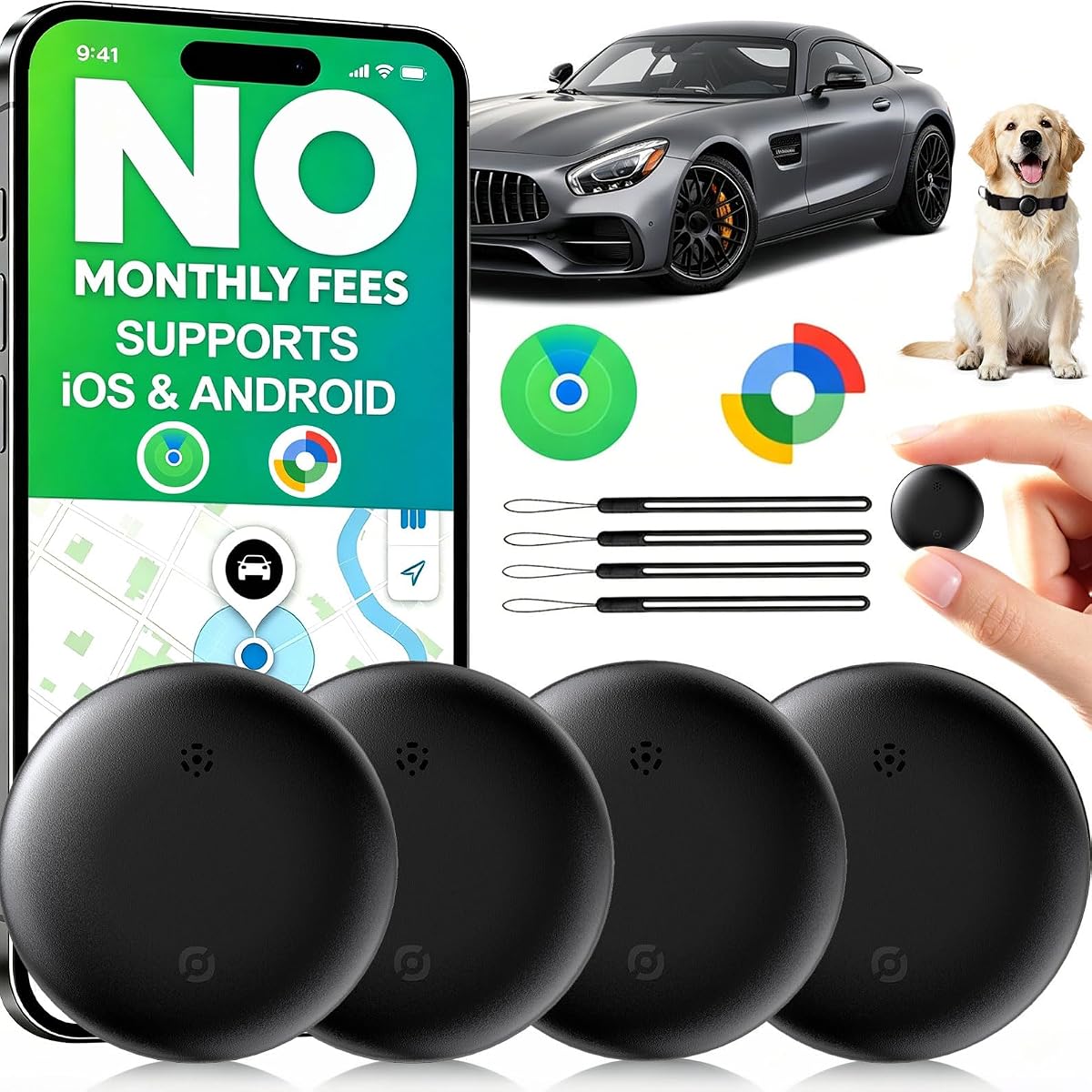
GPS Tracker for Vehicles, Mini Hidden Magnetic Real-Time Car GPS Tracking
5.0Editor score
No subscription required
Free iOS and Android app
IP68 waterproof magnetic housing
Historical location playback
GPS Tracker for Wheelchair Users guide compares ten compact trackers for location updates, alerts, battery life, waterproofing, mounting, privacy, and ease of
A GPS tracker for wheelchair users can add an extra layer of safety and independence by showing the chair’s current location, movement history, and alert status through a smartphone. The most useful device is not simply the smallest one; battery life, attachment security, network compatibility, and understandable alerts matter just as much.
This guide compares ten trackers using the supplied specifications, focusing on location frequency, geofencing, sound alerts, waterproof protection, power requirements, mounting options, and recurring-service requirements. It also considers how each tracker could work for an authorized wheelchair user without assuming that every vehicle-focused product is suitable for a person.
The list includes trackers with different trade-offs, from subscription-based devices with global cellular coverage to compact tags that work through Apple Find My or Google Find Hub. Each review explains the strongest use case and limitations, while current prices and availability should be checked because they can change.
5.0Editor score

4.3Editor score

4.3Editor score
The comparison below highlights the core differences among the ten trackers, including their tracking systems, power approaches, physical size, and suitability for attachment to a wheelchair frame. None of the supplied products is described as a dedicated wheelchair tracker, so users should confirm fit, consent, coverage, and alert behavior before relying on one for safety-critical monitoring.




The LandAirSea 54 GPS Tracker earns a 4.1 rating and stands out for detailed, fast location reporting. Its supplied specifications state that location updates can arrive as quickly as every three seconds, with mapping through web software or the SilverCloud app. That makes it one of the most responsive options in this guide when network conditions and device settings permit.
We may earn a commission when you buy through this link, at no additional cost to you.
Its strongest features include real-time alerts, geofencing, historical playback for up to one year, and a motion-activated sleep function. The internal magnet and compact housing make it easy to attach to a metal chair frame or another suitable surface, although users must secure it against bumps, vibration, and any part of the chair that could interfere with the magnet.
The primary trade-off is the required subscription. It may also be less convenient for independent use than a tracker that depends on nearby phones, because a cellular service plan and compatible account are necessary. Its product positioning is also oriented toward vehicles, motorcycles, carts, and other assets rather than dedicated personal or medical monitoring.
This is a strong choice for a wheelchair user or caregiver who values frequent updates, geofences, and long playback history, and who is comfortable managing a subscription. It is less suitable for anyone who needs a self-contained tag with no recurring cost or a simple find-my-network device without SIM-card management.
The advertised three-second update interval can be valuable when a caregiver wants timely awareness of a chair’s movement. Users should still test how the device performs around buildings, underground areas, and other locations where cellular or GPS reception may be limited.
Historical playback for up to one year is unusually useful for reviewing travel routes, unexpected chair movement, or patterns in everyday journeys. Retention and access also depend on the active service and account settings.
We may earn a commission when you buy through this link, at no additional cost to you.
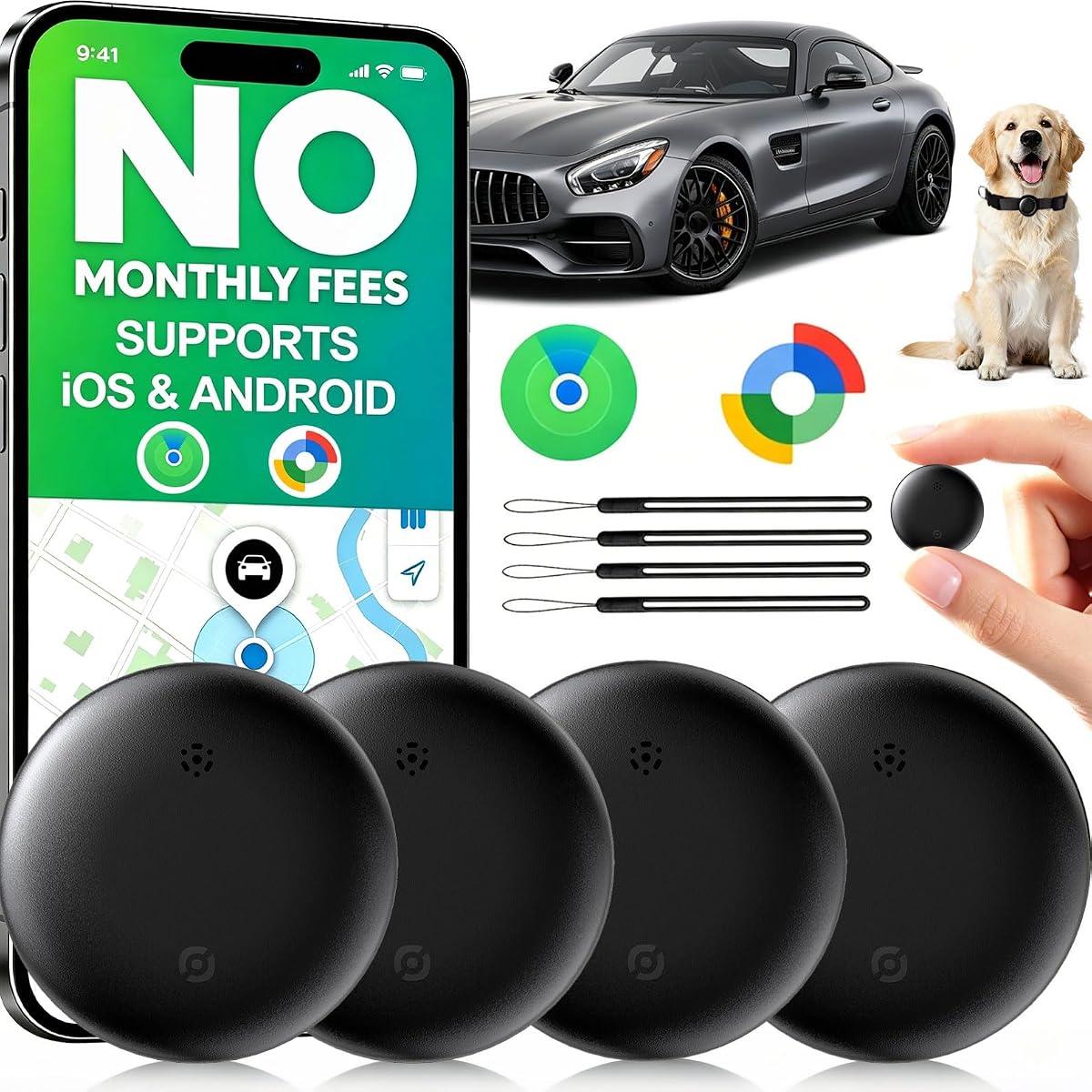
The Mini Hidden Magnetic GPS Tracker has a 5.0 rating and offers an attractive combination of a tiny form factor, a free app, and no subscription requirement. The supplied information says it works with iOS and Android, does not require a SIM card, and provides real-time location tracking through the user’s phone.
We may earn a commission when you buy through this link, at no additional cost to you.
Its 1.1-by-1.1-by-0.3-inch housing weighs only 0.5 ounces, making it less intrusive than larger vehicle trackers. A built-in magnet, shock resistance, and IP68 protection make it well suited to outdoor frame attachment. Historical location records, route playback, and family location sharing add value for authorized monitoring.
The product’s tracking method appears to depend on the connected phone and surrounding network rather than a dedicated cellular plan. Exact update speed and indoor accuracy can therefore vary, and users should not treat a displayed location as guaranteed in every environment. The listing also positions the product mainly for vehicles, motorcycles, pets, children, and elders rather than wheelchairs specifically.
For someone seeking a discreet, inexpensive tracker without another monthly bill, this is a compelling option. It is particularly attractive when a caregiver already uses the same app and can keep a phone nearby. For primary use during independent travel, however, buyers should test cellular reception and verify the product’s location behavior in relevant areas.
Eliminating subscription and SIM expenses can make long-term monitoring simpler and more predictable. The phone-based approach also reduces the number of accounts that caregivers need to manage, although it may place more reliance on nearby mobile devices and app behavior.
At only 1.1 inches across and 0.5 ounces, the tracker can fit into more confined frame areas than a larger asset tracker. Its IP68 rating and vibration-resistant magnetic case support outdoor use, though the attachment must avoid moving parts and pinch points.
We may earn a commission when you buy through this link, at no additional cost to you.
The Two-Pack Find My Tracker has a 4.3 rating and combines a small waterproof design with an unusually generous battery claim. It uses Apple Find My for iOS or Google Find Hub for Android, without subscription or monthly charges, but the supplied information notes that it cannot pair simultaneously with both operating systems.
We may earn a commission when you buy through this link, at no additional cost to you.
The tracker weighs just 0.25 ounces and includes a replaceable battery with a lifespan stated at up to 365 days. It can be paired with a phone in seconds, and the app can report real-time location through nearby iOS and Android devices. An 80–100dB built-in speaker provides a useful sound alert when the item is within Bluetooth range.
Network-based location can be less consistent than dedicated cellular or satellite tracking, especially where few phones are nearby or signals are blocked. The sound alert is also most useful for finding a stationary item in a home, vehicle, or other nearby location rather than searching an entire outdoor area from a distance.
The two-pack makes this an attractive option for a wheelchair user and caregiver who want a spare unit, a backup attachment, or separate devices for a chair and personal belongings. It is also a good fit for households that use only one mobile ecosystem and want long battery life without recurring service fees.
Because the tracker operates through Find My or Find Hub, it does not require the user to learn a separate cellular service dashboard. It also means the product cannot be paired with iOS and Android accounts at the same time, which should be considered in multi-platform households.
The loud built-in alert can reveal a tracker hidden under a cushion, in a bag, or behind accessible storage. It is particularly helpful during transfers, maintenance checks, or indoor troubleshooting when a precise map pin is not the main concern.
We may earn a commission when you buy through this link, at no additional cost to you.
The Tracki Universal GPS Tracker has a 4.1 rating and combines compact dimensions with dedicated 4G LTE Cat1 tracking. At about 1.77 by 1.46 by 0.55 inches and 1.26 ounces, it is small enough to carry in a bag or attach to a suitable wheelchair frame without the bulk of a vehicle asset tracker.
We may earn a commission when you buy through this link, at no additional cost to you.
Automatic location updates occur every minute, while manual pings can be requested every five seconds. The service supports geofence, speed, movement, and SOS alerts through an iOS app, Android app, web app, email, and optional SMS. A Bluetooth proximity mode and audible beep can also help locate the device nearby.
Its 600mAh replaceable battery is listed as lasting five to seven days during active use or up to 45 days in battery-save mode. The connected service, built-in global SIM, worldwide cellular coverage, and app access require a subscription. It works where cellular service is available and is explicitly not a satellite emergency beacon.
This is a good option for users who want a compact, dedicated tracker and accept an ongoing plan. Its movement, speed, and geofence alerts may be valuable for authorized family monitoring. Users relying on it for emergencies should keep it charged, maintain cellular coverage, and pair it with a separate emergency response method.
Using 4G LTE Cat1 makes this a more conventional live tracker than a nearby-phone finder. That architecture is well suited to independent travel, provided the user has cellular coverage and a current subscription.
Geofences, speed alerts, movement notices, and an SOS function offer several ways to monitor a chair. The included buttons should be programmed and tested so an alert goes to the intended caregiver rather than being left unused.
We may earn a commission when you buy through this link, at no additional cost to you.
The Tracki Pro GPS Tracker has a 4.3 rating and is the most substantial tracker in this group. Its 10,000mAh battery can support two to seven months of active use at one-to-five-minute updates, or up to 12 months in sleep mode, depending on activity and settings.
We may earn a commission when you buy through this link, at no additional cost to you.
It provides 4G LTE Cat1 service through a built-in global SIM, with coverage listed across more than 185 countries. Outdoors, GPS accuracy is stated at five to ten meters, and Wi-Fi fallback is available indoors when GPS reception is difficult. Users can receive speed, geofence, movement, idle-time, impact, and battery alerts.
The trade-offs are size and service cost. The unit measures 3.54 by 2.48 by 1.46 inches and weighs 18 ounces, so it is better understood as a vehicle or equipment tracker than a discreet personal tag. The listing also says it is not designed for people or pets, although the same consent and safe-mounting principles still apply to an authorized wheelchair context.
This premium model is most appropriate for a user who values long intervals between charges, robust global cellular tracking, and a broad alert set over minimal size. Its strong magnet and included screw mount provide stable placement options. Confirm that the larger housing will not interfere with the wheelchair’s folding mechanism, cushion, controls, or transfer space.
The 10,000mAh battery is the defining advantage of this model. It reduces the frequency of charging compared with compact cellular trackers, although actual runtime depends on movement, update rate, cellular signal, and sleep settings.
Impact, idle-time, speed, and movement alerts can be useful for long journeys and fleet-style oversight. Users should establish clear notification rules so important alerts are not buried by routine location reports.
We may earn a commission when you buy through this link, at no additional cost to you.
The Optimus 3.0 GPS Tracker Bundle has a 4.3 rating and is aimed at detailed vehicle and asset monitoring. It supports customizable position updates as frequently as every 10 seconds, with one-minute reporting as the default, and provides instant text or email alerts through its tracking software.
We may earn a commission when you buy through this link, at no additional cost to you.
Its battery life is advertised at up to two months while reporting at the default setting. A powerful twin-magnet case helps keep the device secure on metal surfaces, which is a useful starting point for attaching it to a wheelchair frame. The software also supports live viewing of a vehicle, machinery, valuables, or loved ones.
Its largest limitation is coverage. The supplied information lists the USA, Canada, and Mexico, which is adequate for some users but unsuitable for international travel. A monthly subscription is also required, and the product is not described specifically as a wheelchair tracker, so installation and privacy planning remain important.
Optimus is a solid choice for users who want unusually precise, user-controlled reporting intervals and do not need international cellular service. It suits a wheelchair user traveling mainly within the covered region who values frequent updates and simple text or email notifications. Users should test the magnetic case on every terrain where vibration or impacts are common.
Frequent updates can provide near-real-time awareness but may also increase power use and service activity. Longer intervals are generally more practical for routine travel where the main goal is route review rather than continuous surveillance.
Coverage in the USA, Canada, and Mexico limits where the tracker can provide cellular location services. Anyone crossing international borders should choose a product with broader coverage or plan for a different tracking arrangement.
We may earn a commission when you buy through this link, at no additional cost to you.
The Dual-System No-Fee Tracker has a 4.0 rating and offers an exceptionally small, simple option. It measures 1.26 by 1.26 by 0.31 inches, weighs 0.25 ounces, and uses Apple Find My or Google Find Hub without a subscription or monthly fee.
We may earn a commission when you buy through this link, at no additional cost to you.
Its most useful feature is the ability to display distance to a lost item and trigger an 80–100dB sound through the built-in speaker. That makes it effective for locating a tracker hidden in a chair bag, under a cushion, or in a nearby drawer. The app pairs quickly and adjusts to the selected mobile platform.
The tracker cannot be connected to iOS and Android at the same time, and its location depends substantially on the surrounding network of compatible phones. It has an IP66 rating for rain and splashes, but the product is not described as wheelchair-specific. Any mounting should avoid exposed moving components and preserve the chair’s normal operation.
This is a good choice for someone who needs a tiny, inexpensive tag for close-range retrieval and network-based location rather than a dedicated cellular subscription. It may also be valuable as a backup device. Users who need guaranteed live updates across rural areas should verify coverage with their chosen platform before committing.
The 0.25-ounce tracker is small enough for a pouch, wheelchair bag, or discreet frame mount. Its compactness reduces visual prominence, but a durable tether or enclosed pocket may be more appropriate than a loose exposed placement.
The proximity alert can identify a tracker that is present but visually hidden. It works best within Bluetooth range and is best treated as a recovery aid rather than a substitute for long-range location services.
We may earn a commission when you buy through this link, at no additional cost to you.
The 0.8-Inch Mini GPS Tracker has a 4.4 rating and is among the smallest products considered. It supports real-time location monitoring through an app, remote control by phone, and location requests by SMS, all within a magnetic housing designed to attach to metal surfaces.
We may earn a commission when you buy through this link, at no additional cost to you.
Two built-in magnets help it remain attached to a vehicle or another metal structure. The housing is described as waterproof and rainproof, making it suitable for exposed outdoor placement. The tracker can monitor for 24 hours, and its location can be viewed online through Google Maps once properly configured.
Unlike many find-my-network products, this tracker requires the user to prepare and insert an activated SIM card, which is not included. That adds a setup step and can create an ongoing carrier expense even though the product itself carries no subscription. Users must also consider the privacy and security of the SIM account.
This tracker is best for a technically confident user who wants a dedicated cellular connection in an extremely small form factor. It may suit independent travel better than a phone-network tag, provided service coverage is reliable. Test the setup, confirm that the SIM works with the tracker, and establish a fallback communication plan before relying on it.
A compatible activated SIM gives the tracker its own route to mobile networks, which can be useful away from the owner’s phone. The buyer must handle activation, data coverage, account security, and ongoing carrier costs independently.
The built-in magnets make installation quick on a metal wheelchair frame. Because the unit is so small, a secondary retention method can be wise on rough roads or during transfers, provided it cannot contact wheels, brakes, or moving joints.
We may earn a commission when you buy through this link, at no additional cost to you.
The No-Monthly-Fee GPS Tracker has a 4.4 rating and combines a replaceable long-life battery with a SIM-free, no-subscription design. It is compatible with Android and Apple phones and provides real-time monitoring through a smartphone without the data charges associated with a dedicated tracker plan.
We may earn a commission when you buy through this link, at no additional cost to you.
Its integrated magnetic case is intended for secure, discreet attachment beneath a vehicle or within interior panels. The tracker carries an IP67 rating for protection from heavy rain, snow, and temporary submersion. A preinstalled replaceable battery is stated to last more than one year per change.
The product listing says communications are encrypted and anonymous and that location history is not stored on the device. Users should still understand the privacy practices of the connected app, limit account access, and obtain the consent of anyone whose location may be viewed. Like other network-based options, its precision may depend on the phones and services nearby.
This is a good fit for users seeking a low-maintenance tracker with a long battery life and no recurring tracker bill. Its durable housing and replaceable battery make it appealing for frequent travel. Before mounting, check the chair’s frame, wheel clearance, weight balance, and manufacturer guidance, and never allow the device to interfere with a brake or folding mechanism.
A replaceable battery stated to last over a year can reduce the anxiety associated with charging a safety device every few days. Actual life varies with activity, signal conditions, and settings, so periodic checks remain necessary.
Encrypted and anonymous communication is a useful starting point, but privacy also depends on how the account is configured. Caregivers should share access only with trusted people, enable available security settings, and use clear consent for every monitored person.
We may earn a commission when you buy through this link, at no additional cost to you.
The Multi-Use GPS Tracker has a 5.0 rating and offers a rare combination of a 1.3-inch magnetic design, no subscription, and a stated battery life of up to 720 days. It works with iOS and Android and does not require a SIM card or a paid app for its listed functions.
We may earn a commission when you buy through this link, at no additional cost to you.
The built-in magnet is designed to resist vibration and dislodgement, allowing placement under a vehicle, on a gas cap, or in another hidden metal location. The device can be paired through built-in Find My or Works features, and its alarm tone offers a nearby way to locate a missing tracker attached to an important item.
The extraordinary battery claim should be treated as a maximum under favorable conditions rather than a guaranteed interval. A replaceable battery extends service life, but the actual update behavior, charging needs, and network accuracy should be tested in the locations where the chair is used most often. The product is also designed for vehicles and belongings rather than dedicated wheelchair monitoring.
This tracker is a strong candidate for a user who prioritizes minimal maintenance and avoiding recurring service fees. It may be especially useful for attaching to a sturdy metal component that will not interfere with the wheelchair. Buyers should still confirm the app experience, alert sharing, and real-world tracking behavior before treating it as a primary safety device.
A battery stated to last up to 720 days could be useful for users who do not want frequent charging or device turnover. The replaceable design also allows continued use without discarding the entire tracker when the battery eventually declines.
The compact magnetic housing makes the tracker easy to add to a suitable metal frame area. A safety tether may be appropriate if the chair experiences severe vibration, while still allowing the tracker to be removed for charging and cleaning.
We may earn a commission when you buy through this link, at no additional cost to you.
The right tracker depends on the user’s travel patterns, phone ecosystem, mounting options, support network, and need for a dedicated cellular connection. Because most products here are designed for vehicles or personal belongings rather than wheelchairs, safe placement and informed consent should be considered as seriously as location accuracy.
Trackers in this roundup use two broad approaches. Dedicated cellular models use a SIM or built-in global SIM to report through mobile networks, while other compact products use Apple Find My, Google Find Hub, or nearby compatible phones. Dedicated cellular trackers can be more appropriate for independent journeys, provided service is available. Find-network devices can reduce account and carrier complexity, but their location accuracy and update behavior may depend on how many compatible phones are nearby.
Choose a tracking method that matches the user’s actual travel area. Test indoor, outdoor, rural, and urban locations rather than relying solely on a successful placement test.
Battery life is more than a marketing number. A tracker with a one-year claim may sleep for long periods, while an active cellular model may need frequent charging. The relevant questions are how often the device reports, how much it moves, how strong the cellular signal is, and whether the user can charge it regularly. A replaceable battery can simplify long-term ownership, while a long-life sealed unit offers fewer maintenance tasks.
Prioritize a tracker that can remain powered for realistic travel days. Establish a weekly or monthly inspection routine, especially for any device used as part of a safety plan.
Wheelchair users need a tracker small enough to avoid adding bulk, snagging on clothing, interfering with folding parts, or creating an unstable load. Magnetic models are convenient, but magnets are not appropriate on every surface and can detach under vibration. A lightweight unit can be carried in an accessible bag, while a securely mounted device can remain available even when the chair is unattended.
Measure the proposed location and check it against wheels, brakes, footrests, armrests, controls, and transfer areas. If a magnet is used, consider a suitable secondary retention method and verify the device cannot come loose near moving components.
Useful alerts can include movement notifications, geofence entry or exit, unusual speed, impact, low battery, and SOS. The device should be capable of notifying a caregiver without requiring constant app checking. For a user with limited vision, hearing, dexterity, or cognition, alert design matters as much as raw location accuracy. Loud sound alerts, simple buttons, and clear caregiver notifications may be particularly valuable.
Choose alerts that are meaningful and configurable rather than enabling every available notification. Test each feature with the intended caregiver and ensure the user understands what an alert means and how to respond.
No-subscription trackers can simplify ownership, but dedicated cellular products usually require a recurring plan for location service, alerts, and app access. Trackers that use Find My or Find Hub avoid a tracker-specific monthly charge, although the user must have compatible Apple or Android devices nearby. Some models also require a separate SIM and carrier data cost. Compare the full service model instead of looking only at the device price.
Select the service that balances location reliability, convenience, and ongoing cost. Avoid a product because it appears inexpensive if the required plan would materially disrupt the user’s budget.
A wheelchair may encounter rain, dust, splashes, vibration, temperature changes, and occasional impacts. Water-resistance ratings such as IP66, IP67, and IP68 indicate different levels of protection and should not be treated as permission for prolonged submersion. The mounting location also matters because a sealed connector or exposed edge can undermine the enclosure’s protection.
Prefer a tracker with an appropriate IP rating for expected conditions. Inspect the housing and attachment after bad weather, and avoid mounting it where it can collect water or be struck by grit.
A wheelchair tracker can reveal a user’s home, routines, medical appointments, and support network. Every caregiver with location access should be trusted and authorized. The wheelchair user should understand what is collected, how long it is retained, who can view it, and how to pause or remove tracking. Shared geofences can help with privacy, while secure account access and strong device passwords can reduce account compromise.
Use explicit consent rather than assuming monitoring is harmless. A tracker should supplement, not replace, personal choice, communication, and emergency procedures.
A tracker that requires an iPhone, Android phone, SIM card, or paid account may be less useful if the user does not have regular access to that device. Independent travel also requires a way to maintain the account, charge the tracker, interpret alerts, and seek help. Some products also rely on Bluetooth proximity functions, which only help when the user is already nearby.
The best device is one the wheelchair user can understand and maintain independently. If caregiver operation is necessary, make the arrangement explicit and ensure the user retains control of location access.
Begin by fully charging the tracker, installing the app, creating the required account, and deciding who will have access to its location. Pair it with the correct Apple or Android ecosystem if it uses Find My or Find Hub. If the product requires a SIM, activate a compatible data plan and confirm that the tracker can connect before mounting it permanently. Spend time in an open area during initial setup to verify that the displayed location makes sense.
Choose a mounting point that is rigid, easy to inspect, and outside all moving or pinch areas. Do not cover vents, buttons, charging contacts, or sensors. Clean the frame before attaching a magnetic tracker, and use a protective pocket or suitable tether if rough travel could dislodge it. Check that the device does not affect balance, transfers, joystick control, brakes, or the wheelchair’s folding mechanism.
Test the service under realistic conditions. Walk or travel a short route, trigger a geofence, check the update frequency, use the sound alert if available, and confirm that the caregiver receives notifications. Review battery and signal behavior in the places used most often. Clean the device with a dry or lightly damp cloth, avoid charging it when wet, replace the battery as directed, and periodically inspect both the tracker and its attachment.
A compact magnetic tracker may attach to a suitable metal chair frame, but only if it does not interfere with the wheels, brakes, controls, folding action, or transfers. Some listings include examples involving people, while others explicitly focus on vehicles and assets. Check the manufacturer’s instructions and test the mount before relying on the device.
A dedicated cellular tracker with broad coverage and an active or sleep mode suited to the trip is generally more practical for independent travel. The Tracki Pro offers a large battery and broad cellular coverage, while the LandAirSea 54 provides frequent updates and long playback history. Both require subscriptions, so service cost and network availability should be considered.
Yes. The LandAirSea 54, Tracki Universal, Tracki Pro, and Optimus 3.0 require a connected service or monthly plan. The find-my-network products avoid tracker-specific subscription fees, but the 0.8-inch model still requires an activated SIM card, which may carry a separate carrier cost.
It depends on the technology and location. Dedicated cellular trackers may locate a device through nearby networks, while the Tracki Pro specifically lists Wi-Fi fallback indoors. GPS accuracy is generally best outdoors, so indoor location can be less precise. Avoid using a single map pin as the only means of confirming a person’s exact position.
Use a rigid, clean metal surface that does not move independently of the frame and cannot contact wheels, brakes, footrests, cables, or joints. Magnetic attachments should be checked after bumps and rough travel. A pouch or nonmagnetic retention method may be safer for users who need frequent access to the tracker or have chairs with sensitive coatings.
Several products support sharing or multi-user alerts. The Mini Hidden Magnetic tracker explicitly lists location sharing, while cellular services commonly send notifications to designated recipients. The wheelchair user should decide who can view location data, and caregivers should use separate accounts, strong passwords, and multifactor authentication where available.
No. The supplied product information does not establish any of these devices as certified medical alert equipment or as a substitute for an emergency response service. A GPS tracker can assist with location awareness, but users should maintain phone access, emergency contacts, and any professionally monitored medical alert system appropriate to their needs.
Test location updates, alerts, battery condition, and physical attachment at least monthly and after significant travel, weather, or handling. A short route test can confirm that notifications arrive and the map pin is reasonable. Also verify that a caregiver knows how to respond and that the tracker is not causing balance, access, or comfort issues.
The Mini Hidden Magnetic GPS Tracker is a strong budget-oriented option because it combines a 1.1-inch housing, an IP68 rating, historical playback, and no subscription requirement. The Two-Pack Find My Tracker adds another tracker, a replaceable year-long battery, and a loud close-range alert, while the premium Tracki Pro stands out for global cellular coverage and a 10,000mAh battery.
The most important choice depends on the user’s priorities. Select a dedicated cellular model for broader independent-travel coverage, a find-my-network device for simple ownership and close-range recovery, or a long-battery tracker for fewer charging stops. In every case, verify that the tracker can be mounted safely, that the service works along regular routes, and that the user retains informed control of location access.
Current prices, service plans, app compatibility, and availability can change, so check the latest listing details before purchasing. Treat the tracker as one layer of a broader safety plan that includes charged communication devices, trusted contacts, emergency procedures, and regular equipment inspections.