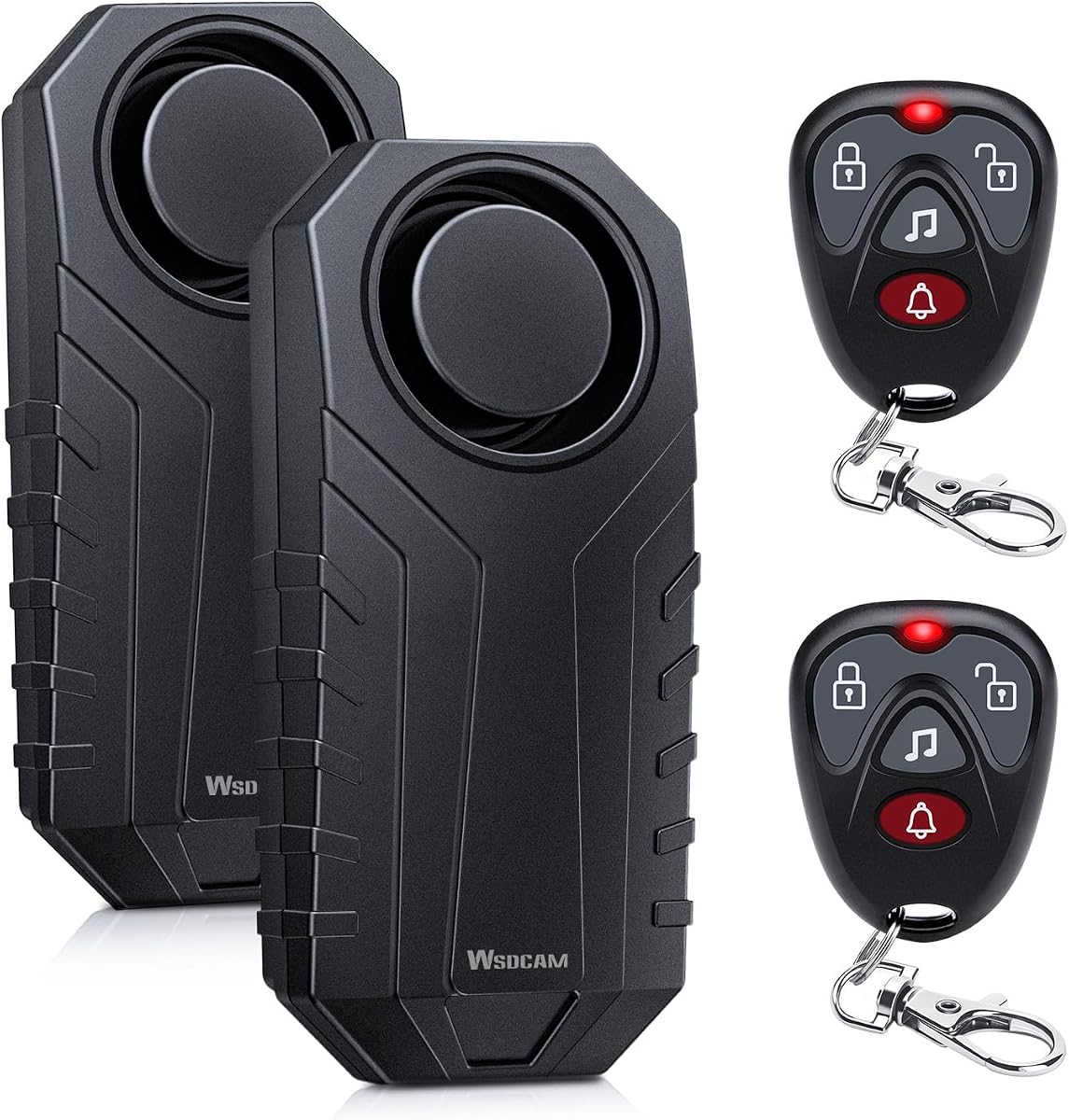
WSDCAM Vibration Sensor Alarm
4.6Editor score
113dB audible alarm
Wireless remote control
IP65 waterproof housing
Seven sensitivity levels
328-foot wireless range
Our Alarm System for Boats guide compares 10 security and monitoring options for theft deterrence, alerts, bilge safety, GPS tracking, and remote control.
An alarm system for boats should protect more than a single hatch or deck locker. The best solutions combine tamper detection, remote notifications, GPS location, and high-water monitoring while remaining suitable for wet, salty marine environments. Because boats may be vulnerable at ramps, marinas, storage lots, and unattended docks, useful features differ considerably by vessel and threat level.
This guide compares ten products across local and cellular monitoring, audible sirens, motion sensors, annunciators, GPS tracking, bilge controls, and physical security bars. We evaluated the supplied specifications, ratings, installation requirements, alert methods, power requirements, and marine-oriented features, separating comprehensive remote systems from simpler add-on alarms and panel indicators.
Each review explains the product's strongest use case, important compromises, and ideal buyer. The list covers options suited to different priorities, from inexpensive theft deterrence to professionally installed vessel monitoring. Product specifications, availability, and market conditions can change, so confirm the current listing and compatibility details before making a final decision.
4.6Editor score

4.7Editor score

4.8Editor score
The comparison below highlights each product's monitoring method, core alert capability, installation demands, and ideal vessel environment, helping readers distinguish comprehensive connected systems from local alarms and physical deterrents.




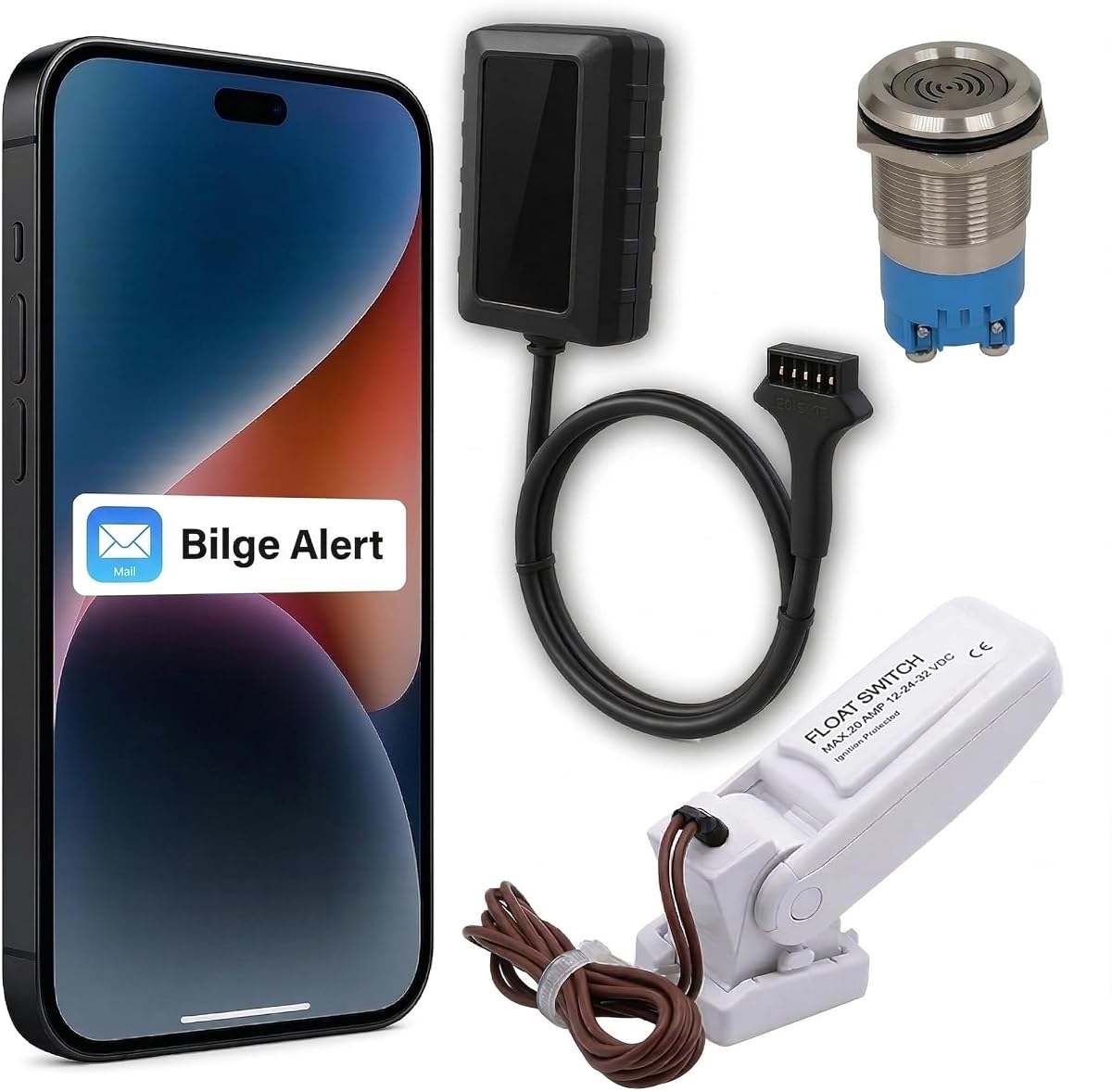
LocMarine's Global LTE Boat Monitoring and Security Hub is the most comprehensive option in this guide, combining remote vessel awareness with an unusually broad set of monitoring functions. Its 4.8 rating reflects a strong overall reception, although ratings alone do not establish compatibility with every boat. The product is designed for owners who want meaningful information about a vessel while away rather than simply an alarm that sounds nearby.
We may earn a commission when you buy through this link, at no additional cost to you.
The included sensor package supports real-time bilge, high-water, shore power, GPS, speed, entry, geofencing, and battery monitoring. Global 4G and 5G connectivity is a central advantage for boats that travel beyond a single marina's local network coverage. Because no NMEA network is required, it may appeal to owners of older or less standardized boats, although modern electronics and sensor connections still need to be checked before installation.
The principal trade-off is that a connected cellular hub is more complex than a plug-in alarm padlock or local vibration sensor. It depends on a cellular monitoring service, appropriate sensor placement, and secure electrical connections. The listed 4G and 5G capability and included monitoring period should not be mistaken for a guarantee of permanent coverage in every country, carrier region, or remote location. A qualified installer should also confirm the vessel's wiring, antennas, and enclosure placement.
This is a strong choice for an owner who wants one marine monitoring platform to cover location, access, water, electrical status, and geofencing. It is particularly relevant for boats stored remotely, kept at moorings, or valued enough that remote oversight justifies a permanent installation. Buyers seeking only a simple deterrent should choose a less complex product, but those wanting broad supervision will find this system's feature set unusually complete.
Instead of limiting the system to motion or water detection, LocMarine combines access, bilge, high-water, shore power, speed, and battery information. That breadth makes it easier to distinguish a security event from an ordinary onboard condition when reviewing alerts.
Geofencing adds value when the boat is expected to remain at a marina, storage yard, or other known location. The system can send a notification when the vessel is moved beyond the defined area, supporting quicker response without requiring continuous visual observation.
We may earn a commission when you buy through this link, at no additional cost to you.
BoatSense by BilgeBuddy combines boat security with practical systems monitoring, making it a versatile choice for owners concerned about water, battery condition, and vessel location. It carries a 4.7 rating and stands out for offering remote bilge pump control rather than merely reporting that an abnormal condition exists. The goal is faster owner response, which can be valuable during flooding or an unattended high-water event.
We may earn a commission when you buy through this link, at no additional cost to you.
The system monitors high water, low battery voltage, system malfunctions, current, position, GPS, impact, and temperature. It also performs bilge pump and float switch health tests, while a backup auto-float switch adds a second layer of protection. Push notifications, SMS, and email give owners several ways to receive information, and the stated support for 12-volt systems of 15 amps or less broadens its relevance across many recreational boats.
Its most important limitation is that remote control and health testing depend on correct integration with the boat's electrical and bilge systems. The waterproof, ruggedized unit is designed for the harsh bilge environment, but it is not a substitute for sound workmanship, fuse protection, or an inspection of the existing pump and switch. Remote functions also depend on suitable communications coverage, and the owner must understand which vessel systems are actually connected.
BoatSense is an excellent recommendation for an owner who wants security, high-water response, and bilge oversight in one connected package. It is especially useful where a stranded or unattended boat could suffer expensive damage from a failed pump or rising water. A buyer looking for a simple self-contained siren should look elsewhere, but a vessel owner who values control and actionable alerts will find the feature set particularly compelling.
An alert is most useful when the owner can respond. Remote bilge pump control adds a direct response option, while low-battery, temperature, current, and impact readings help establish the conditions surrounding an alert.
Regular bilge pump and float switch health tests can reveal problems before a serious flooding event. The backup auto-float switch provides an additional safeguard if the primary float arrangement does not activate as expected.
We may earn a commission when you buy through this link, at no additional cost to you.
WSDCAM's two-pack vibration alarm is an approachable anti-theft option for boat owners who need a fast, inexpensive deterrent and a little flexibility in placement. It has a 4.6 rating and a simple operating concept: attach it to a surface, adjust the sensitivity, and let movement trigger a loud alarm. The package can protect more than one boat-related item, which is one reason the two-unit configuration is useful.
We may earn a commission when you buy through this link, at no additional cost to you.
The alarm reaches up to 113dB and offers three volume levels and seven sensitivity settings. That adjustment is valuable because a rigid deck or storage locker may transmit movement differently from a trailer, motorcycle, mailbox, or door. The supplied remote provides control and a vehicle-search function, while the stated 328-foot wireless range gives the owner some freedom when checking the area. An IP65 waterproof housing makes outdoor placement more practical.
This system does not provide the remote awareness of a cellular hub, GPS locator, or network-based sensor. It is primarily a local audible alarm, so its effectiveness depends on how close someone must be to hear it. Remote-control range is not the same as cellular monitoring coverage, and the advertised alarm volume does not guarantee that sound carries across an entire marina or storage area. Users should also expect to inspect and maintain the batteries.
For a boater wanting a straightforward theft deterrent, a two-alarm package, and adjustable installation, WSDCAM is a practical selection. It could be placed on a deck locker, trailer, or other boat-related structure where movement indicates interference. It is less appropriate for owners who need GPS updates, remote water-level warnings, or a professionally integrated alarm network, but it offers a useful layer of protection with minimal complexity.
Seven levels of adjustment let the owner tune the unit against gentle contact, normal motion, or deliberate movement. This flexibility is especially useful because a boat's materials, storage compartments, and mounting locations can produce very different vibration patterns.
The 113dB maximum volume is designed to startle and deter a potential intruder, while the remote control and search function help the owner locate the protected vehicle or item. Together they provide more convenience than a standalone mechanical siren.
We may earn a commission when you buy through this link, at no additional cost to you.
The Skyhawk Oversea Cellular Hub offers a flexible approach to boat monitoring by separating the communications gateway from the vessel's electrical system. It has a 4.5 rating and is designed for owners who want wireless installation without drawing down the boat's battery. The hub serves as the central connection point for a broader family of Oversea sensors.
We may earn a commission when you buy through this link, at no additional cost to you.
Its built-in cellular IoT technology supports location on demand and can forward information from the Oversea sensor suite. Compatible sensors include bilge pump, battery, power, entry, high-water, sound, and motion units. The hub itself uses replaceable AA batteries, and the supplied information states a lifespan of up to three years for sensor monitoring and one to two years when operating primarily as a location-on-demand gateway.
The product is marketed as a true drop-in installation with no wiring or WiFi requirement, but the scope of that claim still matters. It can be installed quickly, yet alert delivery and sensor operation may depend on subscription service, cellular coverage, and correct hub placement. The IP64 and IP67 protection ratings support use in harsh conditions, although exposed locations should still be selected with care. Owners already invested in the Oversea ecosystem gain the most convenience.
Skyhawk is a good match for a boat owner who wants wireless remote monitoring and a broad range of compatible add-on sensors. It is particularly attractive when avoiding boat-battery drain or complex cabling is a priority. It is not the most complete standalone package, since additional sensors and service support the full experience, but it offers a scalable, well-marine-oriented gateway for a connected vessel.
Because the hub operates on replaceable AA batteries, it can provide communications without being wired directly to the vessel's electrical system. That separation can simplify installation and avoid unnecessary loading on a stored boat's battery.
The hub's value grows as compatible Oversea sensors are added. Owners can address entry, high water, power, sound, motion, and bilge conditions through one gateway rather than deploying unrelated standalone devices.
We may earn a commission when you buy through this link, at no additional cost to you.
The Murphy ST10AS-LM is not a self-contained boat security alarm but a ten-point remote annunciator designed to consolidate alarms and operating faults. Its 4.1 rating reflects a mixed reception, and it should be evaluated as a panel component for a broader marine monitoring system. It is best suited to an owner who wants a clear visual indication of problems in an engine room or pilot house.
We may earn a commission when you buy through this link, at no additional cost to you.
Typical monitoring applications include engine, gear, bilge, and auxiliary power plant problems. The ten-point format allows multiple conditions to be presented in one central location, helping a crew member understand what requires attention. The Selectronic remote alarm architecture makes it a practical bridge between onboard sensors and a helm or control station where status lights and audible annunciation are valuable.
This Less Mount version does not include a flange or gimbal mounting bracket, so the installer must provide the appropriate hardware and confirm the panel layout. It also lacks the built-in cellular connection, GPS function, and standalone siren found in dedicated security products. Compatibility with the vessel's existing alarms and monitoring equipment is essential; otherwise, a ten-point capacity offers little practical value.
Choose the ST10AS-LM when the objective is centralized fault awareness aboard a properly equipped boat, not remote theft tracking from shore. It is most useful on vessels with engine, bilge, gear, and auxiliary systems that can feed compatible remote alarm inputs. For an owner seeking phone notifications or GPS location, a cellular monitoring hub or smart system will be a better fit, while this annunciator remains valuable as the human-facing control panel.
A dedicated annunciator gives crew members a single place to review alarms from several onboard systems. This can improve response times by reducing the need to inspect separate gauges or indicator locations.
The product's intended pilot-house use is important because it is designed around the conditions and monitoring priorities found on marine vessels. Engine, gear, bilge, and auxiliary power faults are central rather than incidental use cases.
We may earn a commission when you buy through this link, at no additional cost to you.
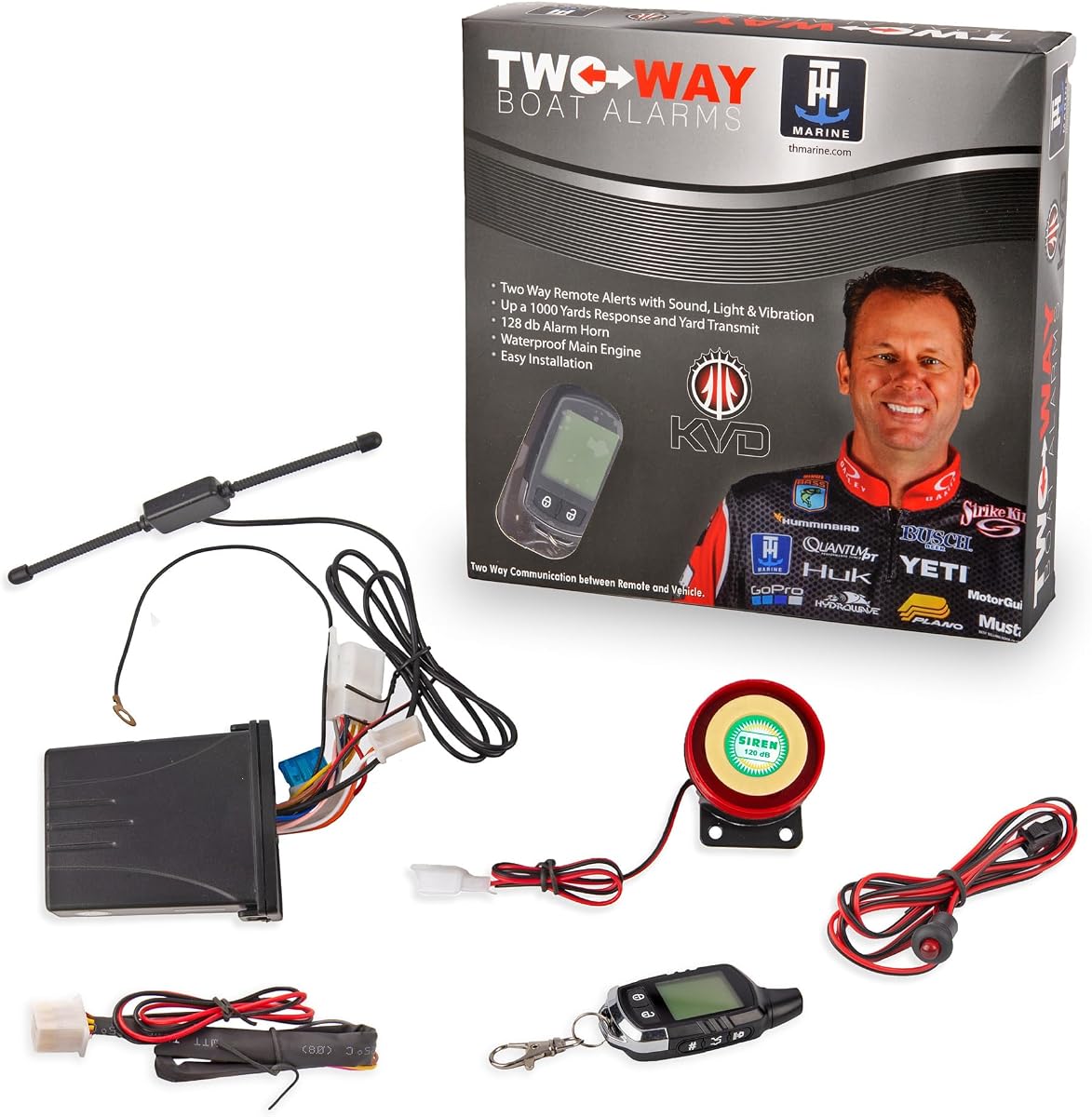
The T-H Marine Two-Way Boat Alarm System focuses on loud local protection and owner awareness through a two-way remote. Its 2.9 rating is the lowest among the reviewed products, so the listed specifications should be considered alongside meaningful buyer feedback rather than accepted automatically. The system is most relevant to a boat owner seeking a conspicuous siren and remote feedback rather than cloud-based monitoring.
We may earn a commission when you buy through this link, at no additional cost to you.
Its shock sensor detects motion or impact and can trigger a 128dB horn. The paired remote vibrates, flashes, and beeps when an alarm occurs, giving the owner several notification cues. A stated alert range of up to 3000 yards is unusually long for a local security system, while adjustable sensitivity lets the user account for normal movement around the vessel. The engine module is described as sealed and built to withstand the elements.
The main concern is the low customer rating, which may indicate recurring issues with installation, reliability, remote behavior, or overall performance. Owners should read current reviews carefully and ask what is included, how the unit is powered, and whether it requires separate sensors. A long stated range is also unlikely to remain constant across every marina, structure, and terrain type. A professional marine installer may be wiser than a strictly DIY approach.
Despite those reservations, the system's core design is straightforward: a sensitive marine shock sensor, an extremely loud horn, and a two-way remote. It may suit an owner whose primary concern is scaring away someone physically handling the boat and who wants immediate confirmation on a handheld device. For dependable remote reporting over cellular or satellite networks, one of the GPS monitoring systems would offer a more comprehensive approach.
A remote that vibrates, flashes, and beeps can be noticed in different settings, including a noisy dock or a bright outdoor area. The combination gives the owner more ways to recognize that the shock sensor has been triggered.
Boats can move in wind, waves, and changing dock conditions. Adjustable shock sensitivity is essential for reducing false activation while preserving a meaningful response to deliberate interference.
We may earn a commission when you buy through this link, at no additional cost to you.
BoatSense appears twice in the guide because it serves two important buying needs: connected vessel monitoring and connected bilge protection. With a 4.7 rating, it offers one of the strongest combinations of location, water-level, battery, impact, and system-health information. It is a good general choice for an owner who wants alerts on a phone as well as protection for the vessel's most consequential unattended risk.
We may earn a commission when you buy through this link, at no additional cost to you.
The integrated GPS tracking supports theft prevention and location monitoring, while high-water and low-battery alerts address common causes of damage. Owners can receive push notifications, SMS, or email messages and remotely operate the bilge pump. The system's monitoring of current, temperature, and impact broadens its diagnostic value, and its regular bilge pump and float switch tests can help identify developing problems.
This is not a battery-free sticker-on alarm, and that distinction matters. The product is built for compatible 12-volt systems of 15 amps or less and must be installed where it can monitor the relevant circuits. Improper wiring or poor sensor placement can undermine both security and bilge safety. Remote control also introduces a communications dependency, and a qualified marine technician is a sensible choice for a complex or unfamiliar electrical system.
BoatSense makes the most sense for a boat that remains connected to 12-volt power and has a conventional bilge arrangement. It offers excellent value for owners who want one platform to cover theft, flooding, electrical health, and equipment condition. It is less attractive for a small trailer, a nonpowered tender, or a vessel with an unusual electrical system, but for a typical powered boat, it is a versatile monitoring solution.
Push, SMS, and email notifications make it possible to receive information without continually opening an application. This is particularly useful for long-distance owners who want timely warnings about movement, water, or battery conditions.
The system can identify developing maintenance concerns as well as security events. Regular health tests and alerts about voltage, current, temperature, and bilge performance extend protection beyond merely detecting an intruder.
We may earn a commission when you buy through this link, at no additional cost to you.
The T-H Marine Loc-R-Bar takes a different approach from electronic monitoring: it physically links multiple deck lockers and uses an integrated alarm padlock to deter access. Its 4.3 rating makes it a solid choice for anglers who want to protect tackle, electronics, and rod compartments without a powered cellular system. The product is especially relevant where openings are spread across a bass, bay, or walleye boat's deck.
We may earn a commission when you buy through this link, at no additional cost to you.
An adjustable stainless steel bar spans from side to side, connecting several lockers so one hatch cannot simply be popped open. The included alarm padlock adds a motion-activated audio deterrent without requiring external sensors or wiring. Solid aluminum brackets and simple tools support installation, and the physical barrier can secure front deck compartments and rod lockers at hotels, ramps, and marinas.
The main limitation is that the bar cannot monitor water, battery condition, GPS location, or conditions across the entire boat. It also has to be positioned so it does not interfere with normal hatch operation, fishing access, storage, or deployment of equipment. A boat with irregular locker spacing or several widely separated compartments may require a different physical-security arrangement. The owner should check dimensions before relying on one bar to span every vulnerable opening.
The Loc-R-Bar is a sensible addition for an owner whose priority is keeping valuable gear inaccessible at a shared ramp or marina. It works particularly well as a layered defense alongside a GPS tracker or remote monitoring hub. It should not be treated as a complete vessel-security network, but for securing accessible deck storage with a visible physical barrier and local alarm, it offers a focused solution.
A spanning bar makes it harder to open one locker and remove equipment without disturbing the entire secured section. Its visible construction can also discourage opportunistic theft before an intruder attempts to defeat it.
The integrated motion-activated padlock removes the need to connect an external sensor, control box, or power supply. That simplicity can make the system attractive for older boats and short-term trips.
We may earn a commission when you buy through this link, at no additional cost to you.
The Oversea Wireless Motion Sensor is a compact add-on for owners using the Skyhawk Oversea ecosystem. It uses passive infrared detection to identify people or animals moving in cabins, salons, and outdoor walkways, then communicates through long-range radio to the Oversea Hub. No customer rating is supplied for this listing, so its evaluation should rest primarily on the documented specifications and system requirements.
We may earn a commission when you buy through this link, at no additional cost to you.
The stated detection range reaches up to 16 feet, which makes the sensor useful for a defined cabin, salon, or deck walkway. It can detect movement within seconds and relay that information to the hub for remote alerting. AA batteries are claimed to support up to five years of protection, eliminating a direct connection to the boat battery or shore power. The stated dimensions are 2.75 by 3.75 by 1.15 inches, and the unit weighs 5.5 ounces.
This is not a standalone alarm. It requires the Oversea Hub, uses long-range RF rather than Bluetooth or WiFi, and needs a subscription for full remote alerting. Those dependencies should be considered before buying the sensor as a first system. Placement also matters because a passive infrared sensor can be affected by blind spots, movement within its field of view, and environmental conditions, although the supplied data does not provide detailed detection guidance.
Buyers who already own an Oversea Hub will find this a convenient way to extend onboard motion coverage without another wiring project. It is especially suitable for a compact cabin or salon where an owner wants a lightweight self-powered detector. For everyone else, a complete Oversea system or a standalone alarm may be easier to justify because the sensor cannot provide meaningful remote operation by itself.
A small sensor can be positioned in a cabin or salon without taking up valuable space. Its stated 16-foot range provides useful coverage for common onboard compartments while the light weight simplifies secure placement.
Screws, hook-and-loop tape, and magnets provide several ways to mount the unit. Battery operation allows placement away from the boat's wiring, supporting cleaner installations and simpler seasonal use.
We may earn a commission when you buy through this link, at no additional cost to you.
The Murphy ST10AS-F is a flange-mounted ten-point annunciator with a perfect 5.0 customer rating. Like the ST10AS-LM, it is a control-panel component rather than a complete remote security system. Its advantage is that the required flange is included, making it the more straightforward choice for a permanent marine panel installation where visual and audible fault indication is the main objective.
We may earn a commission when you buy through this link, at no additional cost to you.
The product is designed for marine pilot houses and can alert the crew to problems involving the engine, gear, bilge, and auxiliary power plants. A centralized ten-point annunciator is useful when multiple conditions must be recognized quickly and consistently. The flange-mount configuration supports a more finished permanent installation than the Less Mount version, whose mounting hardware is not packaged.
The product still does not provide GPS tracking, cellular notifications, or a standalone theft-detection sensor. It needs compatible remote alarm inputs from the vessel's monitoring equipment, so the boat's architecture determines whether it can perform as intended. A qualified installer should confirm electrical compatibility, panel cutout dimensions, wiring, and whether the selected alert tones and indicators suit the helm arrangement.
The ST10AS-F is a strong choice for an owner who wants a properly mounted annunciation panel and already has a robust network of onboard sensors. It may be particularly valuable on larger or more complex vessels where engine, bilge, and auxiliary faults need clear presentation. Buyers searching for phone-based boat tracking should choose a connected hub instead, while this product excels as a permanent onboard status and fault interface.
The included flange creates a more integrated mounting solution than the Less Mount alternative. That can be valuable when the annunciator is part of a permanent control panel with a defined layout and visible operating status.
Engine, gear, bilge, and auxiliary power monitoring can be consolidated into a single ten-point interface. This gives the crew a more efficient way to identify the source of a developing problem.
We may earn a commission when you buy through this link, at no additional cost to you.
Choosing a boat alarm means balancing the threat you want to address, the boat's layout and electrical system, notification distance, and the effort required to maintain the equipment. The most useful product is the one that provides reliable information or a meaningful deterrent without creating false alarms or draining essential power.
Boat security systems solve different problems. A vibration alarm is designed to deter physical interference with a surface or compartment, a GPS tracker helps establish location and movement, a cellular hub provides remote condition monitoring, and an annunciator displays alarms from existing onboard systems. A physical security bar protects selected deck lockers. Before comparing features, decide whether the priority is theft deterrence, location tracking, high-water warning, bilge management, or centralized fault indication.
Choose a security product around one primary threat rather than assuming every device will provide complete vessel protection. Combining a physical bar with a tracker or smart monitoring system can create useful layers, but adding too many products can complicate installation and maintenance.
Some products install with adhesive, straps, screws, magnets, or hook-and-loop tape, while others require vessel wiring, sensor routing, cellular configuration, and professional commissioning. A DIY-friendly alarm is convenient for a small deck locker or trailer, whereas integrated GPS, bilge, and high-water systems demand more attention to placement and electrical safety.
For a powered boat with unfamiliar wiring, a qualified marine technician is usually the safer choice. Ask the installer to verify fuse protection, grounding, waterproof connections, sensor orientation, antenna placement, and compatibility with the vessel's battery and bilge equipment.
A local siren is useful only if someone can hear it, while a local remote may work only within a limited distance. Phone push notifications, SMS, email, geofencing, and cellular location provide awareness when the owner is away. Two-way remotes can offer vibration, light, and audible feedback, but they are not the same as internet-connected monitoring.
Match the alert method to where the owner will be. Marina staff, family members, or a nearby responder may hear a loud horn, but only a connected system can reach an owner traveling elsewhere. Cellular products also require service coverage in the vessel's location.
Marine alarms may draw power from AA batteries, the vessel's 12-volt system, or a combination of both. Battery-powered devices are easy to retrofit and avoid draining a stored boat's battery, but they require periodic replacement. Wired systems can support continuous operation and more extensive sensors, yet correct electrical integration is essential.
Review the system's voltage and current limits, the number of batteries, and the stated battery life. Look for low-power behavior and check whether an alert can be received if the main vessel battery is disconnected. High-water and bilge devices should be positioned where they remain functional in the conditions they are designed to detect.
A boat can be damaged without anyone touching it. High water, a failed bilge pump, a depleted battery, or an inactive float switch can create expensive losses during storms or extended storage. Systems with high-water sensors, bilge health tests, backup float switches, and remote pump control directly address these risks.
Evaluate both detection and response. An alert is helpful, but the ability to activate a pump or identify a failed component can be even more useful. The float switch, pump, wiring, and notification system should be checked together because a reliable alarm cannot compensate for an unreliable bilge installation.
The engine compartment, deck, cabin, storage locker, and electronics enclosure each present different moisture and salt risks. Look for stated IP ratings, sealed housings, and marine-grade construction, but also consider where the device will actually be mounted. A waterproof rating is less meaningful if the enclosure is mounted in a location that routinely receives standing water or direct washdown.
Corrosion resistance, secure fastening, cable protection, and accessible placement for battery changes also matter. A system that is technically rugged but difficult to inspect or service may be less reliable in daily use than a simpler product with a sound enclosure design.
Motion and shock sensors need to distinguish meaningful interference from normal movement. Wind, passing boats, halyard movement, people boarding, and changing water conditions can all affect a mounted sensor. Adjustable sensitivity is useful, but it should not substitute for careful placement or mechanical isolation from surfaces that transmit routine vibration.
The best system is one that can be tested under likely operating conditions. Check whether sensitivity can be changed without replacing the unit and whether the owner can distinguish a tamper alert from a water, power, or connectivity alert.
Connected systems may require a subscription for remote alerts, while other products are self-contained. Installation, cellular service, compatible apps, sensor batteries, and possible account renewal all affect long-term ownership. A device that is straightforward to maintain is often more useful than a feature-rich system that is difficult to configure.
Review what is included with the product, what must be purchased separately, and which company provides support. For ongoing monitoring, verify the service's coverage, renewal structure, and compatibility with the sensors before installing the hardware.
Begin by identifying the locations the system is intended to protect and the conditions each sensor must detect. Clean and dry the mounting surface, follow the manufacturer's placement instructions, and avoid blocking vents, antennas, passive infrared fields, or float switches. For wired products, have a qualified marine technician inspect fuses, connections, grounds, and the available electrical load before energizing the system.
Test the complete setup before leaving the boat unattended. Trigger the alarm using the approved test procedure, confirm that every intended contact method works, and verify that high-water, motion, entry, impact, or GPS alerts appear correctly. Repeat the test after adjusting sensitivity or changing the boat's storage location. For cellular systems, also check that the account, application, vessel identification, and geofence are configured for the correct boat.
Maintain the system according to a regular schedule. Replace primary and backup batteries as recommended, remove corrosion from accessible connections, keep the enclosure dry, and check that brackets, straps, adhesive mounts, and alarm padlocks remain secure. Review the system after storms, prolonged storage, major battery work, or changes to the bilge arrangement. Retire any product that no longer provides reliable alerts rather than assuming an old or intermittently connected device is still protecting the vessel.
A cellular monitoring system with GPS tracking, entry alerts, and high-water or bilge monitoring is generally the most useful for an unattended marina boat. It can report movement and vessel conditions to the owner when local sound alone would not be enough. A physical alarm bar can add protection for accessible gear lockers, and a loud local siren remains useful as another layer.
It depends on the product and the vessel. Battery-powered vibration alarms, motion sensors, and alarm padlocks can be relatively straightforward to position, while connected GPS, bilge, and high-water systems require accurate electrical and sensor integration. A qualified marine technician is advisable for unfamiliar wiring, permanently installed equipment, or any installation affecting the bilge system.
Local audible alarms and two-way radio remotes can work without cellular service within their effective range, but they do not provide continuous off-site monitoring. Cellular hubs, GPS products, and phone-based notification systems need suitable coverage to deliver remote alerts. An owner should check service availability in the boat's usual marina, storage yard, and travel areas.
A product intended for bilge use should be installed according to its environmental and electrical specifications. Marine-grade construction, appropriate sealing, secure wiring, and correct sensor placement are all necessary. A waterproof enclosure does not make an improperly connected or incorrectly positioned device safe, so the system should be checked against the manufacturer's instructions and the vessel's layout.
Some connected systems do both by combining motion, impact, GPS, high-water, battery, and bilge functions. Simpler vibration alarms usually focus on physical interference and cannot detect rising bilge water. Owners with the highest flooding risk should choose a product with a float switch or high-water sensor, while using a separate anti-theft device if localized deterrence is also important.
Test it before every period of extended storage and at regular intervals during the boating season. Confirm that the alarm reaches the owner, that the vessel appears in the correct location, and that high-water or other environmental alerts still function. Repeat testing after any sensor adjustment, battery replacement, wiring change, app update, or relocation of the boat.
An alarm detects or deters specific events such as movement, impact, entry, or high water and may make a loud sound. A tracker reports the vessel's location, and it may also provide movement alerts. The strongest security setup often combines both functions so the owner can receive a notification and know where the boat is.
The need depends on where the boat is kept, what equipment it contains, and how long it remains unattended. A portable vibration alarm can deter handling, while a GPS and monitoring system can reveal movement. For a valuable boat stored at a shared ramp or marina, layered protection may be worthwhile, but simpler use cases may only require a basic physical deterrent.
LocMarine leads the guide for owners who want the broadest connected oversight, combining GPS, geofencing, entry, bilge, high-water, shore power, and battery monitoring. BoatSense is the most versatile smart option for a conventional powered boat, with remote bilge control and actionable phone alerts. WSDCAM offers the most accessible local deterrent, using a loud vibration-triggered alarm and an included remote.
Prioritize the risks that are most likely to affect your vessel. Choose remote monitoring when you need awareness from a distance, a high-water and bilge package when damage can develop without intrusion, and physical security when valuable gear is exposed in accessible compartments. Confirm electrical compatibility, marine protection, installation requirements, and communication coverage before purchasing any system.
Also verify the current listing, included components, subscription details, and support information before making a final choice, as product configurations and availability can change. The right alarm system is not necessarily the one with the most features; it is the one that reliably protects the particular boat, remains easy to maintain, and provides useful information or deterrence in the owner's real absence.