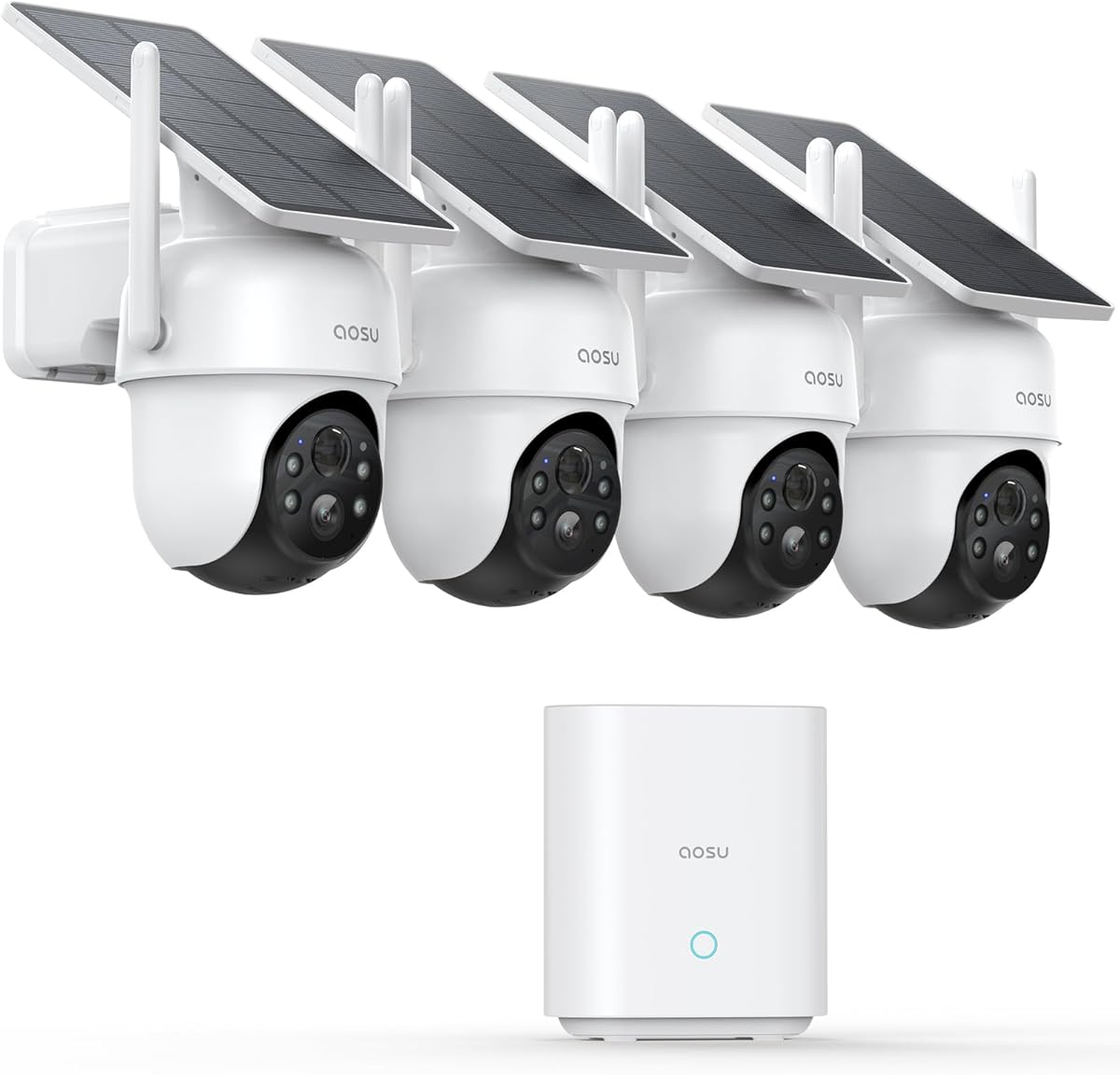
aosu D1 Classic 4-Cam Kit
4.3Editor score
Four-camera coverage kit
Solar-powered operation
32GB local base storage
Cross-camera event tracking
Outdoor Wireless IP Camera guide comparing 10 leading models for video quality, wireless power, storage, night vision, alerts, and weather resistance.
An outdoor wireless IP camera brings convenient remote monitoring to driveways, yards, gates, entryways, and other exposed areas without requiring a network cable at every installation point. A genuinely useful model balances dependable video, effective motion detection, useful night illumination, secure recording options, and enough flexibility to operate outdoors in changing weather.
The products in this guide were compared using their stated specifications and customer ratings, with particular attention to camera resolution, power method, Wi-Fi compatibility, storage, viewing controls, audio, detection features, and outdoor protection. The list includes standalone cameras, battery-powered models, solar systems, an NVR bundle, and add-on cameras that work within a larger ecosystem.
Each review highlights the capabilities that distinguish its camera from the alternatives, while also identifying important limitations such as subscription requirements, ecosystem dependence, wired-only recording, or single-band Wi-Fi. Ratings and specifications can change, and prices vary by promotion, bundle, and seller, so readers should confirm current details on the linked product pages before purchasing.
4.3Editor score

4.9Editor score

4.6Editor score
This side-by-side comparison highlights each camera's core hardware, recording method, connectivity, and practical outdoor features, making it easier to match a model to a particular property or installation plan.
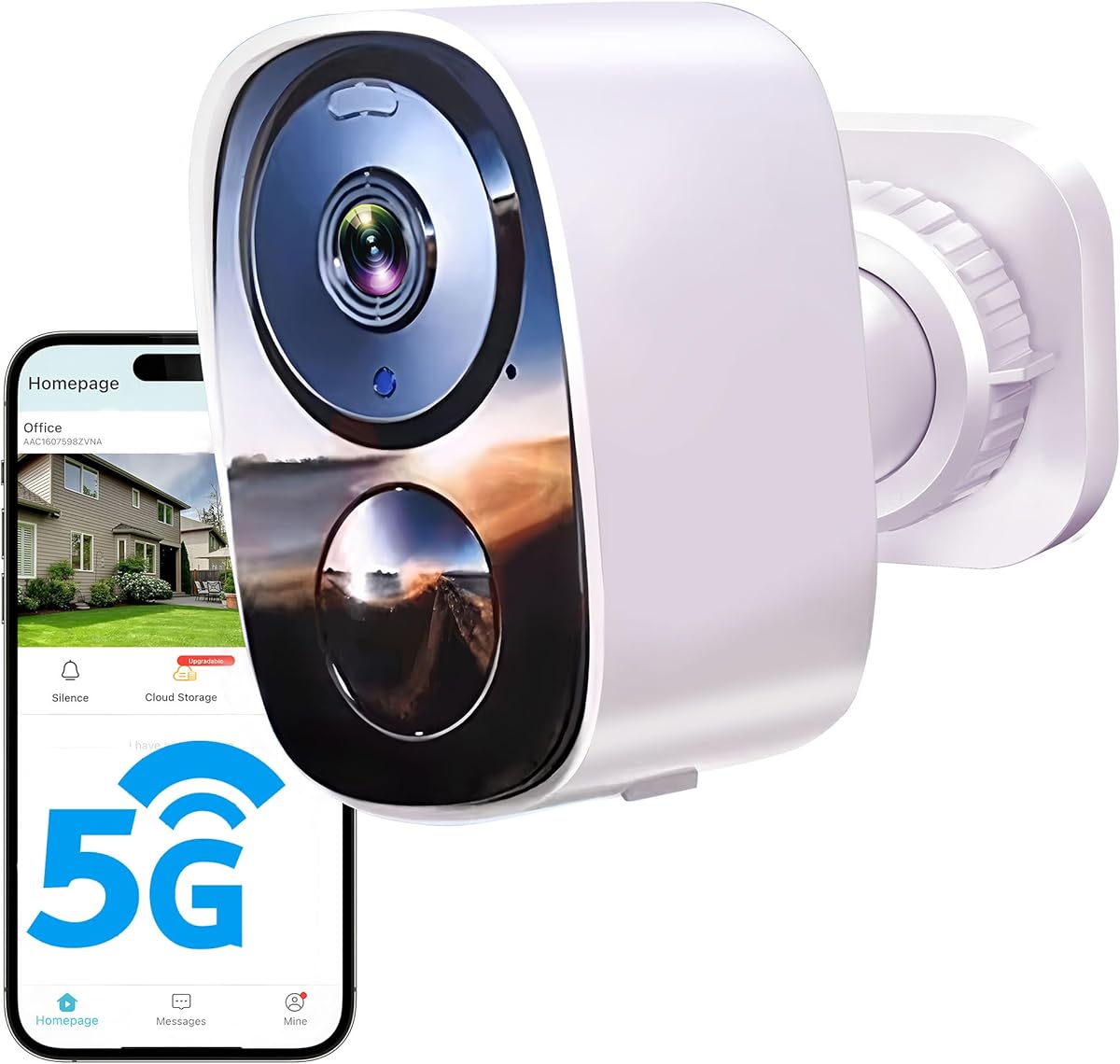


This 2026-updated camera combines 2K UHD recording, full-color night vision, AI motion detection, a spotlight, a siren, and two-way audio in a wire-free outdoor package. Its 4.3 rating reflects a broadly capable design that serves homeowners looking for flexible connectivity and extensive local and cloud recording options without relying on a wired power source.
We may earn a commission when you buy through this link, at no additional cost to you.
One of its most useful advantages is support for both 2.4GHz and 5GHz Wi-Fi. That can simplify placement in a home using either band and may provide a faster connection when the network conditions are favorable. The rechargeable battery is stated to last from one to six months, with the longer figure depending on activity, recording patterns, and temperature. A microSD card of up to 256GB can provide local storage, while a free cloud tier is also advertised.
There are caveats to consider. The free cloud plan provides standard-definition quality, whereas HD cloud access requires a paid plan, and the camera does not include a microSD card. The listed battery duration also varies significantly with motion frequency and environmental conditions, so the six-month maximum should be understood as a best-case scenario rather than a guaranteed interval.
This is an appealing choice for a front yard, driveway, patio, or side entrance where a single camera must cover several everyday security functions. It is particularly attractive for buyers who want dual-band Wi-Fi and local recording in the same unit. Those requiring HD cloud history without ongoing cloud costs should plan around the free plan's resolution limitation or use a microSD card.
Supporting both Wi-Fi bands gives the camera more installation flexibility than products limited to 2.4GHz. A strong signal near the router remains important, but dual-band capability can help avoid unnecessary compromises when a home network is split across frequencies.
The combination of free cloud access and microSD support gives users two ways to preserve recordings. Local storage is useful for reducing dependence on a subscription, while cloud retention can be convenient when remote retrieval from another location is the priority.
We may earn a commission when you buy through this link, at no additional cost to you.
This system pairs a 4MP outdoor camera with a preinstalled 500GB hard drive, a 4W solar panel, an 8000mAh battery, and a complete NVR-based recording setup. Its 4.9 rating is the highest in the group, making it the leading option for buyers who prioritize local control, broad coverage, and avoiding a monthly video-storage charge.
We may earn a commission when you buy through this link, at no additional cost to you.
The included storage can hold footage without a cloud subscription, while a TF card slot provides a secondary local option. The system supports 2.4GHz and 5GHz Wi-Fi and can expand to as many as 10 cameras, making it more practical as a property grows. Its 355-degree horizontal rotation, 90-degree vertical tilt, 4MP sensor, and color night vision extending to about 65 feet provide a solid combination of image detail and coverage.
The trade-offs involve installation and optional features. The camera needs a suitable solar position, and a full charge without direct sun is described as supporting roughly 800 to 1,000 PIR triggers. Basic human-oriented detection and the sound and white-light alarm are advertised, but more granular human, pet, vehicle, and package detection is a premium app feature.
This system is best for a homeowner or small business seeking a complete camera system with generous local storage and no mandatory monthly fee. It is less suitable for someone wanting a single lightweight camera or expecting every advanced detection category without paying for optional features. For broad, solar-assisted outdoor coverage, it offers the most integrated package in this roundup.
A 500GB hard drive puts substantial recording capacity under the user's control. It also reduces the need for recurring cloud fees, making the system appealing for properties where continuous video history is the main requirement.
Solar charging, a large battery, dual-band Wi-Fi, and expansion to 10 cameras make this a practical foundation for monitoring several exterior zones. Placement should still prioritize direct sunlight and a dependable wireless connection.
We may earn a commission when you buy through this link, at no additional cost to you.
The BOAVISION camera is built around automatic motion tracking, a built-in floodlight, an alarm siren, two-way talk, and broad third-party compatibility. Although its title uses 2K terminology, the supplied specifications identify the actual recording resolution as 1080P with 4x digital zoom, so buyers should assess the camera on the confirmed output rather than the marketing label alone.
We may earn a commission when you buy through this link, at no additional cost to you.
Its 350-degree horizontal pan and 120-degree vertical tilt allow a single unit to cover a wide outdoor area, while automatic tracking helps the camera follow movement through that range. The built-in lighting supports full-color night imagery, and the siren can provide an audible response when activity is detected. Compatibility with iOS, Android, macOS, and Windows is useful for a mixed-device household.
The most attractive technical feature is its support for software including Blue Iris, iSpy, Synology, and TinyCam. That gives it more flexibility than a closed standalone ecosystem, especially for users who already use a compatible NVR or home-automation platform. Wireless range and overall image quality still depend on placement, router performance, and lighting conditions.
This camera is a strong match for a user who values tracking, visible deterrence, and third-party control more than maximum native resolution. It works well over a porch, driveway, or broad section of yard where a pan-and-tilt unit can cover more ground than a fixed camera. Buyers seeking a complete NVR with local storage should choose a bundled system instead.
Automatic tracking keeps moving subjects in view, while the combined floodlight and siren add visible and audible deterrence. These features work together well for entrances where the goal is to notify occupants and discourage unwanted visitors.
Support for Blue Iris, iSpy, Synology, and TinyCam gives this model broader integration potential. It is particularly attractive to buyers who prefer to manage cameras through an established third-party platform rather than remain within one manufacturer's app.
We may earn a commission when you buy through this link, at no additional cost to you.
This Hiseeu model is an add-on camera for an existing compatible wireless security system rather than a standalone IP camera. It is rated 4.4 and provides 3MP recording at 2304 by 1296 pixels through a 3.6mm fixed lens, making it a useful expansion option for owners of a listed Hiseeu NVR configuration.
We may earn a commission when you buy through this link, at no additional cost to you.
Its 78-degree viewing angle is useful for covering an entry point, side wall, or section of yard. Three array IR LEDs and three 850nm infrared lights provide night visibility, while an IR-cut filter enables day and night transitions. Pairing is completed through the NVR interface by pressing the camera's reset button for six seconds and waiting for the appropriate IP address to appear.
The primary limitation is clear: the camera cannot work by itself. It is compatible only with the Hiseeu systems identified in the supplied information, and cameras running system versions below 3.0.6.0 may need additional resolution guidance. It also provides only one-way audio, so users cannot speak through the camera, and the included power adapter means it is not entirely battery-free.
This camera makes the most sense for a Hiseeu owner who needs another exterior angle without replacing the existing NVR. It should not be considered for a new standalone installation unless the buyer already owns compatible equipment. Within that narrower use case, the 3MP sensor and infrared night vision offer a straightforward way to expand coverage.
The camera is designed to pair with a Hiseeu NVR through the system's wireless add procedure. For compatible owners, that focused approach can be more convenient than introducing another standalone app or separate recorder.
A 3.6mm lens and 78-degree view balance a broad field of view with useful detail. Infrared illumination then preserves basic nighttime visibility, although it does not provide the color night vision offered by several solar models in this guide.
We may earn a commission when you buy through this link, at no additional cost to you.
The Jet Black camera delivers a broad set of outdoor functions at a budget-oriented level: 2K video, color and infrared night vision, AI detection, a spotlight, a siren, two-way talk, and either microSD or cloud storage. Its 4.6 rating places it among the strongest standalone choices in this guide and helps justify its position as the best budget pick.
We may earn a commission when you buy through this link, at no additional cost to you.
The camera's 33-foot night-vision range and two illumination modes let users choose between color and infrared imagery. AI analysis can recognize people, vehicles, pets, and packages, while phone notifications provide timely awareness of detected movement. A rechargeable battery, IP65 protection, and the included mounting hardware make it suitable for exterior locations without a power cord.
Its limitations are worth noting. It works only on 2.4GHz Wi-Fi, which can be a problem in a home where that band is congested or unavailable. The specified frame rate is 15 FPS, and the microSD card is not included even though the camera supports cards up to 128GB. Battery life ranges from one to five months depending on use, with motion frequency and temperature likely having a major effect.
This is a good choice for a user who wants core wireless security features without paying for a complete NVR or a premium solar kit. It can serve a porch, patio, garage exterior, or small yard effectively, particularly when the router provides stable 2.4GHz coverage. Buyers needing smoother motion, 5GHz support, or smoother distant video should consider higher-tier alternatives.
Recognition of people, vehicles, pets, and packages makes alerts more useful than a basic any-motion trigger. The included siren, flashing light, and two-way talk add active deterrence and communication options.
Users can select a microSD card for local recording or use cloud storage for remote access. Because the card is not included, budgeting for that accessory is necessary if local continuous recording is preferred.
We may earn a commission when you buy through this link, at no additional cost to you.
AlkiVision combines a compact solar design, 2K video, color night vision, an adjustable 360-degree view, and a 5000mAh battery. Its 4.6 rating and IP67 protection make it one of the most attractive solar-only cameras for users who want minimal wiring and comprehensive outdoor awareness.
We may earn a commission when you buy through this link, at no additional cost to you.
The modular solar panel is designed to maintain the battery through routine sunlight exposure, while the stated two hours of direct sunlight can provide a full day of operation. A 120-degree adjustable case allows the installer to orient the camera across yards, driveways, and entryways. The spotlight can illuminate an area, and AI-assisted detection supports people, vehicles, pets, and packages when the relevant subscription service is active.
The camera also has real-time two-way talk, instant phone alerts, an automatic recording of up to 20 seconds after motion, and a siren. Storage can be handled through a microSD card up to 128GB or AI cloud storage. New users are also described as able to claim a seven-day trial of the cloud services, although advanced recognition, custom areas, and cloud memory require a subscription.
This model is well suited to a detached garage, back garden, rural outbuilding, or driveway where a wired installation would be inconvenient. Its 2.4GHz-only connection and subscription-dependent recognition are the main compromises. Choose it for flexible solar placement and adjustable coverage, but not if uninterrupted advanced AI classification is required without any service fee.
A separate panel and integrated battery reduce the need to run electrical cable to the camera. The panel should face sunlight reliably, with obstructions and severe weather considered when choosing the mounting point.
The 2K sensor, spotlight, color night vision, siren, and 20-second automatic recording work together to capture activity and potentially deter an intruder. Recognition features are more useful when the cloud subscription is active.
We may earn a commission when you buy through this link, at no additional cost to you.
The aosu D1 Classic is a coordinated four-camera kit for properties that need several exterior viewpoints. It combines solar-powered pan-and-tilt cameras with 3MP recording, four LED lights for color night vision, automatic motion tracking, and 32GB of local aosuBase storage. Its 4.3 rating reflects a strong all-in-one approach for medium and large outdoor coverage.
We may earn a commission when you buy through this link, at no additional cost to you.
The storage model is particularly appealing because recordings are encrypted and kept in aosuBase without a subscription. The included 32GB supports up to four months of loop recording, while cross-camera tracking relates recordings of events occurring during the same period. Users can also watch four live areas simultaneously and manage the working status of multiple cameras from one interface.
Each camera uses an integrated solar panel, and three hours of sunlight per day is stated to keep it operating, including through cloudy or rainy periods. Pan and tilt eliminate fixed blind spots, and the system automatically tracks activity within its target area. The four LED lights improve nighttime color visibility compared with a two-LED arrangement.
The kit is a strong recommendation for a home with a front yard, side passages, backyard, and garage or driveway that can all be monitored. It is less suitable where a much longer local archive is required, since 32GB is modest beside the storage included with larger NVR systems. Even so, the combination of four cameras, cross-camera review, and no recurring storage fee gives it broad value.
Four pan-and-tilt cameras can cover several zones without requiring the user to select a single priority view. Simultaneous four-area viewing and cross-camera event tracking simplify the review of activity across the property.
The aosuBase setup keeps recordings encrypted and locally accessible without a recurring charge. Loop recording and a stated capacity of up to four months offer a useful balance between convenience and storage management.
We may earn a commission when you buy through this link, at no additional cost to you.
The GALAYOU R6 combines a 2K sensor, a detachable solar panel, a Type-C charging option, and a pan-and-tilt chassis. Its 4.1 rating makes it a credible wireless option for users who want solar flexibility and remote communication, particularly in a yard, garage, barn, or farm setting.
We may earn a commission when you buy through this link, at no additional cost to you.
PIR detection is paired with human detection to filter out some unwanted alerts, after which the camera can track movement through 344 degrees of horizontal pan and 85 degrees of vertical tilt. A built-in siren provides a remotely triggered deterrent, while the noise-canceling microphone and speaker support two-way conversations. Multi-user sharing lets household members access the live feed through the app.
The detachable panel is a useful installation feature because it can be positioned for better sun exposure than the camera body. A Type-C port serves as a backup during extended cloudy periods, and the IP65 rating supports year-round use. The 2K image sensor and intelligent fill light are designed to preserve color detail at night.
Out-of-the-box event history is limited to two days of 10-second alert clips and five days of snapshots. A TF card up to 128GB can expand local recording, while paid cloud service is available for automatic backup. This model is ideal for buyers who need a one-camera solar solution with flexible panel placement; those wanting long continuous local recording should add appropriate storage.
Separating the panel from the camera gives installers more freedom to optimize sunlight and camera angle. The Type-C connection adds a practical fallback when the battery cannot recharge quickly enough.
Human detection, automatic tracking, and a remotely triggered siren create a proactive response instead of passive recording alone. The broad pan and tilt range also helps reduce blind spots around the mounted location.
We may earn a commission when you buy through this link, at no additional cost to you.
This pan-tilt dome camera offers 1080P recording, ONVIF compatibility, two-way audio, and broad support for third-party monitoring software. Its 3.9 rating is the lowest among the listed models, but the camera remains relevant for buyers whose priority is an open, NVR-compatible outdoor installation rather than solar operation or battery independence.
We may earn a commission when you buy through this link, at no additional cost to you.
The camera rotates 355 degrees horizontally and 90 degrees vertically, while a 5dBi Wi-Fi antenna supports the connection. Motion detection is customizable and can generate snapshots through the iCSee app by phone, email, or FTP. ONVIF compatibility extends its usability with NVRs and software such as Blue Iris, iSpy, ZoneMinder, SecuritySpy, and VLC.
Daytime footage is recorded at 1920 by 1080 pixels. Four effective-array IR LEDs provide infrared night vision, while four white LEDs add visible illumination for color night footage. The IP66-rated alloy enclosure is advertised to handle temperatures from approximately minus 4 to 140 degrees Fahrenheit, making it appropriate for exposed entrances, gardens, garages, and yards.
A significant limitation is that the camera does not have a web interface, which can make setup less convenient than with models offering a conventional browser-based management page. It also requires a power connection and lacks the battery or solar options found among many competitors. Existing ONVIF users with compatible infrastructure may find it especially useful because of that integration.
ONVIF support and compatibility with several established surveillance applications make this camera useful within broader systems. Buyers should confirm their chosen NVR or software platform supports the model before installation.
Customizable motion detection, snapshot delivery, and multiple notification methods make event handling more flexible. Infrared and white-light options support monitoring in both low-light and full-color nighttime conditions.
We may earn a commission when you buy through this link, at no additional cost to you.
The Hiseeu 5MP system is designed for dependable, continuous outdoor recording rather than wire-free convenience. It includes four 5MP cameras, a 4K NVR with a 10-inch monitor, and a preinstalled 1TB hard drive. Its 4.3 rating reflects a capable package for buyers willing to run power and install a more permanent surveillance system.
We may earn a commission when you buy through this link, at no additional cost to you.
Local viewing and control can operate without Wi-Fi, while remote access uses 2.4GHz and 5GHz Wi-Fi with a stated installation distance of up to 100 feet. The cameras and NVR support continuous 24/7 recording, motion-triggered recording, or custom schedules. H.265+ bandwidth optimization is said to reduce bandwidth use by 50 percent compared with H.264 while retaining the system's stated high-resolution output.
The 1TB drive can hold more than 45 days of continuous 24-hour recording according to the supplied information, and there is no stated monthly storage fee. The NVR can expand to 10 channels, making it suitable for a larger home or business. Each camera is IP66 rated and specified to operate from minus 13 to 122 degrees Fahrenheit, with AI human detection intended to reduce false alerts.
This system is best for users who value continuous recording, local storage, and the ability to review footage on the included monitor. Its wired cameras require reliable outdoor power and more involved mounting, while one-way audio allows listening but not two-way communication. A battery-free or solar installation would be a better fit for a remote location with no electrical access.
Wired power removes battery-management concerns and supports uninterrupted 24/7 operation. The flexible recording modes allow users to balance storage demands with the desire to capture every moment.
The included 1TB hard drive provides a substantial local recording window without a monthly storage charge. Expansion to 10 channels also makes the NVR a practical central hub for a growing installation.
We may earn a commission when you buy through this link, at no additional cost to you.
The right outdoor wireless IP camera depends on the location, power access, desired recording method, and need for remote control. Comparing these factors before buying helps prevent an attractive but impractical camera from being installed in the wrong place.
Battery, solar, and wired power each suit different properties. A rechargeable battery removes the need for a nearby outlet, while solar panels can maintain a battery with regular direct exposure. Wired systems are less convenient to install but provide the most consistent power and often support continuous recording. Before choosing, inspect the mounting location, measure the distance to an outlet or router, and consider whether the camera will face direct sunlight.
Resolution affects the amount of usable detail, but lens quality, lighting, compression, and network conditions also matter. Models in this guide range from 1080P to 4MP, with several providing color night vision. A white-light spotlight can reveal color but may also disturb neighbors or wildlife, while infrared illumination offers quieter monochrome coverage. Consider the monitored area's darkness and how far the camera must identify people, vehicles, or packages.
Basic motion detection can trigger on shadows, vegetation, animals, or changing light. AI classification narrows alerts toward people, vehicles, pets, or packages, while PIR sensing and adjustable sensitivity can further reduce unwanted notifications. Pan-and-tilt tracking allows a camera to follow activity, but it still needs a broad, unobstructed field. Review whether advanced categories are included, require a subscription, or depend on a separate paid platform.
Local microSD storage is simple for one camera, while an NVR and hard drive provide greater capacity and easier multi-camera management. Cloud storage makes remote viewing and backup convenient but may require a recurring plan. Several products in this guide explicitly provide a free cloud tier, a no-subscription base, or local-only recording. Check the resolution offered by each free plan, the maximum card size, included drive capacity, and how long recordings are retained before deciding.
A camera needs a stable connection at the point of installation, not merely at the router. Dual-band 2.4GHz and 5GHz support offers greater placement flexibility, while 2.4GHz-only products are common because that band reaches farther and can penetrate mild obstructions more effectively. For a detached structure, compare stated installation distance with the actual property layout. Walls, metal, trees, and competing wireless traffic can all reduce reliability.
An IP rating indicates resistance to solids and water, but the exact number should be checked carefully. IP65 indicates protection against dust and water jets, while IP67 indicates temporary immersion protection. Neither rating means the camera is immune to extreme weather indefinitely. Confirm the stated operating-temperature range, position the housing under shelter where possible, and keep cable connections and power supplies dry.
Fixed cameras suit a narrow target, while pan-and-tilt units can cover a wider area and follow motion. Remote rotation, useful field of view, and the ability to define detection zones affect everyday use. Two-way audio allows a homeowner to speak to a visitor or delivery driver, while one-way audio only supports listening. If communication is important, verify that both the microphone and speaker are included and that the app supports live conversation.
Some cameras work only as part of a particular NVR, while others support ONVIF or software such as Blue Iris, iSpy, Synology, and TinyCam. A compatible ecosystem can simplify setup, but it can also restrict future changes. Consider whether you value one app, local third-party control, or the ability to mix cameras from different brands. Verify model compatibility and firmware requirements before buying an add-on unit.
Begin by identifying the primary area of concern, checking wireless coverage at that location, and choosing a mounting height that captures the intended view without creating avoidable glare. Install the bracket securely, keep the lens away from direct reflective surfaces, and orient a solar panel toward useful sunlight rather than simply attaching it wherever the camera is most convenient.
Complete the app pairing, update the camera's firmware if available, set the correct time zone, and define a motion-detection zone that excludes trees, roads, or frequently moving objects. Adjust sensitivity, enable the preferred notification types, and test both day and night viewing. If a siren or spotlight is included, activate it only when needed to avoid nuisance disturbance and to maintain a more considerate neighborhood presence.
For maintenance, clean the lens gently, inspect the bracket and weather seals, and keep the solar panel free of dirt, leaves, and snow. Check the app for storage-health warnings, verify that recordings can be played back, and confirm that alerts still reach the intended users. Battery and solar models should be checked after severe weather, while wired installations need their outdoor connections and adapters kept dry.
Battery and solar models are generally straightforward because they do not require a nearby power outlet. You typically mount the bracket, charge the battery, connect to the app, and join the camera to the Wi-Fi network. Wired NVR systems take more work because cables must be routed safely and connected to power and the recorder. Reading the pairing instructions before drilling helps prevent avoidable setup problems.
It depends on the model and the features being used. Several cameras in this guide offer local microSD recording, while others include a hard drive or a no-subscription base without recurring fees. Cloud storage, advanced AI categories, and some customization features may require payment. Check whether the free service retains only lower-resolution footage and whether local recording can meet your retention needs.
Not always. 5GHz can provide faster throughput and may experience less interference, but it is generally less resilient through walls and across longer distances than 2.4GHz. A dual-band camera gives more placement options, while a 2.4GHz-only model may still be the better choice when distance or obstruction is the main concern. Test signal strength at the intended mounting point.
A solar camera stores energy in its battery and can continue operating without sunlight for a time, but its runtime then depends on battery capacity and activity. Direct solar exposure is necessary to replenish that energy reliably. Cloudy, rainy, or snowy conditions reduce charging, so a Type-C or wired charging option provides useful backup for locations without dependable sun.
1080P can provide useful general coverage, while 2K, 3MP, 4MP, and 5MP offer greater detail for identifying people, vehicles, or license plates. Resolution alone does not guarantee clear results; lighting, lens quality, compression, and motion can affect the final image. The most important factor is how much detail you expect to see at the intended monitoring distance.
No. Some include both a microphone and speaker, while others provide one-way audio for listening only. The Hiseeu add-on camera and the full Hiseeu NVR system described here have one-way audio. If you want to greet a visitor or warn someone away, verify that the model has a speaker and supports live two-way conversation in its app.
That depends entirely on the product. The Hiseeu 3MP add-on camera in this guide works only with specified Hiseeu wireless security camera systems and cannot operate independently. Standalone models are designed to connect directly to an app and network. Always check compatibility, system version, and power requirements before buying an expansion camera.
Mount it where it can view the intended entrance or activity area without including large moving trees, busy roads, reflective windows, or shadows that change throughout the day. Narrow the motion zone as much as practical, adjust sensitivity, and use AI or PIR detection when available. Test the camera during both daylight and darkness before relying on its alerts.
The No Monthly Fee Solar System leads for buyers seeking a complete, expandable local-security package, while the aosu D1 Classic is a strong premium choice for four-camera solar coverage with coordinated event review. The Jet Black 2K camera stands out as the best budget pick for its combination of 2K video, AI detection, two-way communication, and flexible storage.
The right alternative depends on the installation. A dual-band battery camera is useful where outlets are inconvenient, an ONVIF model suits an existing compatible NVR, and a wired multi-camera system is the most dependable option where continuous recording matters. Before buying, verify Wi-Fi range, power access, weather exposure, storage terms, and any subscription requirements.
Ratings, software, bundle contents, and promotional terms can change over time, so confirm the current product page before ordering. Comparing the camera's current specifications with your monitoring priorities will produce a more practical result than focusing on a single feature such as resolution or solar charging alone.