
Raspberry Pi 27W USB-C Power Supply (White)
4.9Editor score
Purpose-built Pi 5 power
Stable 5.1V 5A output
Wide-ranging AC input
This guide compares 10 Raspberry Pi 5 power supply options, covering wattage, USB-C Power Delivery, safety features, cable design, compatibility, and value.
Choosing a Raspberry Pi 5 power supply involves more than finding a USB-C adapter with a suitable wattage. A dependable option should provide stable 5.1V power at 5A, support USB-C Power Delivery, and handle the board and connected peripherals without undervoltage warnings. Cable length, protection features, portability, and build quality also matter.
This guide compares ten listed power supplies using their stated output ratings, connector types, power profiles, safety features, compatibility, and physical design. Seven are intended for the Raspberry Pi 5, while three are older Micro USB options included to clarify connector differences and help buyers avoid an incompatible purchase.
Each review identifies the product's strongest use case, practical benefits, and trade-offs, while the comparison table makes the main specifications easier to scan. Ratings and availability can change over time, and current prices also fluctuate, so readers should confirm the latest listing details before ordering.
4.9Editor score

4.7Editor score
4.7Editor score
The table below compares output capacity, connector type, power delivery, and practical design features. Seven products support the Raspberry Pi 5's USB-C power connection, whereas the three Micro USB adapters are not suitable for Pi 5 and are included to emphasize the importance of verifying model compatibility.


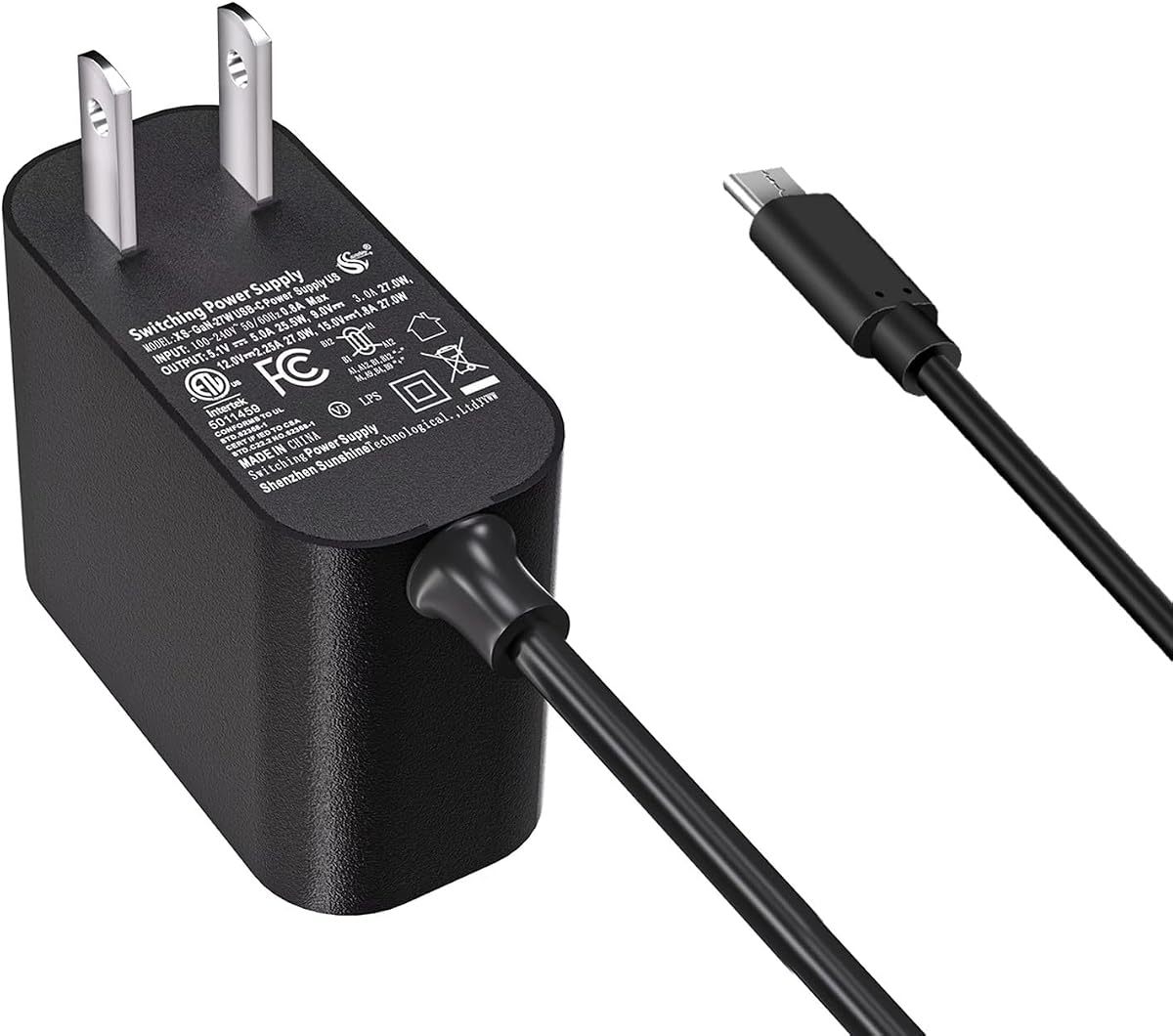
The RasTech GaN PD 27W is a USB-C power supply designed for Raspberry Pi 5 models ranging from 2GB through 16GB. Its 4.6 rating reflects a generally positive reception, and its standout feature is the combination of a 5.1V 5A Pi 5 output, multiple USB-C PD profiles, and an extensive protection package.
We may earn a commission when you buy through this link, at no additional cost to you.
The primary profile supplies up to 27W to a compatible Pi 5, while additional outputs include 9V at 3A, 12V at 2.25A, and 15V at 1.8A. This versatility allows the adapter to serve other compatible USB-C devices as well. Its stated protections cover over-power, over-current, short-circuit, over-voltage, low-voltage, and electrostatic events, providing unusually broad coverage for this product class.
The adapter also addresses the Pi 5's USB current behavior. When a compatible USB-C PD supply is detected, the listed total current available to the four USB ports rises from a nominal 600mA to 1.6A. That makes the RasTech better suited to setups using external storage, hubs, cameras, or other powered accessories than a basic low-current charger.
Buyers who need a versatile 27W supply without a physical switch will find this model practical. It is a strong general-purpose option for Pi 5 owners, particularly when the system must run beyond a light desktop workload. The absence of an inline switch and fixed 1.3-meter cable are minor inconveniences, but neither undermines its core power-delivery capability.
The supply's 5.1V 5A profile is the key attraction for a Pi 5 that needs to run multiple USB peripherals. Detection of the compatible PD source also raises the stated aggregate USB current limit to a nominal 1.6A, giving connected devices more room to operate.
Six stated protection functions cover common electrical fault categories. While protections do not replace correct wiring or sensible use, they make this RasTech appealing for a permanent installation that needs more than a basic wall adapter.
We may earn a commission when you buy through this link, at no additional cost to you.
The CanaKit 45W USB-C Power Supply with PD is explicitly designed for the Raspberry Pi 5 and carries a 4.7 rating. Its distinctive advantage is the ability to provide 27W at 5V and 5A for the Pi while supporting output up to 45W for other compatible devices.
We may earn a commission when you buy through this link, at no additional cost to you.
That flexibility makes the adapter more than a dedicated board replacement. If a desk contains several USB-C devices, one listed power supply may cover more of the setup than a single-profile Pi charger. The included four-foot insulated cable provides useful reach without creating an excessive amount of loose wire around a desktop or workbench.
A built-in noise filter is another practical detail. The product is UL Listed, which adds a recognizable safety and quality consideration when comparing it with less explicit listings. Buyers looking for a recognizable power solution, a long attached cable, and flexibility beyond the Pi 5 should find those features directly relevant.
The main limitation is that the supply does not include a physical on/off switch, so the Pi must be shut down through the operating system when a complete power cut is needed. There is also no separate cable to replace. Even so, the strong Pi 5 output, 45W versatility, noise filter, and four-foot reach make this an especially well-rounded recommendation.
The 45W capability sets this CanaKit apart from supplies limited to 27W. It can serve the Pi 5 at its stated 5V and 5A profile while also offering additional compatibility for appropriately rated USB-C devices.
The integrated noise filter and thick, insulated four-foot cable support a cleaner and more permanent installation. Those details are valuable when the Pi 5 operates continuously with several connected peripherals.
We may earn a commission when you buy through this link, at no additional cost to you.
The iUniker 27W GaN USB-C PD Power Supply is a compact option made for Raspberry Pi 5 projects. It has a 4.7 rating and targets the board's key requirement of a stable 5.1V 5A supply, while its GaN construction is designed for efficient, lower-heat operation.
We may earn a commission when you buy through this link, at no additional cost to you.
The adapter's 27W output is suitable for the Pi 5 and is intended to help reduce low-voltage or low-current warnings under a properly configured load. Its listed USB-C PD profiles include 5.1V at 5A, 9V at 3A, 12V at 2.25A, and 15V at 1.8A, so it can also serve other compatible devices.
The included 120-centimeter cable offers enough reach to reposition the board without leaving the desk in a tangle. Its 18AWG copper construction is a useful specification for a relatively long attached lead, and the compact adapter body occupies less space on a crowded power strip.
This is a strong selection for a Pi 5 owner who wants a dedicated 27W supply with useful PD profiles but does not need a built-in switch. The main compromises are the fixed cable and the absence of a convenient physical power cut. Otherwise, it combines a high rating, compact design, and practical desktop cable length.
GaN conversion is intended to provide steady high-output operation with lower heat, while the compact housing reduces clutter around a power strip. That makes the adapter practical for a small Pi 5 workstation.
The 120-centimeter, 18AWG cable provides enough distance to arrange the board naturally on a desk. The stated heavy-duty copper construction also supports the adapter's role as a permanent installation.
We may earn a commission when you buy through this link, at no additional cost to you.
The Raspberry Pi 27W USB-C Power Supply in white is a purpose-built option for the Pi 5, and its 4.9 rating is the highest among the products in this guide. It provides the board's key 5.1V 5A output with an explicitly stated 25.5W power rating.
We may earn a commission when you buy through this link, at no additional cost to you.
Its input accepts 100–240V AC at 50–60Hz, making it suitable for use across a broad range of regions and common mains systems. The design is focused rather than expansive: it prioritizes a dedicated Pi 5 power profile instead of advertising a broad collection of extra outputs for other devices.
For a buyer who wants the most straightforward match between the adapter and the board, this dedicated specification is easy to understand. The white housing may also coordinate with a clean workstation or enclosure setup. It is a sensible premium option when board-specific compatibility and a simple power specification matter more than multi-device versatility.
The supply does not advertise a physical on/off switch, and its dedicated Pi 5 focus gives it fewer expansion options than the CanaKit. Even so, the 5.1V 5A output, wide input range, and particularly strong rating make it an excellent recommendation for owners who want a straightforward, model-specific power solution.
This adapter concentrates on the output required by the Raspberry Pi 5 rather than trying to serve every possible USB-C device. That focused approach can reduce ambiguity when configuring a new board.
A 100–240V AC input and 50–60Hz frequency range make the supply suitable for many international installations. It is a useful feature for buyers who may relocate their setup or travel with the Pi 5.
We may earn a commission when you buy through this link, at no additional cost to you.
The CanaKit 5V 2.5A Raspberry Pi 3 B+ Power Supply has a 4.7 rating and remains a relevant adapter for older boards. It is explicitly compatible with the Raspberry Pi 2, Pi 3, and Pi 3 B+, but the product information clearly states that it is not compatible with the Raspberry Pi 4 or Pi 5.
We may earn a commission when you buy through this link, at no additional cost to you.
Its regulated output is 5V DC at up to 2.5A from a 100–240V AC input. A five-foot cable with an integrated noise filter provides ample reach, and the UL Listed specification adds a clear point of distinction. Those qualities make it well suited to a legacy Pi installation.
However, connector compatibility is the decisive issue. The attached Micro USB plug cannot connect to the Raspberry Pi 5's USB-C power input. Even with an appropriate cable or adapter, the 2.5A output is not equivalent to the Pi 5's recommended 5.1V 5A supply and may be inadequate for demanding loads.
This adapter should be chosen only for an older Raspberry Pi 2, 3, or 3 B+ system. It is not a viable Raspberry Pi 5 power supply despite its strong rating and reputable construction. Its inclusion here helps demonstrate why checking the board model and connector is essential before purchasing a power adapter.
For a Pi 2, Pi 3, or Pi 3 B+, the 5V 2.5A output and five-foot lead provide a straightforward power solution. The integrated noise filter also supports stable operation in a permanent setup.
The Micro USB connector and lower current output make this unsuitable for a Raspberry Pi 5. Pi 5 owners should choose a purpose-built 5.1V 5A USB-C supply instead.
We may earn a commission when you buy through this link, at no additional cost to you.
The RasTech 27W Power Supply with Switch is designed for Raspberry Pi 5 boards and carries a 4.4 rating. Its defining feature is a physical on/off switch with an LED indicator, giving users a direct way to see and control the supply's power state.
We may earn a commission when you buy through this link, at no additional cost to you.
Electrical performance is centered on a 5.1V 5A output, with additional PD profiles listed at 9V 3A, 12V 2.25A, and 15V 1.8A. The product also states that detection of this compatible USB-C PD supply increases the Pi 5's nominal USB power allowance from 600mA to 1.6A.
Protection features cover over-power, over-current, short-circuit, over-voltage, low-voltage, and electrostatic conditions. A 1.3-meter attached cable adds useful placement flexibility, while the switch design is intended to stabilize the voltage and reduce low-voltage warnings during use.
The physical switch is particularly helpful for projects that need a clean, immediate power cut rather than relying only on operating-system shutdown procedures. The trade-offs are a slightly bulkier adapter and the lowest customer rating among the Pi 5-compatible products listed here. Even so, it offers one of the clearest control options for a permanent desktop or project installation.
A physical switch removes the uncertainty of leaving the board powered while still needing to cut its input. The adjacent LED provides a quick visual indication of the adapter's state.
The 5.1V 5A profile and increased nominal USB current allowance make the supply suitable for Pi 5 configurations that use several powered peripherals. Correctly configured loads are still important for avoiding low-voltage warnings.
We may earn a commission when you buy through this link, at no additional cost to you.
This 27W USB-C PD Power Supply is a straightforward Raspberry Pi 5 option with a 4.6 rating. It provides the board with a 5.1V 5A output and is listed as compatible with Raspberry Pi 5 configurations in 2GB, 4GB, 8GB, and 16GB capacities.
We may earn a commission when you buy through this link, at no additional cost to you.
Its 1.3-meter attached cable offers enough freedom to position the board around a desk while avoiding a very long run of wire. The adapter accepts 100–240V AC input and also offers PD outputs of 9V 3A, 12V 2.25A, and 15V 1.8A for other compatible products.
The protection package is another important strength. The listing identifies over-power, over-current, short-circuit, over-voltage, low-voltage, and electrostatic protection, giving the product a comprehensive safety-oriented feature set for a permanently installed computer.
This model is best for Pi 5 owners who want a dedicated 27W adapter, useful peripheral support, and a reasonably long cable without needing a larger 45W source. It lacks an integrated switch, so power control depends on the board and operating system. Within those boundaries, it remains a capable and practical general-purpose choice.
The stated 1.6A nominal USB allowance when a compatible PD supply is detected provides additional power for peripherals. That makes the adapter more appropriate for a working setup than a minimal board-only installation.
The six stated protections cover a broad set of common fault conditions. They complement, rather than replace, correct equipment use and properly rated peripherals.
We may earn a commission when you buy through this link, at no additional cost to you.
The iUniker 27W GaN USB-C PD Power Supply combines a Pi 5-oriented output with an integrated on/off switch. Its 4.5 rating indicates a positive reception, while the compact black adapter and 120-centimeter cable are designed to balance functionality with a manageable footprint.
We may earn a commission when you buy through this link, at no additional cost to you.
Its stated PD profiles cover 5.1V at 5A, 9V at 3A, 12V at 2.25A, and 15V at 1.8A. The maximum output is listed at 27W, and the USB-C cable uses 18AWG wire. The product is ETL Listed and specifically optimized for the Pi 5's USB-C power connection.
The switch is the most visible convenience feature. It allows a user to cut power directly from the adapter, which can be useful during assembly, troubleshooting, or routine shutdown procedures. The compact GaN body is intended to leave more room around neighboring outlets on a power strip.
This is a sensible choice for someone who values physical control and a compact adapter but does not need the higher 45W versatility offered by the CanaKit. The fixed 120-centimeter cable and dedicated 27W ceiling are limitations for some multi-device setups. For a Raspberry Pi 5 installation, however, the core output and switch functionality are well matched.
The switch adds direct control without requiring a bulky inline controller. At the same time, the compact GaN housing helps preserve space on crowded power strips.
Listing the PD profiles makes it easier to confirm compatibility with the Pi 5 and other devices. The 5.1V 5A profile provides the dedicated Pi 5 output, while lower-current profiles cover additional USB-C uses.
We may earn a commission when you buy through this link, at no additional cost to you.
The Argon 5.25V 3A Power Supply is designed for Raspberry Pi 3, Pi 3 B+, and Pi Zero boards. It has a 4.7 rating and is built around a regulated 5.25V 3A output, which is presented as helping compensate for cable voltage drop and reduce undervoltage warnings.
We may earn a commission when you buy through this link, at no additional cost to you.
A 3.3-foot Micro USB cable is integrated into the adapter, so no separate power lead is needed for compatible boards. The product is UL Listed and includes protection mechanisms intended to safeguard connected devices against electrical faults, making it suitable for home labs and long-running projects.
The slightly elevated 5.25V output distinguishes it from a standard 5V phone charger and supports more stable delivery over a connected cable. It can also power other Micro USB development boards, microcontrollers, and compatible electronics that accept the same output profile.
This product should not be considered for a Raspberry Pi 5 despite its strong rating. The connector is Micro USB rather than USB-C, and the 5.25V 3A profile does not meet the Pi 5's dedicated 5.1V 5A requirement. It remains a thoughtful legacy option for Pi 3 and Pi Zero systems, not a current Pi 5 solution.
The 5.25V output is designed to offset voltage lost through the attached cable. This can help maintain stable operation on compatible legacy boards that otherwise display undervoltage warnings.
The built-in three-point-three-foot Micro USB lead eliminates the need for a separate adapter cable. It provides a neat connection for compatible development boards and other suitable Micro USB devices.
We may earn a commission when you buy through this link, at no additional cost to you.
The GeeekPi 27W Power Supply is a compact USB-C PD adapter compatible with Raspberry Pi 5 models in 16GB, 8GB, 4GB, and 2GB capacities. It carries a 4.4 rating and emphasizes portability, broad mains compatibility, and support for several output voltages.
We may earn a commission when you buy through this link, at no additional cost to you.
Its listed outputs include 5V at 5A, 9V at 3A, 12V at 2.25A, and 15V at 1.8A. The adapter accepts 100–240V AC at 50/60Hz, making it a travel-friendly choice for users who may use their Pi 5 in different locations with compatible mains systems.
Safety features include over-current, over-voltage, and short-circuit protection. While the protection list is less extensive than those offered by several RasTech products in this guide, it covers three common electrical concerns and complements careful peripheral selection.
The GeeekPi is a practical option for owners who want a portable 27W supply with flexible PD profiles and a compact body. It lacks a physical on/off switch and has the second-lowest rating among the Pi 5-compatible selections, but its core electrical specifications and broad input range make it a credible general-purpose recommendation.
The 100–240V input and compact form make the adapter convenient for different locations. It is well suited to a portable project kit or a Pi setup that moves between workspaces.
Four PD profiles give the adapter more flexibility than a single-output charger. The 5V 5A profile addresses the Pi 5, while the other listed profiles support suitable USB-C devices.
We may earn a commission when you buy through this link, at no additional cost to you.
A Pi 5 power supply should be selected by connector, voltage, current, power-delivery support, protection features, and intended workload. The most important starting point is matching the adapter to the Pi 5's USB-C input and its requirement for 5.1V at up to 5A.
The Raspberry Pi 5 uses a USB-C power connection, and a compatible adapter must terminate in the correct plug and support the required power-delivery profile. Some search results for Raspberry Pi power supplies show older Micro USB products for the Pi 3, Pi Zero, or earlier generations. Those adapters do not physically match the Pi 5's power port and are not suitable merely because they use a familiar USB connector family.
The key Pi 5 profile is 5.1V at 5A, corresponding to a maximum stated output of 27W. A lower-current charger may work in light situations, but it can become the limiting factor when the board, storage, displays, networking equipment, and other USB peripherals draw power at the same time. Matching the intended workload is more dependable than relying on a charger that merely happens to fit.
USB-C Power Delivery allows a charger and device to negotiate an appropriate output. A Pi 5-oriented adapter should expose 5.1V at 5A, while adapters that also list 9V, 12V, and 15V profiles can potentially serve other compatible devices. Buyers should check the complete profile list rather than assuming that every USB-C charger supports the same current at every voltage.
A board-only project and a desk full of USB accessories have different demands. Hard drives, SSDs, cameras, hubs, displays, and other powered peripherals can place additional pressure on the Pi 5's available power. Some listed Pi 5 USB-C supplies raise the nominal aggregate USB current limit from 600mA to 1.6A when a compatible PD source is detected, which can make them better suited to peripheral-heavy configurations.
Over-current, over-voltage, short-circuit, low-voltage, over-power, and electrostatic protection form a useful baseline for any permanently installed supply. The exact feature count varies across this list, but protection is especially important when the Pi 5 runs unattended. Certification labels such as UL Listed or ETL Listed also provide useful information about how a product has been evaluated.
The listed Pi 5 adapters use fixed cables of approximately 1.2 to 1.3 meters, with the CanaKit offering a four-foot lead. A longer cable can make it easier to position the board without stretching the connection, but it should also be routed carefully. Buyers should consider the distance to the wall outlet, available desk space, and whether the attached cable will be strained during maintenance.
A physical on/off switch makes it easy to cut adapter power immediately, while an LED can show whether the supply is active. These features are particularly useful during assembly, troubleshooting, and controlled shutdowns. They are not required for normal operation, so buyers can balance the convenience against size, cost, and the desire for the simplest possible adapter.
Compact GaN bodies reduce clutter around crowded power strips, and broad 100–240V input ranges are useful for travel. Some supplies also provide higher wattage for other devices, but the Pi 5-focused options prioritize a dedicated 27W profile. Consider whether the adapter must serve only the board or also function as a general USB-C power source before choosing between them.
Before connecting the adapter, confirm that the Pi 5 model uses USB-C power and that the published 5.1V 5A profile is present. Inspect the connector, adapter body, and cable for visible damage, then connect the USB-C plug directly to the Pi 5's power port. Avoid leaving the connector partially inserted, since an incomplete connection may cause instability or low-voltage warnings.
Use the adapter with a compatible Raspberry Pi 5 and properly rated peripherals. USB devices still have their own current requirements, so the Pi 5's increased USB current allowance should not be treated as permission to connect arbitrary equipment. Introduce storage, displays, cameras, and hubs gradually, and shut down the operating system before unplugging or switching off the supply during normal use.
Place the adapter where it is not exposed to moisture, excessive heat, or physical impact. Keep the cable from being sharply bent or pinched, especially near the plug. For an installed system, periodically check the connector and monitor the Pi for undervoltage messages, and replace the supply if voltage becomes unstable or the connector shows discoloration, cracking, or heat-related damage.
The Raspberry Pi 5 requires a USB-C Power Delivery supply capable of delivering 5.1V at up to 5A, commonly described as a 27W supply. That rating is especially important when several USB peripherals are connected. A charger that fits physically but supplies less current may work under light loads but can cause low-voltage warnings or instability under heavier demand.
The Raspberry Pi 5 uses a USB-C power connection, but a basic Pi 4-style USB-C charger may not provide the required 5.1V 5A profile. It is important to verify both the connector and the negotiated output specifications. A supply advertised only as a lower-wattage USB-C charger is not automatically an adequate Pi 5 power source.
No. The Micro USB adapters in this comparison are intended for older Raspberry Pi boards, including the Pi 3, Pi 3 B+, Pi Zero, and in one case the Pi 2. Their connectors do not match the Pi 5's USB-C power input, and their output specifications are not equivalent to the required 5.1V 5A profile.
Both can provide the Pi 5's stated 27W operating profile, but the 45W CanaKit also advertises higher output for other compatible USB-C devices. For powering only the board and its normal peripherals, the key point is whether the adapter supports 5.1V at 5A. The 45W rating adds versatility rather than being required for basic Pi 5 operation.
No. A correctly rated supply is essential, but warnings can also result from an unsuitable cable, an incomplete connection, excessive peripheral demand, or a configuration that exceeds what the setup can sustain. Products in this guide use 18AWG wire or thick insulated leads, which helps with power delivery, but proper connections and reasonable load management remain important.
It can be useful, especially for permanent installations where a quick and obvious power cut is desirable. The RasTech and iUniker switch versions provide this convenience, along with an LED in the RasTech case. For routine operation, shut down the Pi through its operating system before using the switch to remove power.
Several listed products provide additional PD profiles at 9V, 12V, and 15V, so they may power other compatible devices. The CanaKit also advertises output up to 45W. The connected device must support the relevant USB-C PD profile, and the adapter's total output should not be exceeded when multiple devices are attached.
Check the Raspberry Pi model first, then confirm the connector, output voltage, maximum current, and PD profiles. The Pi 5 needs USB-C and a 5.1V 5A profile. Also consider peripheral load, cable reach, safety features, portability, and whether a physical switch would improve your installation before placing an order.
The Raspberry Pi 27W USB-C Power Supply stands out as the premium, purpose-built choice, delivering 5.1V at 5A with a 5.9 rating. The CanaKit 45W USB-C PD model earns the Editor's Choice designation for its 27W Pi 5 profile, 45W versatility, UL Listed construction, noise filter, and four-foot cable. The iUniker 27W GaN model is the budget pick, combining a 4.7 rating with compact construction and a useful 120-centimeter lead.
For most Raspberry Pi 5 owners, the decision should start with a verified 5.1V 5A USB-C PD profile. Then consider the number and type of peripherals, whether the setup needs a physical switch, how much cable reach is required, and whether the adapter will also power other devices. The RasTech, iUniker switch, GeeekPi, and other 27W options provide varying combinations of protection and convenience.
Customer ratings, product availability, and prices can change, so shoppers should review the current listing before making a final decision. Confirm the connector and output profile, compare the physical design with the intended installation, and choose the adapter that offers the right balance of stable power, useful controls, and compatibility.