
Soundcore P30i
4.3Editor score
Bass-enhanced 10mm drivers
Adaptive noise cancellation
Phone stand charging case
Discover the best earbuds for rock music, with 10 expert picks compared for bass, clarity, noise control, comfort, battery life, and connectivity features.
Rock music rewards earbuds that can handle punchy low frequencies without burying guitars, vocals, or snare drums in mud. The right pair should also maintain separation during dense arrangements, remain comfortable through long sessions, and deliver enough volume and noise control for commuting, rehearsals, and live events.
This guide compares ten wireless and wired earbuds based on driver design, frequency-focused features, noise cancellation, microphone systems, battery specifications, water resistance, connectivity, and fit. It covers budget models from established audio brands, specialized hi-fi monitors, and premium options intended for listeners who want greater tonal detail.
Each review highlights the product's most useful strengths, practical limitations, and best-suited listener. The top selections stand out for bass impact, detail retrieval, adaptive noise control, or a balanced mix of features, while prices and availability can change, so readers should confirm current details before purchasing.
4.3Editor score
4.1Editor score

4.4Editor score
The comparison below covers the ten leading options for rock listening, from bass-forward true wireless earbuds to detailed wired in-ear monitors. Driver type, noise control, playback potential, durability, and connectivity help separate a punchy everyday choice from a more specialized audiophile model.


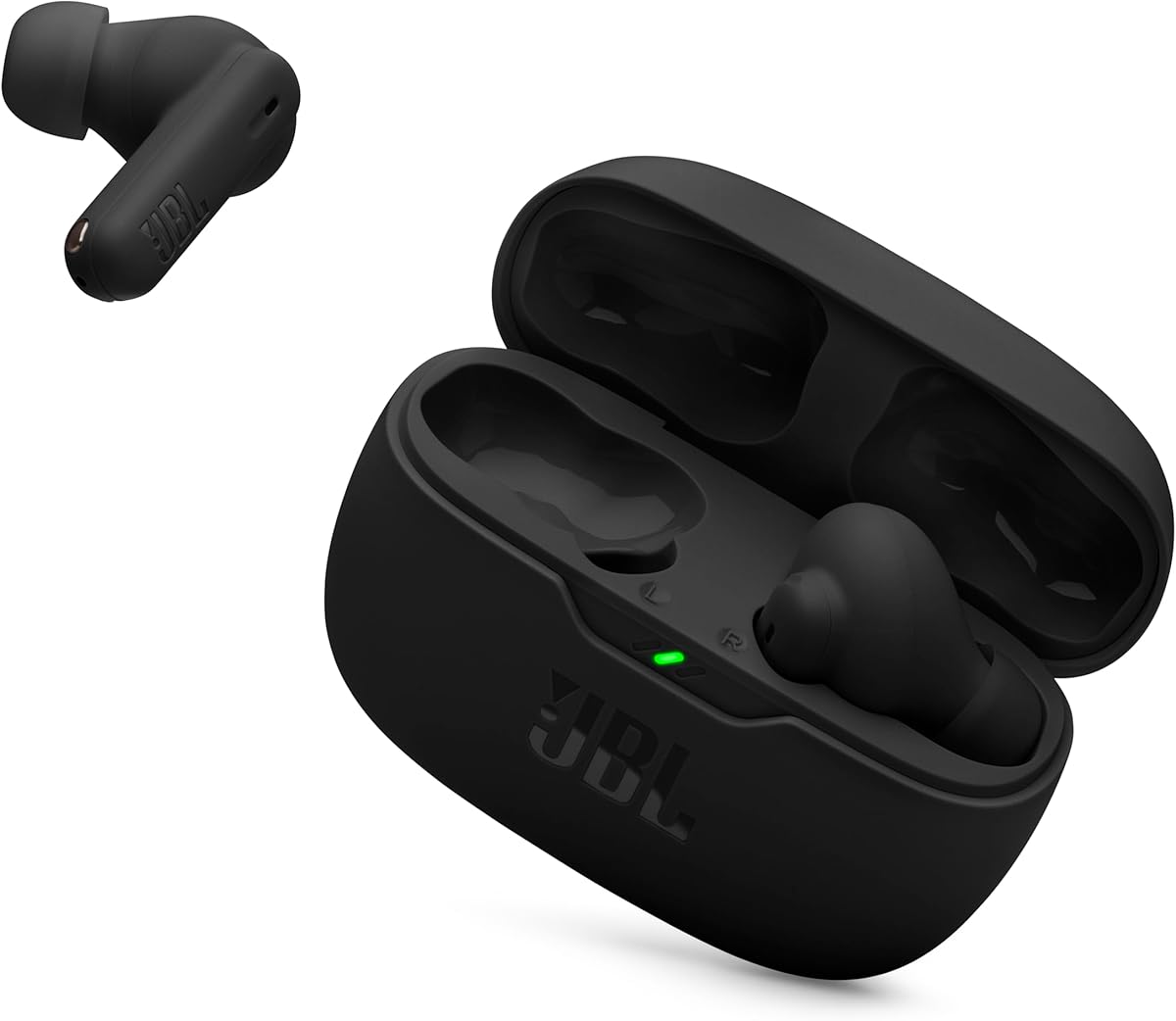
The JBL Vibe Beam 2 combines an 8mm dynamic driver, JBL Pure Bass sound, active noise cancelling, and a flexible app-based equalizer. Its 4.1 rating reflects a broadly capable pair, but the important attraction for rock listeners is the way it emphasizes low-end energy while keeping everyday controls convenient. It is designed for commuters who want impactful music without surrendering call clarity or awareness.
We may earn a commission when you buy through this link, at no additional cost to you.
The strongest feature is the balance between musical character and utility. JBL Pure Bass gives kick drums and bass lines weight, while the adjustable EQ in the JBL Headphones app lets listeners reduce that emphasis when acoustic guitars, vocals, or densely layered productions need more space. Smart Ambient allows users to admit outside sound without removing the earbuds, while the four-microphone arrangement is designed to keep voices clear in noisy surroundings.
The main limitation is that the 8mm drivers and bass-focused identity do not guarantee the same fine separation or upper-frequency extension as a specialist hi-fi monitor. Rock recordings are mastered with considerable variation, so listeners who prefer detailed neutrality may need to spend time in the EQ. Also, several convenience features depend on the companion app, and battery figures are most favorable when active noise cancelling is off.
This is a strong all-around recommendation for rock fans who want confident bass, effective noise control, and long wireless listening without moving into specialist equipment. It works especially well for daily commutes, practice sessions, and casual listening across classic rock, alternative, punk, and modern hard rock. Those wanting a wired monitor for precise mixing should look elsewhere, while everyone else gets a particularly usable package.
The 8mm drivers provide the forceful low-end foundation associated with JBL Pure Bass sound. Because rock mixes can become congested at high bass levels, the app's selectable and customizable EQ options give listeners useful control over kick drums, bass guitars, and vocals.
Active noise cancelling reduces distractions during commutes or shared spaces, while Smart Ambient lets users hear their surroundings. The four microphones also support clear hands-free calls, making the earbuds convenient for music, travel, and remote work.
We may earn a commission when you buy through this link, at no additional cost to you.
The Soundcore P30i pairs 10mm drivers with BassUp technology, adaptive active noise cancelling, and a four-microphone AI-enhanced call system. Its 4.3 rating makes it one of the stronger-rated options in this guide. For rock listeners, its most relevant attraction is the promise of deep, punchy bass through larger drivers, supported by EQ controls that can broaden the presentation when needed.
We may earn a commission when you buy through this link, at no additional cost to you.
Its noise cancelling is adaptive, detecting external sound and selecting a suitable level automatically. That makes the P30i convenient in changing environments such as a train platform, an office, or a busy street. Transparency mode restores awareness when required, and the app provides EQ modes plus adjustable noise cancelling. The charging case doubles as a phone stand, a useful extra for watching performances, documentaries, or concert footage while traveling.
Bass-forward tuning is the main caveat. Rock listeners who love weighty low frequencies will probably appreciate the default character, but the balance may feel aggressive on lighter recordings or dense arrangements. The 10-minute charging claim of two hours of use is useful, while full playback figures range from 10 hours per charge with ANC off to six hours with it on. The included case raises total playback to 45 hours without ANC and 25 hours with ANC.
The P30i is the best budget-oriented choice for listeners who want a dramatic bass presentation, adaptive noise control, and smart features without moving to specialist wired equipment. It is particularly well suited to commuters, gym sessions, and casual listeners who want their rock to feel energetic and immediate. Use the app's EQ to refine the balance, and check the included ear-tip fit for the strongest low-end response.
BassUp is designed to emphasize deep, punchy low frequencies, which suits driving rock, punk, metal, and modern alternative. The app's EQ modes allow that impact to be moderated when cleaner vocal and guitar separation is preferable.
The P30i automatically selects a noise-cancelling level based on surrounding sound. Combined with Transparency mode and four microphones, it is a flexible choice for commuting, calling, and switching between music and environmental awareness.
We may earn a commission when you buy through this link, at no additional cost to you.
The Beats Studio Buds + use Beats' custom acoustic platform, personalized active noise cancelling, Transparency mode, and support for spatial audio. Although their 3.9 rating is the lowest among the ten products, that number does not tell the whole story. The earbuds provide a polished, lifestyle-focused package built around rich sound, convenient controls, and broad phone compatibility.
We may earn a commission when you buy through this link, at no additional cost to you.
For rock, the custom acoustic platform is designed to produce a rich and immersive presentation, while the inclusion of four silicone tip sizes helps listeners establish a proper seal. A good seal is important because it improves perceived bass consistency and supports the noise-cancelling system. The three voice-targeting microphones are intended to isolate the user's voice during calls, and Class 1 Bluetooth is included for extended range with fewer dropouts.
Spatial audio can make live albums and carefully produced rock tracks feel more enveloping, although the available experience depends on the connected device and content. The 36-hour listening figure is useful, though it falls short of several competitors in this list. With an IPX4 rating, the earbuds are also prepared for sweat during workouts. Listeners who require extensive onboard controls, deep EQ menus, or wired-level detail may need to look elsewhere.
The Beats Studio Buds + are a strong choice for rock listeners who value presentation, portability, ecosystem compatibility, and a clean design. They work well for casual daily listening, gym sessions, and phone-centered use with either Apple or Android devices. For buyers who want maximum battery capacity or deeper custom sound adjustment, the alternatives here provide more specialized advantages.
Beats' custom acoustic platform emphasizes a rich presentation, making it well suited to energetic rock and modern production styles. Spatial audio adds another dimension for compatible content, helping supported recordings feel more enveloping.
Four pairs of silicone tips allow listeners to find a stable, comfortable seal. That fit supports both the earbuds' noise cancellation and the consistency of the low end, especially important when moving between home, street, and gym environments.
We may earn a commission when you buy through this link, at no additional cost to you.
The JBL Vibe Beam uses 8mm drivers with JBL Deep Bass Sound and an ergonomic stick-closed design. Its 4.2 rating reflects a well-liked model that focuses on bass, straightforward operation, and durability. The closed shape is particularly relevant for rock because it helps exclude external sound and can enhance the perceived impact of bass lines and kick drums.
We may earn a commission when you buy through this link, at no additional cost to you.
The earbuds offer up to 32 hours of total playback, including eight hours in the earbuds and 24 in the case. A ten-minute charge adds two hours of playback, which is helpful for rehearsals, road trips, and spontaneous listening sessions. VoiceAware allows users to adjust how much of their own voice they hear during stereo hands-free calls, while the ergonomic shape is designed for long wear.
Unlike several other products here, the Vibe Beam does not include active noise cancelling. That means the passive isolation supplied by the closed design and ear-tip seal will carry more responsibility in noisy environments. Its feature set is also less elaborate than app-centered rivals, but the straightforward approach can appeal to anyone who wants to concentrate on playback rather than manage extensive controls. The IP54-certified earbuds and IPX2 case add protection for outdoor use.
This is a compelling pick for rock fans who prefer a bold low end, a secure and comfortable design, and rugged construction without complicated setup. It suits listeners who want dependable music for travel, exercise, and outdoor practice. Those who need active noise cancelling or advanced EQ controls should compare the Vibe Beam 2 or Soundcore models, while simpler operation remains one of this model's strongest qualities.
The closed stick design excludes more external sound than many open-style alternatives. Combined with JBL Deep Bass Sound, it creates an intimate presentation that can make rhythm-heavy rock tracks feel more immediate.
IP54 protection for the earbuds and IPX2 protection for the case make them suitable for daily activity, dust, and splashes. The speed-charge function is particularly useful when a long rehearsal or commute approaches.
We may earn a commission when you buy through this link, at no additional cost to you.
The Linsoul KZ ZS10 Pro is a specialized wired in-ear monitor with a hybrid five-driver arrangement: two balanced armatures for high frequencies, two for midrange detail, and a double-magnetic dynamic unit for low frequencies. Its 4.4 rating is the highest in this roundup. For listeners who want to examine the layers within a rock mix, that division of duties is considerably more revealing than a single compact wireless driver.
We may earn a commission when you buy through this link, at no additional cost to you.
The balanced armatures extend the high-frequency response beyond 40kHz and are described as transient, dynamic, and bright. A PCB dividing board helps each driver operate with controlled performance, while the dynamic unit supports stronger bass. The result is presented as a detailed, cohesive sound with bright resolution, making the ZS10 Pro suitable for listeners interested in guitar tone, cymbal texture, vocal articulation, and bass definition.
The trade-off is obvious: this is a wired product without wireless freedom, and the specified black version does not include a microphone. It also requires a compatible source and cable connection rather than offering phone-call features, touch controls, or active noise cancelling. Cable versions may arrive with different appearances, although the manufacturer states that acoustic performance remains the same. New users may also need time to learn the fit and tonal character.
The KZ ZS10 Pro is the pick for serious rock listeners who value detail, passive isolation, and the ability to replace or upgrade the cable. It works especially well for focused listening at a desk, practice sessions where background noise is distracting, and connecting to a compatible playback setup. For commuters who require wireless operation, one of the true wireless alternatives will be more convenient, but this monitor offers the most specialized tuning architecture in the group.
Separate balanced armatures handle high and mid frequencies while the double-magnetic dynamic driver focuses on low-end movement. That specialization can expose guitar picking, cymbal decay, snare texture, and vocal details that less elaborate drivers may blend together.
The sculpted in-ear cavity is designed to provide up to 26dB of isolation. There is no battery, charging case, or wireless pairing to manage, making it simple to use for focused sessions with a suitable wired source.
We may earn a commission when you buy through this link, at no additional cost to you.
The TOZO NC9 combines 10mm drivers, OrigX Acoustic 2.0 technology, hybrid active noise cancelling, and a charging case with an LED battery display. Its 4.3 rating places it alongside the strongest products in the guide. The defining attraction is the amount of functionality packed into a value-oriented wireless design, particularly for bass-heavy rock and long listening sessions.
We may earn a commission when you buy through this link, at no additional cost to you.
TOZO claims noise reduction up to 45dB, while Transparent mode keeps environmental sounds available. The app provides 32 EQ options, bass adjustment, music-style settings, and noise-cancelling controls. For calls, six microphones and environmental noise reduction are intended to preserve the user's voice. Six replaceable eartip sizes give listeners several ways to adjust fit, while IPX8 water resistance makes the earbuds suitable for demanding everyday use.
The feature abundance also creates complexity. EQ sharing, sound adjustments, and several control options depend on the companion app, so new users may need to spend time configuring the earbuds. The 60-hour total figure applies with ANC off, with 40 hours available when ANC is on; single-charge playback is listed as 14 hours without ANC and 10 hours with it. Bass-forward tuning can also dominate lighter rock recordings unless the user adjusts the available EQ.
The NC9 is a strong pick for rock fans who prioritize deep sound, extensive customization, long battery life, and useful outdoor durability. It suits commuters, students, gym users, and listeners who enjoy creating personal EQ settings. Those wanting a more neutral presentation should use the app to moderate the low end, while buyers who prefer minimal setup may find one of the more streamlined models easier to manage.
Ten-millimeter OrigX drivers provide the foundation for a strong low end. Thirty-two EQ choices and manual bass controls let rock listeners increase the impact of a favorite track or pull it back when vocals and guitars need more room.
The charging case's LED display makes remaining power easier to monitor. Total playback reaches 60 hours with ANC off, while shorter but still substantial figures apply when noise cancelling is active.
We may earn a commission when you buy through this link, at no additional cost to you.
The JBL Tune Buds use 10mm drivers, JBL Pure Bass sound, active noise cancelling, and Bluetooth 5.3 with LE Audio support. Their 4.2 rating reflects a well-rounded pair with particularly strong battery specifications. For rock listeners, the larger drivers and bass-focused tuning create a more forceful presentation than the smaller-driver Vibe Beam models.
We may earn a commission when you buy through this link, at no additional cost to you.
Active noise cancelling helps isolate the music during travel or busy indoor sessions. Ambient Aware and TalkThru provide two ways to monitor surroundings, with TalkThru designed for quick conversations. The four-microphone arrangement supports stereo hands-free calls, and VoiceAware controls how much of the caller's own voice is heard. Bluetooth 5.3 also supports synchronized independent earbuds and audio sharing, subject to the listed future-update availability for some functionality.
Battery performance is the standout practical advantage. The earbuds provide up to 12 hours per charge, rising to 48 hours with the case. With active noise cancelling enabled, the listed maximum is 10 hours in the earbuds and 40 hours with the case. A 15-minute Speed Charge adds four hours of playback, making the earbuds convenient for long journeys and rehearsals. As with many wireless products, exact results depend on volume, features, and use.
The Tune Buds are a compelling choice for rock fans who want JBL's bass character, wireless convenience, and long battery life in one package. They work well for commuting, studying, and all-day casual listening. Listeners seeking deep app-based customization may prefer TOZO or Soundcore, while those prioritizing wireless simplicity will appreciate the focused feature set.
The 10mm drivers are designed to produce JBL Pure Bass sound with a strong sense of pulse. Their larger size makes this model especially appealing for listeners who want kick drums and bass lines to carry the emotional weight of a rock track.
Bluetooth 5.3 can support independent earbud use and sharing audio with another listener where compatible. The 48-hour maximum and 15-minute four-hour boost make the charging case one of the most reassuring features for extended listening.
We may earn a commission when you buy through this link, at no additional cost to you.
The Soundcore Space A40 combines double-layer diaphragm drivers, adaptive active noise cancelling, LDAC support, and up to 50 hours of total playback. Its 4.2 rating reflects a balanced and versatile pair. The sound signature is described as strong in the bass, clear in the mids, and bright in the treble, which gives rock music both impact and room for guitars and vocals.
We may earn a commission when you buy through this link, at no additional cost to you.
The adaptive noise cancelling detects surroundings and automatically chooses a suitable cancellation level. That makes the earbuds adaptable to offices, public transport, outdoor streets, and flights. In the app, listeners can use EQ modes, HearID, and adjustable ANC settings. LDAC mode provides a higher-resolution wireless option for compatible devices and source material, while the lightweight shape is intended to reduce listening fatigue.
The key consideration is compatibility. LDAC requires suitable hardware, and many of the deepest personalization options depend on the soundcore app. Battery life reaches 50 hours with the case, and a ten-minute fast charge supplies four hours of use. The earbuds themselves offer ten hours per charge. Strong bass is present, but the design does not depend exclusively on exaggerated low frequencies, making it easier to hear a complete rock arrangement.
The Space A40 is a strong all-round recommendation for rock listeners who want detailed wireless sound, adaptive quiet, long battery life, and flexible EQ. It is ideal for commutes, focused desktop listening, and mobile use. Users who want the most forceful bass may prefer the P30i, while listeners prioritizing a specialized hi-fi architecture may prefer the KZ ZS10 Pro.
Double-layer diaphragm drivers are tuned for strong bass, clear mids, and bright treble. That combination allows the low end to drive rock while retaining definition in guitars, snare drums, and vocals across energetic arrangements.
Noise cancelling automatically responds to the environment, reducing the need for constant manual changes. Fifty hours of case-inclusive playback and a four-hour fast-charge boost provide practical freedom for long travel or workdays.
We may earn a commission when you buy through this link, at no additional cost to you.
The Soundcore P42i deliver LDAC hi-res audio, adaptive active noise cancelling up to 55dB, a Natural Mode designed for loud live environments, and up to 56 hours of total playback. Their 4.2 rating supports their position as a feature-rich option. The concentration on concerts, festivals, and sports suggests they are especially relevant to rock listeners who want more presence and detail from live recordings.
We may earn a commission when you buy through this link, at no additional cost to you.
Natural Mode lowers loud live sound more evenly while keeping voices, music, and atmosphere clear. That makes it useful for reducing the harshness of a close microphone setup without completely flattening the atmosphere of a concert. LDAC reproduces the recording with rich, well-balanced treble and bass, while six AI-enhanced microphones help the user's voice remain clear in offices, trains, and windy streets.
The earbuds provide up to 12 hours per charge, or eight and a half hours with ANC enabled. Total playback reaches 56 hours without ANC and 40 hours with it, and a ten-minute charge adds up to three and a half hours. As with other advanced wireless models, LDAC compatibility depends on connected devices, and HearID, EQ, and ANC controls are managed through the soundcore app.
The P42i are an excellent recommendation for rock fans who attend concerts or follow live performers closely. They are also strong daily wireless earbuds thanks to their detailed sound, excellent call microphones, and long battery life. Listeners focused on editing or critical wired monitoring will want a specialist cable option, while everyone else gets a well-equipped pair for studio recordings and live playback.
Natural Mode is intended to reduce loud, uneven live sound while preserving voices, instruments, and atmosphere. That makes it particularly interesting for rock listeners who follow concerts, festival performances, or more heavily amplified recordings.
LDAC support preserves more musical nuance than standard wireless modes on compatible hardware. The balanced presentation gives bass, guitars, and vocals room to coexist, supporting both energetic modern rock and more intricately arranged tracks.
We may earn a commission when you buy through this link, at no additional cost to you.
The Nothing Ear (a) feature an 11mm dynamic driver, smart hybrid noise cancelling, an advanced equalizer, dual-device connectivity, and more than 42.5 hours of total playback. Their 4.1 rating reflects a capable pair with a particularly large driver. The redesigned venting and driver chamber are intended to improve airflow, reduce distortion, and create deeper bass with greater overall clarity.
We may earn a commission when you buy through this link, at no additional cost to you.
The noise cancelling checks for leakage between each earbud and the user's ear canal, then applies more cancellation as needed. Adaptive mode can adjust the level in real time, while three manually selected levels offer additional control. Clear Voice Technology uses a dedicated talk microphone and an additional airway in the stem to reduce wind interference. The Nothing X app provides equalizer options, ANC settings, and Low Lag mode.
The main caveat is dependence on smart features and the app for deeper configuration. There is also no wired connection for critical monitoring. Battery figures depend on whether noise cancelling is active: a ten-minute fast charge produces ten hours with ANC off, while the earbuds support over 42.5 hours with the case under the same condition. Dual Connect is valuable for switching between a laptop and phone, but it does not make the earbuds a universal replacement for a wired monitor.
The Ear (a) are well suited to rock listeners who want a deep, clear low end, automatic noise management, and effortless switching between devices. They are particularly useful for students, office workers, and commuters who alternate between music, calls, and videos. Those who want total control over a studio signal should choose a wired in-ear monitor, while mobile listeners will appreciate the smart adaptive behavior.
The 11mm driver uses extra internal space and new vents to support deeper bass and improved airflow. The stated goal of less distortion makes the earbuds appealing for punchy rock that contains demanding bass lines and energetic drums.
Noise cancellation responds to both environmental sound and fit leakage. Dual Connect allows music on one device and calls on another, while Low Lag mode is available for better synchronization with games.
We may earn a commission when you buy through this link, at no additional cost to you.
The best earbuds for rock music depend on how you listen, where you use them, and how much detail you want from dense recordings. Bass impact, midrange clarity, isolation, wireless convenience, battery life, durability, and device compatibility should be weighed together.
Rock often depends on the relationship between kick drums, bass guitar, guitars, and vocals. A bass-forward driver can make a performance feel more powerful, but excessive low-end energy may blur those elements. Listeners who enjoy modern hard rock, punk, and metal may prefer the pronounced emphasis of the JBL Vibe Beam 2, Soundcore P30i, TOZO NC9, or Nothing Ear (a). Those wanting a more balanced presentation with clearer guitars and vocals may favor the Soundcore Space A40 or P42i. The Linsoul KZ ZS10 Pro takes a different approach by assigning separate drivers to low, middle, and high frequencies, making it appealing when analyzing the layers of a mix.
Driver size alone does not determine sound quality, but it can influence practical characteristics such as bass extension and output. The 8mm drivers in the JBL models emphasize a familiar, bass-forward character, while the 10mm and 11mm options offer greater room for larger-diameter movement. Multi-driver in-ear monitors divide the frequency range among specialized components, which can benefit listeners seeking texture and separation. LDAC-capable models may provide more detailed wireless playback when paired with compatible hardware. The most useful approach is to consider both the stated tuning and the type of rock being played, since vocals, distortion, and acoustic textures require different balances.
Active noise cancelling is useful on commutes, in offices, and during travel because it reduces the need to raise the volume against environmental noise. Adaptive systems, found in the Soundcore models, adjust their behavior as conditions change. TOZO and Nothing specify deeper maximum cancellation levels, while JBL's models provide active cancellation and ambient controls. Passive isolation matters too, particularly for the wired KZ ZS10 Pro, whose sculpted in-ear design is specified to isolate noise effectively. For rock listeners attending small live sessions, performers should also account for monitoring needs, because consumer noise cancellation is not a substitute for an accurate stage signal.
Wireless freedom is convenient for everyday rock listening, but it comes with charging, pairing, and codec considerations. Bluetooth 5.3 appears in the JBL Tune Buds and TOZO NC9, Bluetooth 5.4 in the Soundcore P30i, and LDAC support in the Space A40 and P42i. Some wireless models also support multipoint or dual-device use, allowing transitions between calls and music. The KZ ZS10 Pro instead uses a detachable wired cable, which can be advantageous for stationary listening and future cable replacement. Choose wireless when mobility and convenience matter most; choose wired when consistent connectivity, replaceable parts, and critical listening take priority.
Battery specifications are most useful when converted into practical listening scenarios. The Soundcore P30i reaches 45 hours with its case, the Space A40 reaches 50, and the P42i reaches 56, although noise cancellation reduces some totals. TOZO NC9 lists up to 60 hours with ANC off. The JBL Vibe Beam 2 offers 40 hours, while the JBL Tune Buds reach 48. Fast charging can be decisive: several models add several hours in ten or fifteen minutes. Buyers should compare both total case-inclusive playback and single-charge endurance, because extended ANC use consumes more power than the headline maximum suggests.
A secure and comfortable seal improves bass consistency, isolation, and perceived sound quality. The JBL Vibe Beam and Vibe Beam 2 use ergonomic stick-style designs, while TOZO includes six replaceable eartip sizes. Beats Studio Buds + include four tip sizes, and the KZ ZS10 Pro uses an ergonomically molded cavity intended to remain secure during vigorous movement. Rock listeners should consider whether they will wear earbuds for an entire flight, a long rehearsal, or a sweaty live show. A heavier or firmer design may stay secure, but it should still remain comfortable enough to avoid changing the ear-tip position and altering the sound.
Rock is often enjoyed in social or active environments, so microphone quality and durability matter alongside sound. The TOZO NC9 and Soundcore P42i use six-microphone systems, while the JBL Vibe Beam 2, Tune Buds, and Soundcore P30i provide four microphones. IPX4 protection makes the Beats Studio Buds + suitable for sweat, while TOZO NC9 has an IPX8 rating and the JBL Vibe Beam carries IP54 protection. These certifications do not make earbuds suitable for every environment, but they can provide greater confidence during commuting, workouts, and outdoor rehearsal. Call clarity, water resistance, and portable size should be judged against how the earbuds will actually be used.
App-based equalizers can make a bass-forward pair more adaptable to different rock styles, while adaptive controls can simplify daily use. JBL, Soundcore, TOZO, and Nothing all provide app-based features to varying degrees. Apple and Android users should verify that their preferred functions, codecs, and calling behavior work with the phone and computer they use most. LDAC requires compatible source hardware, while wireless sharing and LE Audio functions may also depend on device support. An app is useful when it adds genuine control, but listeners who want minimal setup should prioritize models whose core operation does not depend on software.
Begin by fully charging the earbuds and case, then check the manufacturer's instructions for pairing and app setup. For wireless models, place both earbuds in the case, remove them while the lid is open, and select the correct Bluetooth device when it appears. Fit each earbud with a stable seal, then use the app to adjust the EQ, noise cancellation, and listening modes. Start with moderate volume and increase it gradually, particularly when using noise cancelling in a quiet room.
For a better rock presentation, organize a small test playlist containing a forceful modern track, a vocal-heavy classic, an acoustic performance, and a dense guitar arrangement. Compare the same songs across EQ settings and check whether kick drums remain distinct from bass guitar, vocals remain clear, and cymbals do not sound harsh. Use transparency mode when crossing streets or boarding public transport, and use noise cancellation in sustained noisy environments. For the wired KZ ZS10 Pro, connect the detachable cable to a suitable source and confirm the correct left and right orientation before inserting the earbuds.
Keep the earbuds clean by gently wiping the tips and exterior surfaces with a dry or lightly damp cloth, avoiding moisture in the drivers and charging contacts. Remove earbuds before sleeping, showering, swimming, or exposing them to liquids beyond their stated rating. Store wireless earbuds in their case, inspect the tips for debris, and avoid pulling on the cable of a wired model. Clean the case contacts, keep the charging port free of dust, and use only compatible charging equipment. Periodic cleaning, careful storage, and correct charging habits can help preserve sound quality and extend service life.
The JBL Vibe Beam 2, Soundcore P30i, and TOZO NC9 are strong choices for listeners who want pronounced bass. Their drivers and tuning emphasize low frequencies, while their EQ controls make it possible to moderate that impact. Listeners who want more separation between bass, guitars, and vocals may prefer the Soundcore Space A40 or the wired Linsoul KZ ZS10 Pro.
A wired in-ear monitor can provide a specialized driver arrangement and consistent connectivity without battery dependence. The Linsoul KZ ZS10 Pro uses multiple drivers for low, middle, and high frequencies, which can be appealing for detailed listening. Wireless models are usually more convenient for commuting, workouts, and casual use, so the better choice depends on where and how the earbuds are used.
Active noise cancelling is most useful in noisy environments because it reduces the need to raise the volume. It can also make quieter passages and subtle instrumentation easier to hear. However, some listeners prefer to hear the full environmental effect of a live recording, so a wired model or one with adjustable transparency may be preferable for critical listening.
The TOZO NC9 offers 32 EQ options and detailed controls in its app, while the JBL Vibe Beam 2 and Soundcore models provide customizable EQ modes. These features help listeners reduce bass for acoustic rock, emphasize vocals for classic tracks, or increase low-end impact for metal. The amount of in-app control is one of the main differences among otherwise similar wireless models.
Several models are suitable for audiences: the TOZO NC9 and JBL Vibe Beam have strong water-resistance specifications, and the Beats Studio Buds + carry an IPX4 rating. For performers, consumer earbuds are not automatically dependable stage monitors. Musicians should consider feedback, monitoring needs, cable reliability, and a proper in-ear monitoring system rather than relying on noise cancelling.
LDAC can provide more detailed wireless playback when both the earbuds and source device support it. It is useful for listeners who want more texture in cymbals, guitars, and vocals, but the difference depends on the recording and playback setup. The JBL Vibe Beam 2, Soundcore P30i, TOZO NC9, and Beats Studio Buds + remain practical choices when high-resolution codecs are not essential.
Start with a medium or large ear tip, clean the tips, and reseat each earbud until there is a gentle, stable seal. A proper seal can improve bass consistency and passive isolation, but forcing a tip that causes pain is not worthwhile. Earbud performance also varies with ear shape, so experimenting with included sizes and using a comfortable fit matters more than pushing for maximum isolation.
Most listed maximum playback figures assume noise cancelling is off, because the feature consumes additional power. Turning it off can extend listening time and may also reduce pressure or alter the perceived sound. Keeping it on is generally worthwhile in noisy places, where reducing external sound can allow a safer and more comfortable listening level.
The JBL Vibe Beam 2 is the strongest all-around recommendation because it combines forceful Pure Bass tuning, active noise cancelling, four microphones, app-based EQ, and generous battery life. The Soundcore P30i is the best budget choice, offering large bass-focused drivers, adaptive cancellation, a useful phone stand, and extensive customization. For listeners seeking the most specialized and revealing wired setup, the Linsoul KZ ZS10 Pro stands out with its five-driver architecture and detachable cable.
Prioritize the part of the listening experience that matters most. Rock fans focused on heavy low end may favor the JBL, Soundcore P30i, or TOZO NC9; listeners wanting balanced detail and wireless refinement may choose the Soundcore Space A40 or P42i. Mobile users can also consider the JBL Tune Buds, Nothing Ear (a), and Beats Studio Buds +, while the KZ ZS10 Pro serves stationary and detailed listening. Fit, codec compatibility, durability, and battery behavior are just as important as the first impression of the bass.
Prices, promotions, app compatibility, and availability can change, so check current product details before buying. Once narrowed down, use the manufacturer's instructions to establish the correct fit, pair the earbuds, install the relevant app, and compare a few familiar songs across available EQ settings. The most satisfying choice is the one that delivers the energy of rock without losing the vocals, guitars, and rhythm that make the genre distinctive.