
1000LB Battery Power Winch 40FT Steel Cable
4.6Editor score
DeWALT 20V battery compatibility
1,000-pound rated capacity
40-foot steel wire rope
Wireless remote included
Our Battery to Run a Winch guide compares ten options for portable lifting, cord-free control, battery compatibility, rope type, capacity, safety, and
A battery-powered winch gives you portable lifting and pulling capability without needing a mains outlet or a permanently installed vehicle power supply. The best unit depends on load capacity, battery-platform compatibility, rope construction, control range, anchoring hardware, and whether a steel cable or synthetic rope better suits your working environment.
This guide compares ten relevant products, including cordless winches for Milwaukee and DeWALT battery systems, a 120-volt electric model, a quick-disconnect connector kit, and a 12-volt vehicle recovery winch. We evaluated the stated specifications, compatibility, capacity, control features, included accessories, and customer ratings rather than claiming hands-on testing.
The list shows which options stand out for different needs, including cordless convenience, 1,000-pound portability, recovery work, and flexible battery connections. Ratings and availability can change, and product prices fluctuate, so check the current listing, battery requirements, safety information, and included components before making a final purchase.
4.6Editor score

5.0Editor score
4.5Editor score
This side-by-side comparison highlights each product's power source, lifting capacity, line or rope type, control method, and intended application. It also distinguishes cordless tool-battery winches from AC-powered and vehicle-wired recovery equipment.
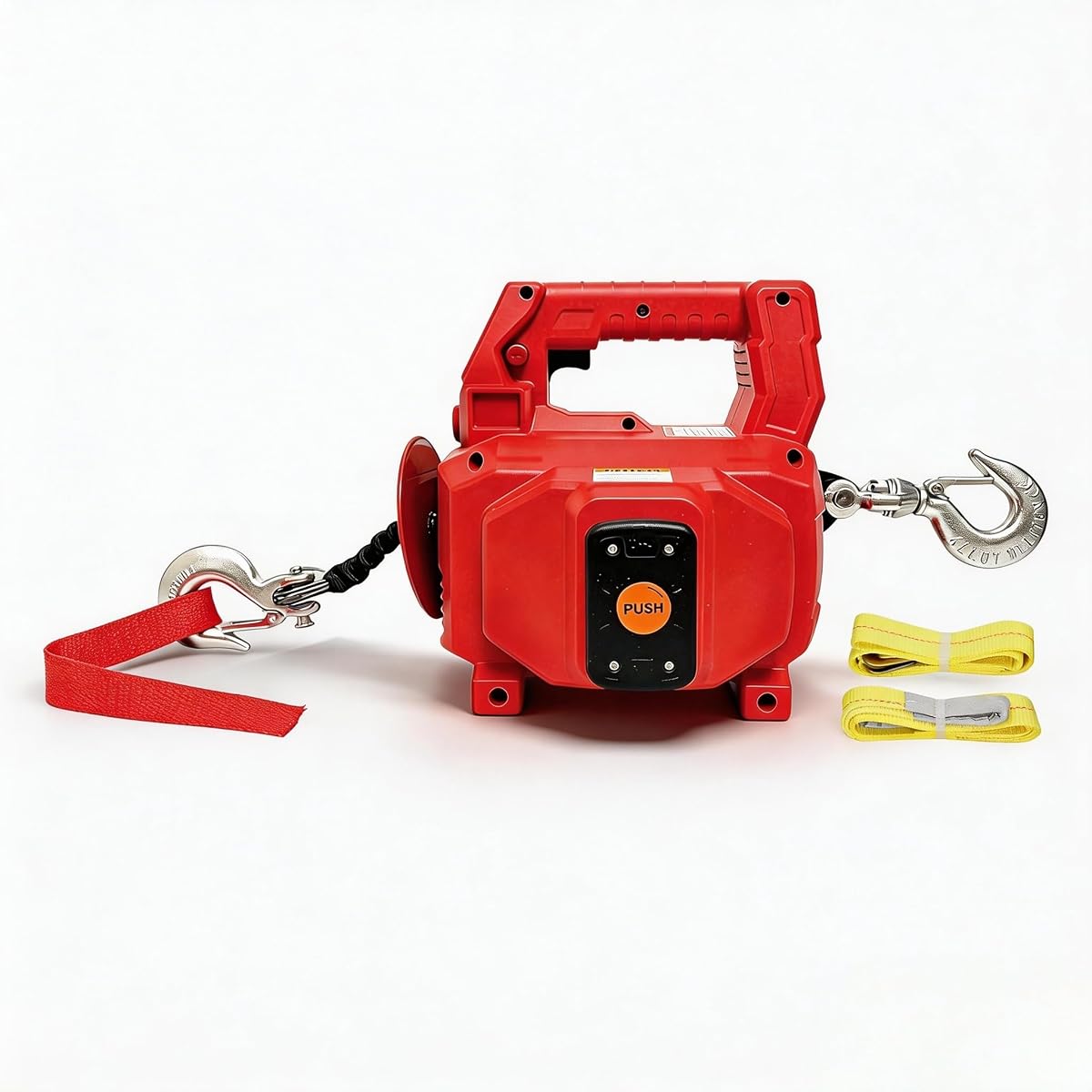


This Milwaukee-compatible cordless winch combines a 1,000-pound rated lifting capacity with the portability of an 18-volt tool battery. Its 5.0 customer rating is the highest in this group, and its defining features are a 40-foot steel cable, an 80-foot wireless remote range, and compatibility with Milwaukee batteries rated 4.0Ah or higher. That makes it a particularly relevant option for anyone trying to run a winch without installing dedicated vehicle wiring.
We may earn a commission when you buy through this link, at no additional cost to you.
The battery list is broad for its class, covering Milwaukee 18V models such as 48-11-1820, 48-11-1840, 48-11-1850, 48-11-1828, 48-11-1862, 48-11-1852, 48-59-1812, and 48-59-1802. A heavy-duty T-shaped control knob supports free rope hovering, and twisting it can secure the line when the operator steps away. The one-button remote allows a single person to lift, pull, and position loads from up to 80 feet away, while two auxiliary fixing ropes provide added anchoring options.
The main trade-off is that the battery is not included, so buyers must already own a compatible Milwaukee pack or purchase one separately. A steel cable is also less flexible and more difficult to handle than synthetic rope, particularly around sharp edges. Even so, the cable's resistance to abrasion and its suitability for demanding outdoor work make sense where durability is more important than easy routing or reduced weight. The 1,000-pound rating and extensive control features help justify its position at the top.
Choose this winch if you already use Milwaukee 18V batteries, need genuinely portable lifting equipment, and work around abrasive outdoor conditions where a steel cable makes the most sense. It is also a strong choice for operators who value an 80-foot remote range and a free-lock feature over a synthetic line. For users with a DeWALT battery collection, one of the DeWALT-compatible options may offer a more natural fit.
Using an existing 18-volt battery eliminates the need for a dedicated power lead during many lifting tasks. The listed 4.0Ah-or-higher requirement should be checked against the exact battery model and the demands of the load before work begins.
The 80-foot wireless remote expands the working area around the load, while the T-shaped knob lets the operator hover the cable and lock it temporarily. These controls are useful for positioning awkward loads without standing directly beside the line.
We may earn a commission when you buy through this link, at no additional cost to you.
This version of the Milwaukee-compatible cordless winch substitutes a 40-foot synthetic rope for steel cable while retaining a 1,000-pound rated capacity. It is designed for people who want portable lifting without operating a cord around a vehicle. Its 4.2 rating, battery-platform flexibility, 80-foot remote, and straightforward one-button control make it a credible cordless option, especially when line flexibility matters more than abrasion resistance.
We may earn a commission when you buy through this link, at no additional cost to you.
Compatibility extends to Milwaukee 18V batteries rated 4.0Ah and above, including the 48-11-1820, 48-11-1840, 48-11-1850, 48-11-1828, 48-11-1862, 48-11-1852, 48-59-1812, and 48-59-1802 families. The T-shaped knob supports controlled hovering and temporary line locking. An 80-foot wireless remote lets one operator work away from the winch, and two included fixing ropes help reinforce anchoring around irregular loads, slopes, or other difficult conditions.
Synthetic rope is easier to bend and route than steel cable, which can be helpful when the anchor or load has complex geometry. The trade-off is that the line is generally more exposed to cutting and abrasion than a steel cable, so users should inspect it carefully and avoid running it across unprotected edges. The 4.2 customer rating is not as strong as the steel-cable version in this list, and the battery is not included. Those are meaningful considerations for buyers comparing long-term value and ownership convenience.
This model is best for Milwaukee 18V users who regularly handle awkward loads, need a lightweight flexible line, or want remote control in locations where a steel cable would be inconvenient. It is less compelling when the line will drag over sharp rock, metal edges, or abrasive surfaces. If your priority is simple routing and reduced handling burden, the synthetic-rope configuration is the more practical choice.
Synthetic rope bends around obstacles more readily than steel cable and can be easier to manage during setup. Its reduced abrasion resistance makes edge protection and regular inspection important parts of responsible use.
The wireless remote and locking knob work together to support hands-on positioning from a safer distance. Confirm that the load path is clear before operating the control and never stand inside the line's potential movement path.
We may earn a commission when you buy through this link, at no additional cost to you.
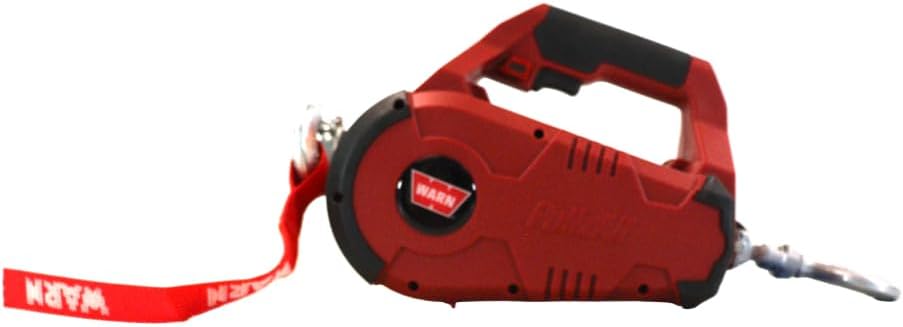
The WARN PullzAll is a 120-volt AC electric winch rather than a tool-battery model, but it remains relevant because it offers another practical way to power a 1,000-pound lifting or pulling device. Its 4.5 rating reflects a well-regarded alternative for garage, workshop, and fixed-location jobs where a reliable outlet is available and portable cordless operation is unnecessary.
We may earn a commission when you buy through this link, at no additional cost to you.
A variable-speed trigger gives the operator more precise control than a simple on-off system, while the electronic load limiter and LED indicator provide information about operating conditions. The stated no-load speed is 13.8 feet per minute, and the unit can lift or pull up to 1,000 pounds. The listing says it is easy to use and highly durable, and notes that it is designed to replace older come-alongs and chain falls while helping one person handle more work.
The essential limitation is its power source. A 120-volt AC connection means it cannot be used where no outlet is available, and the cable introduces a tether that must be managed. It is also vehicle-specific according to the supplied fit information. Buyers should not mistake this model for a battery-operated winch; its value comes from controlled, continuous operation in a suitable fixed environment rather than cordless mobility.
The PullzAll is a strong choice for home workshops, vehicle-restoration spaces, and other locations where a grounded outlet is readily accessible. Buyers who need to move among job sites without extension-cord limitations should prioritize one of the Milwaukee or DeWALT cordless models. For stationary work, however, its variable-speed trigger and load indicator provide a different and potentially useful control experience.
Variable-speed control can make it easier to approach a load slowly, start movement smoothly, and stop without abrupt line motion. That precision is particularly helpful when positioning a component or working near a fixed obstacle.
This winch is most suitable where a 120V outlet is dependable and accessible. Its AC design should be evaluated on cord length, trip hazards, and the distance between the outlet, winch, and load rather than as a cordless feature.
We may earn a commission when you buy through this link, at no additional cost to you.
This DeWALT-compatible winch combines a 1,000-pound rated capacity with a 40-foot steel wire rope and an 80-foot remote range. Its 4.6 rating is the second-highest in the group and gives it a strong balance of cordless convenience and customer feedback. It is a particularly practical selection for DeWALT 20V users who want portable lifting capability but do not need to install permanent vehicle wiring.
We may earn a commission when you buy through this link, at no additional cost to you.
The stated battery requirements include DeWALT 20V packs rated 4.0Ah and above, with the product information listing DCB202, DCB204, DCB206, DCB203, DCB210, DCB606, DCB609, DCB612, DCB180, and DCB181. A free-lock knob allows rope hovering and rotation and can secure the line temporarily when the operator moves away. The wire rope is described as resistant to scratches in complex outdoor environments, and two securing straps assist with anchoring the winch and load.
As with other cordless options here, the battery is not included. The wording of the battery-platform requirement should be checked against the exact pack and adapter arrangement, especially when combining older and newer battery designs. Steel cable adds weight and resists bending, but it remains a sensible choice for abrasive environments and repeated recovery work. The included straps are helpful, although no winch should be considered properly anchored until the connection points and surrounding structure have been evaluated.
This is a compelling option for DeWALT 20V owners who need a portable 1,000-pound winch and value a strong rating. It is particularly attractive for outdoor applications where scratch resistance is more important than the lighter feel of synthetic rope. Buyers without a compatible battery should factor the cost and availability of a 4.0Ah-or-higher pack into the overall purchase decision.
The winch can draw from a range of listed DeWALT 20V batteries, making it easier to standardize around one battery ecosystem. Confirm compatibility, voltage, and required capacity before purchasing or operating the unit.
The 40-foot wire rope is described as scratch-resistant and durable for complex outdoor settings. It should still be inspected for fraying, flattened strands, and contact with sharp edges before every significant lift.
We may earn a commission when you buy through this link, at no additional cost to you.
The Comdazy DeWALT model provides a 1,000-pound rated winch with a flexible 40-foot synthetic rope and cordless operation from a DeWALT 20V battery. It shares the portable format of the other tool-battery winches in this roundup, but its stated compatibility list is particularly broad, naming DCB200, DCB201, DCB204, DCB205, DCB206, DCB207, DCB202, DCB203, DCB210, DCB606, DCB609, DCB612, DCB180, and DCB181 packs rated 4.0Ah or higher.
We may earn a commission when you buy through this link, at no additional cost to you.
Its T-shaped knob provides rope hovering and rotation, with a locking position for temporarily leaving the area. The one-button wireless remote supports single-person operation from up to 80 feet away, and the product includes two auxiliary fixing ropes for irregular loads, slopes, and difficult anchoring situations. Those features place it in the same functional category as the other Comdazy cordless models, but synthetic rope makes it easier to maneuver around irregular objects.
The battery is not included, and buyers should verify that their chosen pack meets the stated 4.0Ah-or-higher requirement. The line's flexibility is an advantage for routing, but it needs more protection from cutting than steel cable. A 4.2 rating is solid without standing out among the group's strongest options, so the purchase decision will likely depend more on DeWALT battery ownership and rope preference.
This winch suits DeWALT users who want a cordless setup, a large stated selection of supported battery models, and a line that is easy to bend during setup. It is less suitable for applications where repeated contact with sharp or abrasive edges is unavoidable. For those conditions, the DeWALT steel-cable alternative is likely easier to justify.
The listed model range gives DeWALT owners several options for powering the winch. Battery capacity and physical fit should still be confirmed with the manufacturer or seller before use.
Synthetic rope's flexibility is useful when working around irregular shapes or complex anchor points. Use edge protection and avoid making the line bear directly against sharp metal or rock.
We may earn a commission when you buy through this link, at no additional cost to you.
This quick-connect kit is not a winch itself, but it directly supports the question of how to connect a vehicle-powered winch to a battery. With a 4.9 customer rating, a stated 175-amp rating, and compatibility with 1/0 AWG cable, it is a strong accessory for users who want a cleaner, reusable connection between a winch power lead and a battery system.
We may earn a commission when you buy through this link, at no additional cost to you.
The installation process involves inserting the wires into the terminal pins and crimping them correctly. The housing is made from solid flame-retardant PC material, while the purple copper terminal pins have silver plating for conductivity and resistance to abrasion and corrosion. A 600-volt voltage rating and the stated 175-amp capacity make the kit relevant to demanding electrical environments, subject to proper wire sizing, protection, and installation quality.
The kit includes two housings and four terminals, allowing a quick-disconnect arrangement for cars, RVs, trailers, forklifts, cranes, boats, solar equipment, and other applications. Its limitation is scope: it does not provide a motor, cable, remote, mounting hardware, or complete winch. Incorrect crimping or undersized wiring can create resistance, heat, or connection failure, so this accessory should be paired with sound electrical knowledge and appropriate circuit protection.
The connector kit is a strong companion purchase for a separately installed 12-volt recovery winch, particularly when frequent battery isolation is desired. It is not a substitute for a ready-to-use battery-powered winch. Buyers wanting a complete portable lifting solution should select one of the cordless units, while vehicle owners with a permanently wired winch can use this kit to improve battery access and disconnection.
A quick-disconnect connector lets the user separate a winch circuit without dismantling permanent wiring. This is useful for storage, maintenance, and preventing unintended battery drain when the vehicle is not being used.
The terminals must be correctly crimped to suitable 1/0 AWG cable, and the connection should be protected from moisture, strain, and accidental contact. Electrical-system design should follow vehicle requirements and applicable safety practices.
We may earn a commission when you buy through this link, at no additional cost to you.
This red Milwaukee-compatible winch offers a 1,000-pound rated capacity, a 40-foot synthetic rope, and an 80-foot wireless remote. The 4.2 rating places it among the well-regarded cordless options, and its appeal lies in a simple combination of portable tool-battery power, flexible line, and remote operation. The battery itself is not included.
We may earn a commission when you buy through this link, at no additional cost to you.
The stated supported batteries are Milwaukee 18V packs rated 4.0Ah and above, including 48-11-1820, 48-11-1840, 48-11-1850, 48-11-1828, 48-11-1862, 48-11-1852, 48-59-1812, and 48-59-1802. A free-lock knob allows the rope to hover and rotate and can secure it while the operator temporarily leaves the area. The synthetic rope is highlighted for flexibility, durability, and its ability to adapt to unexpected situations.
Two securing straps are included to help anchor the portable winch and the load being pulled. Buyers must still ensure that the structural anchor is appropriate, since accessories cannot compensate for a weak attachment point. Synthetic rope should be kept away from sharp edges because it can be cut more readily than steel. Compared with the Milwaukee steel-cable model, this unit prioritizes easier handling and routing rather than maximum abrasion resistance.
This is a sensible option for Milwaukee 18V users who want a flexible line and remote-controlled positioning. It fits jobs involving irregular geometry, equipment repositioning, or portable lifting where cable weight and bendability are priorities. Choose the steel version instead when the line will regularly contact rough, sharp, or high-abrasion surfaces.
The 40-foot synthetic rope bends more readily than steel and can simplify setup around uneven anchor points. It remains sensitive to cuts, heat, and abrasion, so careful line management is essential.
The free-lock knob can hold the rope during brief pauses, reducing the need to hold the control continuously. It should not be treated as a substitute for a rated mechanical restraint or an independently secure load.
We may earn a commission when you buy through this link, at no additional cost to you.
The Comdazy DeWALT steel-cable winch combines a 1,000-pound rated capacity with cordless operation from a DeWALT 20V battery. Its 3.8 customer rating is the lowest among the ten products, so prospective buyers should approach it with a closer look at expected conditions and customer feedback. Functionally, however, the listed design includes many of the convenience features found in the group's more highly rated cordless models.
We may earn a commission when you buy through this link, at no additional cost to you.
Compatibility covers DeWALT 20V batteries rated 4.0Ah and above, with the product information naming DCB200, DCB201, DCB204, DCB205, DCB206, DCB207, DCB202, DCB203, DCB210, DCB606, DCB609, DCB612, DCB180, and DCB181. The winch has an 80-foot wireless remote for single-person operation, a T-shaped knob for rope hovering and locking, and two auxiliary fixing ropes for tougher anchoring situations. The 40-foot steel cable is suited to pulling work where durability is important.
The rating difference does not change the stated specifications, but it can signal that some buyers may have encountered issues or may not have found the overall package as satisfying as competing products. The absent battery adds another ownership consideration. Steel cable also demands more care during handling than synthetic rope, and a 1,000-pound rating should not be interpreted as permission to approach that limit without considering line condition, anchor strength, battery condition, and dynamic forces.
This model is most appropriate for DeWALT 20V users who want a portable winch with a steel cable and already own a qualifying battery. Comparing the listing closely with the DeWALT synthetic-rope and black steel-cable alternatives is advisable because their feature sets are similar but their customer ratings differ. The lower rating does not automatically disqualify it, but it warrants more attention to warranty terms, included parts, and recent customer feedback.
A steel cable is generally less vulnerable to cutting than synthetic rope and is a logical choice for rough surfaces. It should still be kept from sharp edges, inspected regularly, and handled with gloves to prevent injury.
Because this option has the lowest rating in the roundup, prospective buyers should examine recent feedback for recurring themes. A lower average does not identify a specific defect, but it can help inform a more cautious purchasing decision.
We may earn a commission when you buy through this link, at no additional cost to you.
The black DeWALT synthetic-rope winch delivers a stated 1,000-pound capacity with a 40-foot synthetic line and cordless operation. Its 4.2 rating is consistent with the other flexible-rope cordless models in this guide. The main attraction is the combination of DeWALT battery support and easy-to-route rope for portable lifting where permanent vehicle wiring would be inconvenient.
We may earn a commission when you buy through this link, at no additional cost to you.
The stated battery list includes DeWALT DCB202, DCB204, DCB206, DCB203, DCB210, DCB606, DCB609, DCB612, DCB180, and DCB181 packs rated 4.0Ah and above. A free-lock knob allows the operator to hover the rope, rotate it, and temporarily secure the line. The wireless remote has an 80-foot operating range, and two securing straps are included to assist with anchoring the winch and the load.
The product information describes synthetic rope as more flexible than steel and more durable and robust than traditional ropes, although users should still account for its lower resistance to cutting. The battery is not included, and actual run time will depend on the compatible pack, its condition, load demand, and operating environment. The 1,000-pound rating is a maximum stated capacity, not a recommendation to pull continuously at that level.
This model is best for DeWALT 20V owners who need a portable winch and work with loads that favor line flexibility. It is a good fit for controlled positioning tasks where the rope must bend around equipment or anchor points. If the work repeatedly exposes the line to sharp, rocky, or abrasive surfaces, choose a steel-cable model and add appropriate edge protection.
Owners can use a qualifying pack from the listed DeWALT 20V range, reducing the need for a separate battery ecosystem. Verify the exact pack, capacity rating, and connection before relying on the winch for a demanding task.
The remote provides 80-foot control range, and the free-lock knob supports controlled hovering and temporary restraint. Together, these features can improve positioning around objects that are difficult to reach safely.
We may earn a commission when you buy through this link, at no additional cost to you.
The XPV AUTO is a 12-volt DC vehicle recovery winch with a much higher stated pulling capacity than the 1,000-pound portable models. Its 3,000-pound rating, 32-foot steel cable, and inclusion of both wireless handheld and corded controls make it a strong choice for UTV, ATV, and boat recovery work. The 4.1 rating indicates a generally positive customer response, though it should be compared carefully with smaller cordless options because it serves a different power and installation category.
We may earn a commission when you buy through this link, at no additional cost to you.
The winch is described as suitable for challenging conditions, including mud and heavy rain, with a waterproof steel construction and heavy-duty mounting plate. A 12V DC motor rated at 1.0kW or 1.3hp uses copper wire, while a three-stage planetary gear system provides the speed reduction and direction control needed for recovery work. Color-coded terminals are intended to simplify installation, and the dual controls offer flexibility in different operating situations.
Unlike the tool-battery models, this unit requires a vehicle's 12-volt electrical system and suitable wiring. Installation quality, cable gauge, circuit protection, grounding, and switch placement all affect performance and safety. The 3,000-pound figure also represents a stated maximum under appropriate conditions; users should not approach it without understanding line condition, anchor strength, winch mounting, and the forces produced by a stalled or recovering load.
Choose the XPV AUTO when you need higher vehicle-recovery capacity and already have or plan to install a permanent electrical system. It is not the most convenient option for carrying into remote locations because of its vehicle-powered design, but it offers a more specialized recovery solution. Users seeking a small tool-battery winch for occasional positioning should favor one of the 1,000-pound cordless models instead.
A 3,000-pound rating gives this model a different role from compact lifting winches. It is intended for vehicle recovery, where proper mounting, electrical protection, and a secure recovery point are essential.
Wireless and corded controls allow the operator to choose the most suitable setup for the recovery scene. The control method should never place the operator in the path of a tensioned cable or an unstable vehicle.
We may earn a commission when you buy through this link, at no additional cost to you.
The right power system depends on whether you need portable tool-battery operation, a fixed AC installation, or a permanently wired vehicle recovery system. Capacity, line type, controls, environmental conditions, and safe installation should be considered together rather than treated as isolated specifications.
Start with the power source you can realistically use. Tool-battery winches require a compatible battery platform, voltage, and minimum Ah rating, and most of the cordless models reviewed specify 4.0Ah or higher. Existing battery ownership can simplify charging, spares, and field logistics, but a battery with greater capacity may also be better suited to demanding lifts. By contrast, the XPV AUTO requires a 12-volt vehicle supply and suitable permanent wiring, while the WARN PullzAll requires a 120-volt AC outlet.
Compare the stated maximum capacity with the weight of the intended load, but do not plan to operate continuously at the published limit. Dynamic movement, rope angle, shock loading, anchor strength, and battery condition can increase effective loads. The cordless models here are rated at 1,000 pounds, the WARN PullzAll is also rated at 1,000 pounds, and the XPV AUTO is rated at 3,000 pounds. Larger capacity is not automatically better for every task because it can also mean greater weight, more energy consumption, and a less manageable line speed.
Steel cable is generally favored where abrasion resistance, compact storage, and rugged pulling are priorities. Synthetic rope is easier to bend, lighter to handle, and less likely to form sharp bends that damage components, but it needs greater protection from cutting edges. Several reviewed winches include 40-foot lines, while the XPV AUTO has a 32-foot steel cable. Match the line to the geometry of the job rather than treating one material as universally superior.
The portable 1,000-pound winches listed here use wireless remotes with a stated 80-foot range, allowing the operator to move away from the immediate winch location. The XPV AUTO includes both wireless and corded controls, while the WARN PullzAll uses a variable-speed trigger. Control choice should reflect the working area: wireless freedom is useful around obstacles, a corded remote offers a physical connection, and variable speed can provide finer control when approaching a load.
A winch's rated capacity alone does not describe how it will feel during a lift. The WARN PullzAll lists a 13.8 feet-per-minute no-load speed and variable-speed control, making it easier to approach a target gradually. The cordless models offer remote control but do not provide a comparable no-load speed figure in the supplied information. If precision is critical, investigate line speed, braking behavior, gear design, and control feedback before choosing a model.
Tool-battery winches can be carried to a work area and anchored with suitable straps, but their listed accessories do not guarantee compatibility with every tree, vehicle, trailer, or structural point. Vehicle recovery winches generally use a mounting plate and fixed electrical installation. A portable product may be lighter and easier to redeploy, but permanent mounting can provide a more consistent anchor during demanding recovery work. Neither approach should be attached to a point that has not been evaluated for strength.
Recovery equipment is often exposed to mud, rain, rocks, sand, and abrasive edges. The XPV AUTO is specifically described as waterproof-oriented and built for harsh terrain, while the cordless models offer different line materials for outdoor conditions. Stainless or plated electrical components, sealed housings, and protected cable paths can all influence reliability. Regardless of design, inspect the line, casing, connectors, and controls for damage before use and clean the equipment after exposure to mud, salt, or moisture.
Securing straps and auxiliary fixing ropes can help organize an installation, but they are not substitutes for independently rated anchors, shackles, or restraint systems. Several listings describe email support and repair or replacement assistance, with responses stated within 24 hours. Review the current warranty terms before buying, especially for cordless models whose batteries are not included. Also verify that the remote, line, mounting hardware, and control knob are present in the package you receive.
Before operating any winch, read its instructions and inspect the complete system. Confirm that the battery model meets the compatibility and capacity requirements, the winch is securely mounted, the line or cable is free of damage, and the load path is clear. Use appropriate personal protective equipment, keep hands away from the cable, and never work inside the possible movement path of the line. Test the remote and control knob with a light or unloaded condition before approaching the intended load.
Plan the pull and the load's path before energizing the winch. Use a rated anchor, connect the line to the load as directed, and avoid sharp edges that could damage synthetic rope or steel cable. Move the load in short, controlled movements, monitor the line and anchors, and stop if the winch strains, the battery becomes unusually hot, or the load shifts unexpectedly. For a recovery winch, secure the vehicle and use appropriate recovery points; never use the winch as the sole means of supporting an unstable vehicle.
After the task, disconnect or remove the battery according to the instructions, release residual tension in a controlled manner, and inspect the line for cuts, kinks, birdcaging, or damaged strands. Clean dirt and moisture from the housing, cable, connectors, and mounting hardware, and store the unit in a dry place. A compatible battery should be stored according to its manufacturer's guidance, while vehicle-installed systems should have their wiring and connections checked regularly for corrosion, looseness, and damaged insulation.
It can if the winch is specifically designed for that battery platform, voltage, connector, and capacity requirement. The cordless models reviewed call for Milwaukee 18V or DeWALT 20V batteries rated at least 4.0Ah, and they do not include a battery. Do not assume that two batteries are required unless the winch instructions specifically state that arrangement, because connecting cells incorrectly can damage the tool or create a serious hazard.
The reviewed cordless winches specify 4.0Ah or higher, so that is the minimum relevant range for this group. A higher-capacity compatible pack can be useful for repeated lifts or demanding workloads, but actual performance depends on the winch design, load, conversion losses, and battery condition. Use the manufacturer's compatibility list and operating guidance for the exact model.
It may be suitable for lighter vehicles and modest recovery conditions when the winch, mounting, battery, and recovery points are all properly rated. The XPV AUTO in this guide offers a higher 3,000-pound stated capacity for more specialized recovery work. Vehicle weight, terrain, anchoring, slope, line condition, and the risk of a failed pull all influence the appropriate capacity.
Choose steel cable when abrasion resistance, compact storage, and rugged pulling performance matter most. Choose synthetic rope when flexibility, easier routing, and lower handling weight are more useful. Synthetic rope generally needs more protection from cutting edges, while both materials require inspection for damage before each substantial task.
No. The Milwaukee- and DeWALT-compatible 1,000-pound winches listed in this guide are sold without the compatible battery, and they generally require a pack rated 4.0Ah or higher. Buyers should confirm the exact battery model, its condition, and any adapter requirements. A separate battery purchase should be considered part of the total ownership plan.
The kit is designed for quick battery connection and disconnection with 1/0 AWG cable in vehicle, trailer, RV, marine, crane, and industrial applications. It can complement a permanently wired 12-volt winch by allowing the operator to isolate the circuit quickly. It is not a complete winch and requires correct crimping, suitable circuit protection, and installation practices appropriate for the electrical system.
Wireless control can be safer when it lets the operator stand farther from the winch and outside the immediate load path. It does not remove the need for a clear work zone, secure anchoring, and proper line handling. A corded remote can provide a consistent physical connection, while the XPV AUTO offers both options so the user can select the appropriate method for the recovery scene.
Battery-powered winches are well suited to portable and intermittent tasks, but continuous operation depends on battery thermal performance, runtime, duty cycle, and the manufacturer's guidance. Avoid using a tool battery beyond its intended duty cycle. For sustained repetitive work at a fixed location, an appropriately rated AC or vehicle-powered system may be more suitable.
The Milwaukee Steel Cable Winch stands out as the most complete cordless choice because it combines a 1,000-pound rating, a 5.0 customer rating, 40-foot steel cable, and an 80-foot remote with broad 18V battery support. The DeWALT Steel Cable Winch is another strong portable option, particularly for DeWALT owners, while the WARN PullzAll serves fixed-location users who prefer variable-speed control and a 120-volt AC supply.
Prioritize the power source you already use, then match the line to the environment and the controls to the task. Synthetic rope is convenient where flexibility matters, steel cable is preferable in abrasive conditions, and a vehicle recovery winch should be selected for higher-capacity recovery work with proper permanent wiring. In every case, anchor strength, battery condition, line integrity, and safe operating distance deserve as much attention as the advertised capacity.
Customer ratings, package contents, availability, and product prices can change, so review the current listing before buying. Confirm the exact battery model, included remote and hardware, warranty terms, mounting requirements, and rated capacity. Those checks will help ensure that the selected winch is not only compatible with your equipment but also suitable for the environment and the work you genuinely intend to perform.